
Reviewed · SAHARA DESERT TOURS
3-Day Tunisia Sahara Desert Camel Trek from Douz
The Sahara rewards patience. This three-day camel trek from Douz takes you beyond the usual short desert ride, with golden dunes, changing views, campfire meals, and two nights under the open sky. I especially like the slow pace by camel and the chance to reach sandy places that vehicles cannot access. The included turban and djellaba are useful touches, too, not just dress-up for photographs.
I also like the food focus, with Berber breakfasts and Bedouin-style lunches prepared around camp. The main consideration is physical comfort: you will ride a camel for long stretches over three days, and desert nights can feel basic even when the camp is more comfortable than expected.
In This Review
- Key points to know before booking
- Why three days works better than a quick camel ride
- Day 1: From Douz to your first desert camp
- Day 2: Sunrise, food traditions, and sunset from the dunes
- Day 3: A final ride before returning to Douz
- Camp life, meals, and the night sky
- What the camel ride is really like
- How the $270 price measures up
- Who should book this Sahara trek?
- Practical details to settle before you go
- Should you book it?
- FAQ
- Where does the camel trek start?
- How long does the experience last?
- How many nights do you spend in the desert?
- Are meals included?
- Is vegetarian food available?
- Is the tour private?
Key points to know before booking
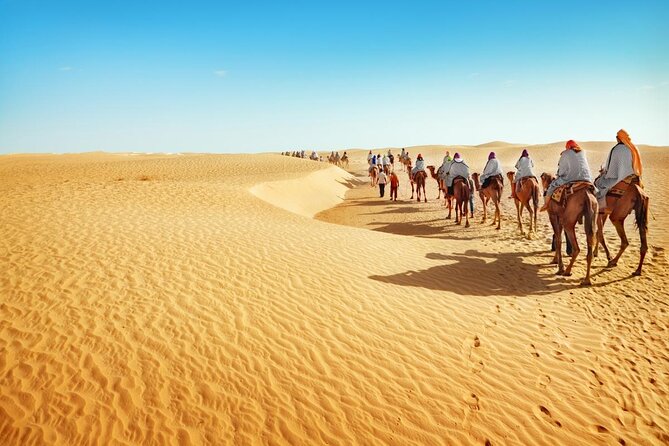
- Three days gives the Sahara room to change: You ride through dunes from morning into late afternoon, rather than squeezing the desert into a short outing.
- Two nights in a desert camp: You get sunset, sunrise, campfire dinners, drumming, and star-filled skies without racing back to Douz.
- Meals are part of the experience: You can watch traditional food being prepared and learn the difference between Berber and Bedouin cooking styles.
- Guides matter here: Ahmed and Mohammed have been praised by name, while Mounir has also received warm recognition for his work at the camp.
- Everything begins in Douz: Pickup starts at 9:00 a.m. from a hotel or accommodation in town, with return around 11:00 a.m. on the third day.
- The price covers the main desert costs: At $270 per person, the package includes the camel, guide, camp, six meals, drinks, clothing, pickup, and drop-off within Douz.
Why three days works better than a quick camel ride
Douz is often called the gateway to the Sahara, and a short camel ride can give you a taste of the dunes. This trip gives you something quite different. You spend enough time away from roads and buildings for the desert to become the main event, not a backdrop between transport stops.
The first day takes you from Douz into the sandy wilderness. On the second day, you ride out from camp and return later, giving you a fuller sense of the area. The third morning continues through the dunes before bringing you back to the meeting point.
I like this rhythm because the desert needs quiet time. You are not checking off monuments every hour. Instead, you watch the sun alter the color of the sand, notice how the view opens and closes around the dunes, and let the silence do some of the work.
That slower pace also has a cost. Camel riding is not like sitting in a car. The saddle can become tiring, especially during long stretches, and you should be comfortable with a simple outdoor routine. The tour is private, so only your own group participates, which makes the pace easier to manage than on a large shared departure.
More Sahara Desert Trips in Douz:
- 2-Day Tunisia Sahara Desert Camel Trek from Douz
★ 5.0 · 27 reviews - Sunset or Sunrise Camel ride in the Sahara Desert of Douz
★ 4.5 · 9 reviews - Quad Biking (ATV) in Douz Tunisia Sahara Desert
★ 5.0 · 7 reviews
Day 1: From Douz to your first desert camp
Pickup is scheduled for 9:00 a.m. from your hotel or accommodation in Douz. After meeting the cameleers, you mount your camel and begin moving through the golden dunes.
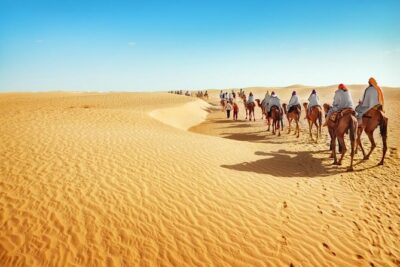
The appeal of this opening is not a single attraction. It is the gradual change around you. The sandy terrain shifts as the day progresses, and the route takes you into areas that vehicles cannot reach. You have time to stop for photographs, but the experience is best when you also put the camera down and pay attention to the wide, quiet setting.
At midday, the group pauses for lunch while the chef prepares the meal. This break matters for more than food. It divides the first riding day into manageable sections and gives you a chance to stretch, drink water, and look around before continuing.
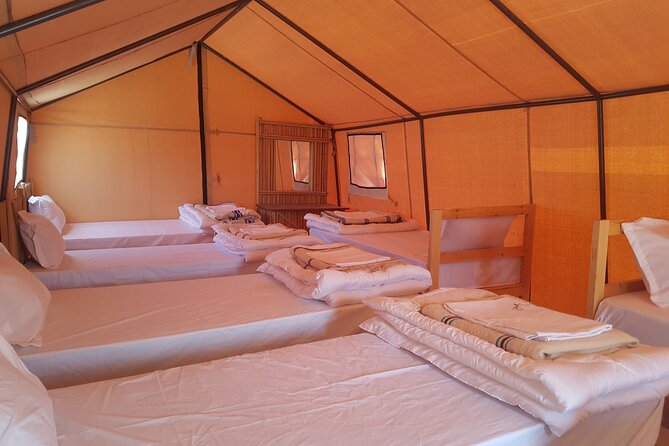
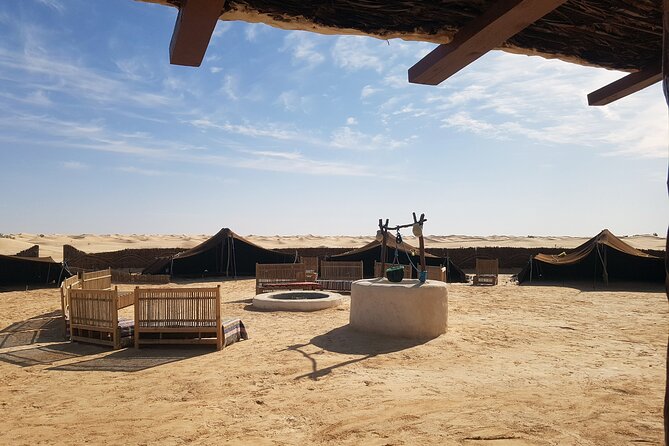
After lunch, you ride onward to the desert camp. The exact camp style can vary, but the package includes two nights of desert camp accommodation. One description of the experience praised the camp for offering more comfort than expected, so you should not assume that this means sleeping entirely without shelter or basic conveniences. At the same time, it is still a desert camp, not a city hotel.
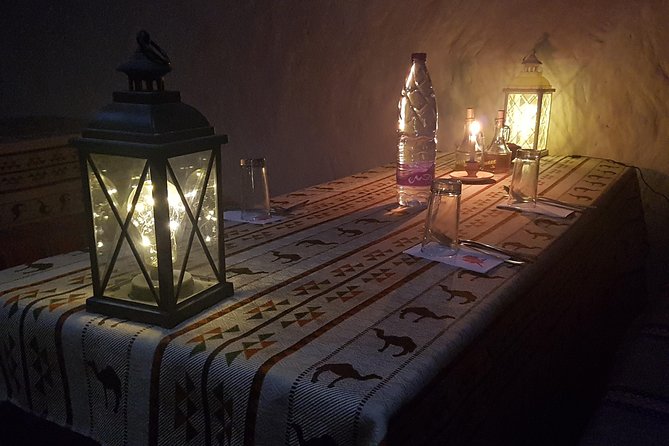
The evening is one of the strongest parts of the trip. Dinner is served near a fire, with Berber-style food and drumming. After sunset, the sky becomes the main attraction. The lack of city lights gives you a chance to spend a long evening looking at the stars rather than rushing through a short photo stop.
If your idea of a good night is quiet, open air, and a warm meal, this first camp should suit you well. If you need a firm mattress, private hotel facilities, or reliable comfort at every hour, ask for more details before booking.
Day 2: Sunrise, food traditions, and sunset from the dunes
Day two begins early, with sunrise and a Berber breakfast. This is the right time to be outside. The light is softer, the air can feel cooler, and the dunes take on new shapes as the sun climbs.
After breakfast, you ride out to see broader views of the desert. The wording for this part is broad, so you should not expect a fixed list of named sights. The attraction is the changing view itself, with the camel carrying you across sandy routes that are not practical for ordinary vehicles.
Around midday, you return to camp for lunch. One of the more distinctive features of the outing is the chance to watch a traditional Bedouin-style meal being prepared. You are also introduced to the difference between Berber and Bedouin food traditions, which adds cultural meaning to what could otherwise be just a camp meal.
The distinction is valuable because food is one of the clearest ways to connect a desert experience with the people who have lived and worked in this region. You are not simply handed a packed lunch and sent back to the saddle. The preparation becomes part of the day.
After lunch, the camel ride continues until sunset. The high point is reaching the dunes in time for the evening light. From the top of a dune, the view can feel enormous, with ridges and hollows stretching away in every direction.
Then comes another dinner near the campfire and another night beneath the stars. Some people will find two similar evenings deeply relaxing. Others may feel that the second night repeats the first. I would choose this trip for the repetition, because the quiet and the sky are the point. This is not a tour built around constant novelty.
The desert also makes weather important. Sunscreen is not included, so bring your own. The tour provides bottled water, coffee or tea, a Sahara turban, and a djellaba during the trek, but you remain responsible for protecting yourself from the sun.
Day 3: A final ride before returning to Douz
The final morning starts with coffee, breakfast, and another sunrise. This is a pleasant contrast to a rushed departure. You have time to enjoy the early light before climbing back onto the camel.
The morning ride continues through the dunes and other parts of the desert before turning back toward the original meeting point. Return transportation to Douz is waiting there, with arrival around 11:00 a.m.
That finish is useful for planning. You can still have part of the afternoon in Douz, but the tour does not end at dawn. If you are connecting to another destination the same day, allow extra time beyond the stated return, since desert transport can be affected by local conditions.
The third day is shorter than the first two, but it completes the journey properly. You do not simply wake up and drive back. The final camel ride gives the outing a clear beginning, middle, and end.
Other camel treks leaving Douz:
- Douz Overnight Camp Stay in Sahara Desert with Dinner By Camel
★ 5.0 · 6 reviews - Camel & Quad Combo In Douz Sahara Desert
★ 5.0 · 4 reviews - Tunisia Sahara Desert Camel Ride in Douz
★ 4.5 · 2 reviews - Discovery ride on horseback or camel 2h30
★ 5.0 · 153 reviews
Camp life, meals, and the night sky
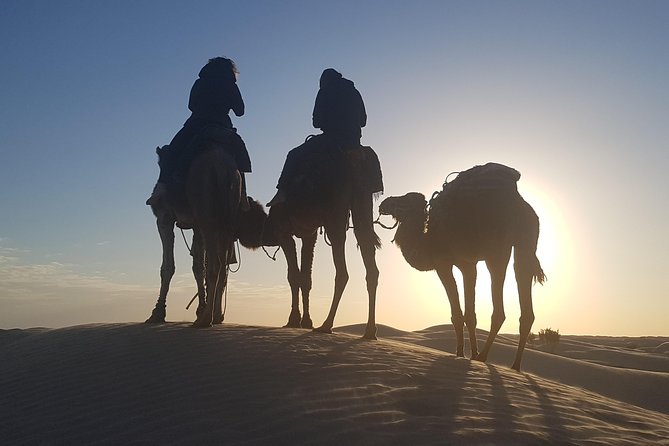
The two-night camp stay is the heart of the trip. The schedule includes two breakfasts, two lunches, and two dinners, along with coffee or tea and bottled water. That means you do not need to arrange separate meals while away from Douz.
The cooking is given unusual attention. You can expect regional dishes, a Berber breakfast, and a Bedouin-style lunch prepared at camp. Vegetarian food is available, but you must request it when booking. The same applies to other dietary needs.
The evening program is simple: dinner, fire, drumming, conversation, and the sky. That simplicity is a strength. You are not being sold a long list of staged activities. You are given time and space to enjoy the setting.
The camp has received praise for its comfort and welcome, with Mounir specifically associated with a friendly reception at the camp. The guide names Ahmed and Mohammed have also been linked with particularly strong praise. Staff can change, so I would treat those names as useful points to ask about rather than a guarantee of your exact crew.
What the camel ride is really like
The camel is not just transport for a photograph. You ride it across much of the trip, including the morning and afternoon stretches on the first two days and the return ride on day three.
That makes the experience more personal than a vehicle excursion. You travel at animal pace, hear less mechanical noise, and reach sandy routes that cars cannot use. The camels have been described as well behaved, healthy, and well cared for, which is an important consideration for an animal-based activity.
Still, the ride can be demanding. The supplied information does not give exact riding times, distances, saddle design, or rest intervals. If you have back, hip, or knee concerns, ask the operator for current details before paying. Most people can participate, but children must be accompanied by an adult.
The turban and djellaba are included during the trek. They help you handle the sun and give the outing a stronger connection to local desert dress. Bring sunscreen anyway, since it is specifically excluded, and use the water provided rather than waiting until you feel thirsty.
How the $270 price measures up
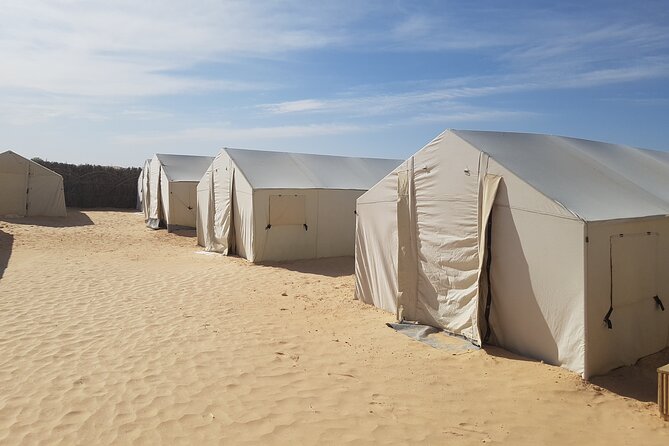
At $270 per person, the price is not a bargain day trip, but it covers three days and two nights in a difficult setting. The package includes:
- Pickup and drop-off in Douz
- A camel for you to ride
- A cameleer guide
- Two nights of desert camp accommodation
- Two breakfasts, two lunches, and two dinners
- Bottled water, coffee, and tea
- A Sahara turban and djellaba
That list changes the value calculation. You are not paying only for a camel ride. You are paying for food, camp arrangements, staff, desert transport, and the planning needed to move a small private group into a remote area.
I think the price makes the most sense if you want time away from roads and a more complete Sahara experience. It is less suitable if you only want a quick introduction to riding a camel or if your main goal is to keep costs as low as possible.
The private format adds value for couples, families, and small groups who want to travel together. Only your group participates, so you are not placed with a large crowd. That can make the long riding periods feel more relaxed, though the price per person remains fixed at the stated rate.
Who should book this Sahara trek?
I would recommend it to you if you want:
- A quiet desert stay rather than a brief photo stop
- Sunrise and sunset in the dunes
- Traditional meals and camp cooking
- A private trip for your own group
- A chance to learn about Berber and Bedouin food traditions
- A simple outdoor experience with campfire evenings
- A camel ride that reaches places vehicles cannot
It is also a good fit for people who enjoy repeated views and unhurried days. New Year’s Eve has been used for the trek, showing that it can suit a peaceful holiday break, not just a summer itinerary.
I would think twice if you dislike animals as transport, find long seated rides uncomfortable, or expect hotel-level facilities. The camp may be more comfortable than you expect, but the supplied details do not promise a full range of hotel services.
Practical details to settle before you go
The start time is 9:00 a.m., and pickup is offered from hotels or accommodation in Douz. Pickup from other cities is not included, so you need to arrange your own way to Douz before the tour begins.
Confirmation is provided when you book. Service animals are allowed, and the departure point is near public transportation. Most people can take part, but children need an adult with them.
Ask for vegetarian meals or other dietary requirements at booking time. Do not wait until you reach camp, since the food team needs notice.
The cancellation terms are fairly strict close to departure. You can receive a full refund by cancelling at least six full days before the start time. Cancelling two to six full days ahead allows a 50 percent refund, while cancelling less than two full days ahead brings no refund. All cutoffs use local Tunisian time.
Should you book it?
Book this trek if you want the Sahara in its quieter form: camel pace, long views, campfire food, sunrise, sunset, and stars. The strongest elements are the two nights away from Douz, the care reported for the camels, and the warm guide and camp service associated with names such as Ahmed, Mohammed, and Mounir.
Skip it if you only have time for a short outing or if basic camp life and extended camel riding sound uncomfortable. For the right person, $270 is a fair price for the camel, meals, clothing, guide, private format, and two desert nights. It gives you enough time to stop treating the Sahara as scenery and start noticing how it feels.
FAQ
Where does the camel trek start?
The trek starts in Douz. Pickup is offered from your hotel or accommodation in Douz at 9:00 a.m.
How long does the experience last?
The experience lasts approximately three days. You return to Douz around 11:00 a.m. on the third day.
How many nights do you spend in the desert?
The tour includes two nights in a desert camp.
Are meals included?
Yes. The package includes two breakfasts, two lunches, and two dinners. Coffee or tea and bottled water are also included.
Is vegetarian food available?
Yes. A vegetarian option is available, but you must advise the operator when booking. You should also provide details of any other dietary requirements at that time.
Is the tour private?
Yes. Only your group participates in the private tour or activity.
More 3-Day Experiences in Douz
- 3 Days South Tunisia Discovery Tour with luxury camp and Meals
★ 5.0 · 31 reviews - Private 3 Day Tour in Southern Tunisia or More
★ 5.0 · 17 reviews - The Tunisian South between Oasis and Mountain: 3 Days / 2 Nights Douz and Tozeur
★ 5.0 · 17 reviews - Private 3-Day Excursion to the Tunisian Desert
★ 5.0 · 10 reviews
More Hiking & Trekking in Douz
- Desert tours and adventurous camel trekking through the Sahara
★ 4.0 · 10 reviews
Newest from Douz
- Tunisia Sahara Desert Camel Ride in Douz★ 4.5 · 2 reviews
- Overnight Tunisia Sahara Desert Safari by 4×4 from Douz★ 4.0 · 4 reviews
- 40 Minutes Private Quad on the Dunes in Douz★ 5.0 · 2 reviews
- Camel & Quad Combo In Douz Sahara Desert★ 5.0 · 4 reviews
- Douz Overnight Camp Stay in Sahara Desert with Dinner By Camel★ 5.0 · 6 reviews
- 7-Day Northern South Tour from Tunis★ 5.0 · 2 reviews
- Quad Biking (ATV) in Douz Tunisia Sahara Desert★ 5.0 · 7 reviews
- 2 Days Tunisia Sahara Desert Buggy Safari Adventure★ 4.5 · 7 reviews
Sahara Desert Tours, compared.
2-Day Tunisian Sahara Tour with Food & Stay from Hammamet
Read our review →
2-Day Tunisian Sahara Tour with Food & Stay from Sousse
Read our review →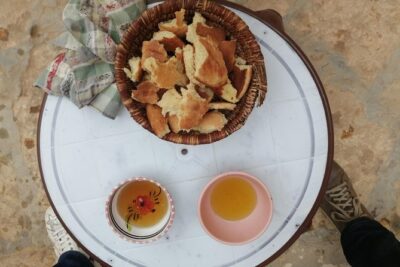
One night under the tent: Tataouine – Chenini – Ksar Ghilane – Matmata
Read our review →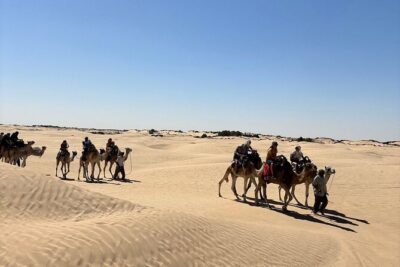
Door of the tunisian desert Ksar Ghilane and Matmata: Full one Day
Read our review →
Ksar Ghilane 1 day: The hot spring and the homestay
Read our review →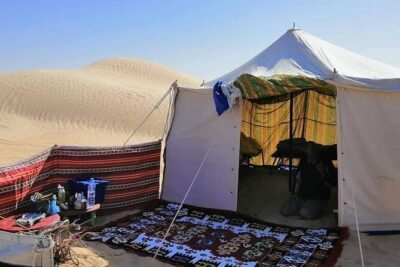
2-Day Tunisia Sahara Desert Camel Trek from Douz
Read our review →Browse the lists this tour appears in