
Reviewed · SAHARA DESERT TOURS
The Tunisian South between Oasis and Mountain: 3 Days / 2 Nights Douz and Tozeur
The Sahara arrives with a packed three-day punch. I like the route’s sharp variety, from Kairouan’s ancient mosque and Tozeur’s palms to Chott el-Jerid, desert dunes, Matmata’s underground homes, and El Jem’s Roman amphitheater. I also like the private format, which gives your group more room to adjust stops and pace. The tradeoff is simple: the days are long, often beginning around 7 a.m. and ending between 5 and 6 p.m.
This is not a slow desert retreat. It is a fast-moving tour across southern Tunisia, with long drives balanced by memorable stops. Guides including Chaouki, Ahmed, Yahya, and drivers such as Usama and Hamsa have been praised for safe driving, flexibility, clear explanations, and good communication. Still, the route covers a lot of ground, so you should book it for variety rather than plenty of free time.
In This Review
- Key points to know before booking
- What this three-day Tunisian route is really like
- Day one: Kairouan begins with sacred architecture
- Tozeur: palms, dates, and sun-baked brick
- Chak-Wak offers an unusual change of tone
- Day two: Chebika and Tamerza bring the mountains
- Ong Jemel and the Star Wars desert
- Nefta and the changing life of an oasis
- Chott el-Jerid: a huge salt plain under open sky
- Douz: the Sahara at sunset
- Day three: Matmata puts people at the center
- El Jem closes with Roman scale
- Guides, vehicles, and the pace of the trip
- Who should pay $638.80 for this experience?
- Booking details worth remembering
- Should you book this southern Tunisia tour?
- FAQ
- How long is the tour?
- Where does the tour begin?
- Is this a private tour?
- Is transportation included?
- Are meals included?
- Are the camel ride and quad ride included?
- Does the tour include entrance fees?
- Can most people participate?
- What happens if the tour is canceled because of weather?
Key points to know before booking
- Kairouan opens the tour with major Islamic architecture, a preserved medina, and the city’s famous makroud pastries.
- Tozeur combines a huge date-palm oasis with a carriage ride and the unusual Chak-Wak cultural park.
- The mountain-oasis day brings Chebika, Tamerza Canyon, Nefta, Chott el-Jerid, and a Star Wars filming site.
- Douz gives you a first taste of the Sahara, with sunset, sand dunes, optional camel rides, and optional quad biking.
- Matmata offers one of the most human moments of the trip: traditional troglodyte homes and Berber village life.
- El Jem provides a grand final stop, with a Roman amphitheater built for about 35,000 spectators.
What this three-day Tunisian route is really like
At $638.80 per person, this is a serious purchase, but the price covers more than transport. You get an air-conditioned vehicle, entrance fees to the listed sites and museums, two breakfasts, two dinners, a carriage ride, and 4×4 excursions to the Great Sand Dunes of Ong Jemel, Chebika, and Tamaghza.
The private setup helps explain the cost. Your group is not traveling with a large coach party, and the guide can respond to your interests. One pair found the flexibility especially useful, while another praised the team for responding quickly and adapting to requests. If you are splitting the price among several people, the value improves. Group discounts are also available.
The route is best for you if you want to see a large slice of Tunisia in a short time. It is less suitable if you prefer late starts, long meals, or an afternoon spent doing nothing but watching palms move in the breeze. The itinerary has plenty of stops, but most are brief.
Other mountain oasis runs from the edge of the desert:
- Private Day Trip Ksar Ghilane Oasis
★ 5.0 · 53 reviews - Half-day excursion the mountain oases from Tozeur
★ 4.5 · 39 reviews - Tozeur: Tamerza, Chebika, Mides and Star Wars locations Day Tour
★ 4.5 · 18 reviews
Day one: Kairouan begins with sacred architecture
The first morning starts at 7 a.m., a sensible choice for a route this long. Kairouan gives the trip a strong opening because it connects Tunisia’s desert regions with the country’s religious and architectural traditions.
The Great Mosque of Kairouan dates to 670 and is considered one of the oldest and most important mosques in the Islamic world. You have about 30 minutes here, enough to take in the massive minaret, broad courtyard, arcades, carved cedar doors, and marble columns in the prayer rooms.
The building has the heavy, fortified look common to early North African religious architecture. I would pay close attention to the courtyard and its proportions rather than rushing straight to the minaret for a photograph. The site’s scale is the point.
The tour then moves into the Medina of Kairouan for about an hour. This is a useful change of pace after the formal mosque. You can look through the souks, see carpet-making traditions, and try makroud, the city’s well-known pastry made with semolina and dates.
This stop also gives you a chance to buy something local without waiting until the desert portion of the trip. Keep in mind that an hour passes quickly in a medina, especially if you want to browse carpets or stop for food.
Tozeur: palms, dates, and sun-baked brick
Tozeur is the first major taste of southern Tunisia. It is the capital of the Bled el-Jerid region, close to the Algerian border, and its identity is tied to date farming and oasis agriculture.
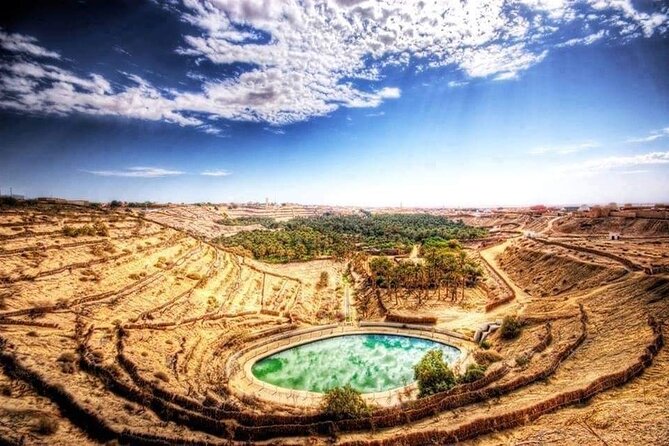
The city’s architecture is one of its best features. Houses and mosques use distinctive sun-baked bricks, often arranged in geometric patterns. The oasis contains more than three million palm trees, including about 400,000 near the city, and around 200 springs are associated with the oasis.
You have about an hour in Tozeur itself, followed by a 45-minute carriage ride and walk through the oasis. That carriage ride is included, which matters because the palm groves are easier to appreciate when you are not simply passing them through a car window.
The oasis is not just scenery. It is a working agricultural system, with dates at its center. Deglet Nour dates, whose name means fingers of light, are especially prized for their translucent flesh and sweetness. The tour gives you a practical sense of how the city’s economy and appearance are connected.
The timing is tight, so you may not get a long independent walk through town. Still, the combination of city architecture and palms gives Tozeur more substance than a quick roadside photo stop.
Chak-Wak offers an unusual change of tone
The Chak-Wak Tozeur Museum is unlike the other stops. Set across five hectares in the palm grove, it combines entertainment, culture, and displays about the history of Earth and humanity.
The grounds contain dinosaur figures, animal and human forms, small museums, caves, and huts scattered among the palms. The presentation draws on science and different religious traditions, making it more of a themed cultural park than a conventional museum.
You have about an hour here. Some people will find the mixture playful and entertaining, while others may prefer the mosque, canyon, and Roman sites on this route. I see Chak-Wak as a useful change of rhythm. After the formal history of Kairouan and the agricultural focus of Tozeur, it adds a lighter, more unusual stop.
The first night includes dinner and accommodation, although the supplied details do not name the hotel. You should expect the tour to keep moving rather than leave you with a long evening to explore independently.
More Sahara Desert Trips in Tunis:
- 4-Day Private Tour: Sahara and Djerba Island from Tunis and Hammamet
★ 5.0 · 4 reviews - Private Three day Desert Experience Tour
★ 5.0 · 2 reviews - 2-Day 1-Night Sahara Luxury Tent Experience Bedouin Show Dinner
★ 5.0 · 2 reviews - 2-Day Tunisian Sahara Tour with Food & Stay from Hammamet
★ 4.5 · 80 reviews
Day two: Chebika and Tamerza bring the mountains
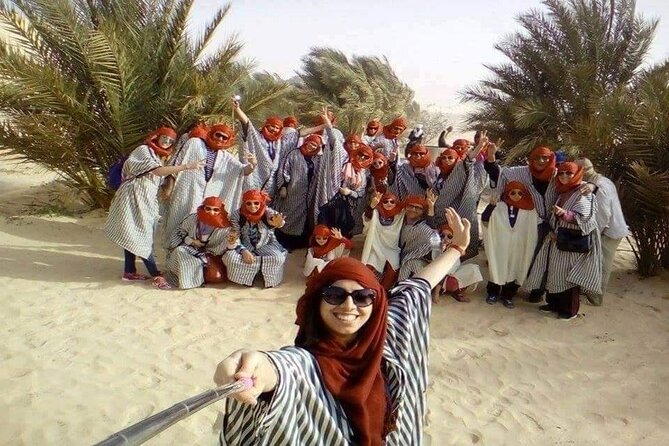
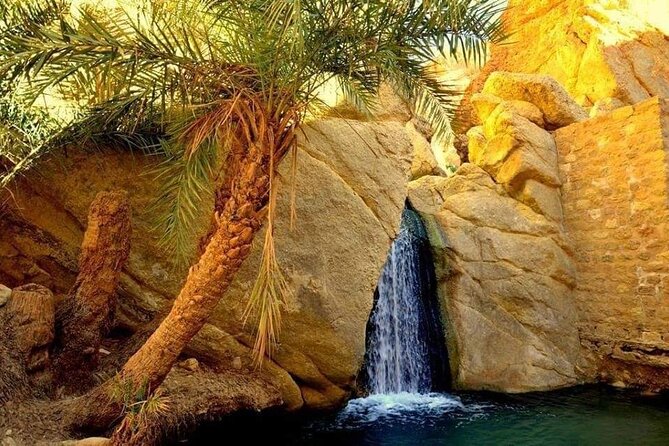
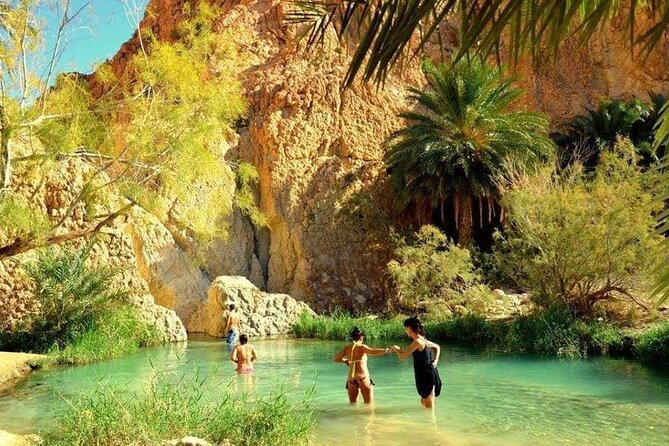
Day two moves from palms and salt flats into the mountain oases near the Algerian border. Chebika is a small mountain oasis in western southern Tunisia, with about 45 minutes allocated for the visit.
The appeal comes from the contrast. Water and palm trees appear in a dry mountain setting, and the stop feels very different from Tozeur’s broad oasis. The nearby roads also lead into canyon country, so this is where the included 4×4 element becomes important.
Tamerza, also called Tameghza, lies about 14 kilometers north of Chebika. The area once served as a Roman and later Byzantine defensive position. A winding road follows a canyon for roughly 10 kilometers from Chebika, creating some of the trip’s strongest views.
Only 30 minutes is listed for Tamerza Canyon, so you should not expect a long hike. The road and canyon are the main event. If you want time for photographs, tell your guide early, since the private format may allow some flexibility but the overall route still has a fixed schedule.
The 4×4 excursions to Chebika and Tamaghza are included. This is a real advantage because the mountain roads and desert tracks are part of the experience, not just a way to reach the next town.
Ong Jemel and the Star Wars desert
The route also includes 4×4 access to the Great Sand Dunes of Ong Jemel. The supplied schedule gives only a 30-minute stop for the Star Wars setting, but the desert drive itself adds a sense of adventure that a standard road transfer would miss.
The filming site lies about 14 kilometers from Nefta and 38 kilometers from Tozeur. George Lucas used the Tunisian desert for scenes from Star Wars, including material connected with Episodes I and II.
You do not need to be a devoted fan to enjoy this stop. The sets sit in a stark desert setting, and the odd sight of a film village in the middle of the Sahara makes for a memorable photograph. Fans will get an extra thrill from recognizing the location.
The short visit is the main limitation. You are seeing a film set, not spending half a day studying production history. Treat it as a quick, distinctive stop within a wider desert route.
Nefta and the changing life of an oasis
Nefta is scheduled for about 30 minutes. Its most notable feature here is the Basket of Nefta, a natural crevice shaped like a basket where 152 springs once emerged to feed the palm grove.
The springs gradually dried up during the 1980s. Similar problems affected El Hamma, Degache, and eventually Tozeur. That detail gives the stop more meaning than a simple scenic viewpoint. The oasis is not an endless, self-sustaining postcard. Water shapes its survival.
This is one place where a good guide can make a major difference. Guides such as Ahmed and Chaouki have been praised for adding useful context without overwhelming the day with lectures. You should ask about water, farming, and how the oasis towns have changed. Those questions can turn a brief stop into a clearer picture of southern Tunisia.
Chott el-Jerid: a huge salt plain under open sky
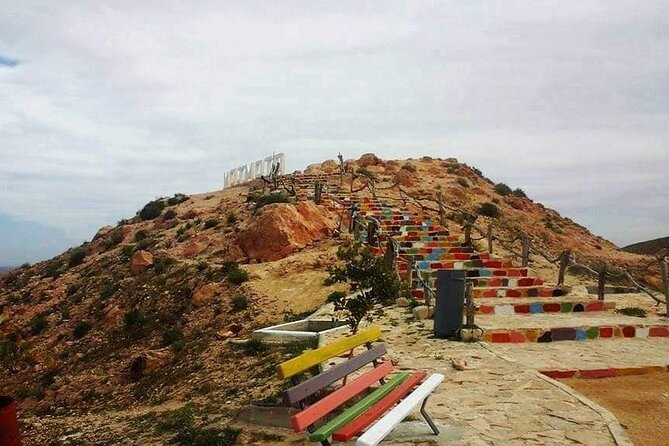
Chott el-Jerid is the largest salt lake, or sebkha, in Tunisia and the largest of its kind in the Maghreb. It covers about 5,000 square kilometers.
The 30-minute stop is about openness and light. The salt plain can appear white, pink, or reflective depending on conditions. Mirages are also associated with the area, so the view may seem to shimmer or stretch toward the horizon.
Do not expect a conventional lake with water lapping at a shore. This is a broad salt depression, and the experience depends heavily on weather and light. The stop can feel stark rather than busy, which is exactly its appeal.
Because the route requires good weather, conditions may affect the order or availability of outdoor stops. The operator says a weather cancellation brings either another date or a full refund.
Douz: the Sahara at sunset
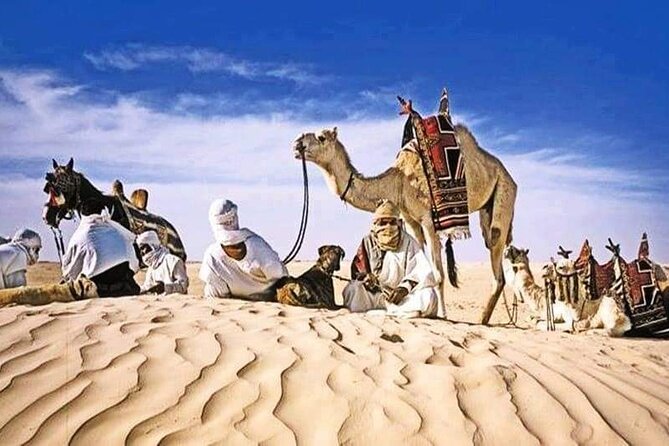
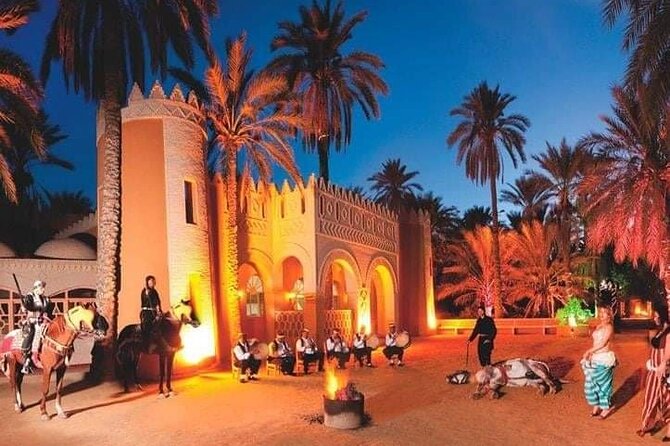
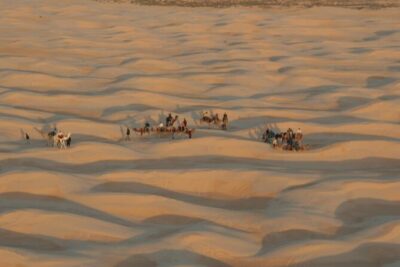
Douz is known as the gateway to the Sahara, and it is where the route shifts from salt plain to sand. You have about two hours here, with time to see the dunes and watch the desert sunset.
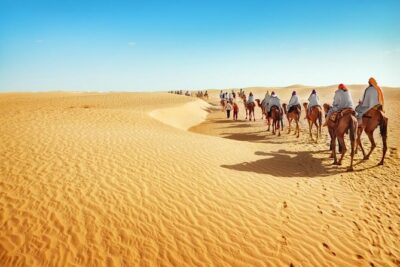
The desert activities are optional and cost extra. A quad ride is 30 euros per person, and a camel ride is 20 euros per person. These fees are not included in the tour price, so budget for them if you want the classic Sahara experience.
You can also choose to enjoy the setting without paying for an activity. The sunset itself is the central reason to stop. After a long day in the vehicle, the open dunes offer a chance to stretch your legs and see the desert at its most dramatic.
Bring a way to protect your phone and camera from sand. One person described the trip as early mornings and sand everywhere, which is a fair warning rather than a complaint. Wear practical shoes and avoid packing loose items in easily opened bags.
Dinner and breakfast are included during the two nights. The hotel standard was described as good, clean, and comfortable, though the specific properties are not named in the information provided.
Day three: Matmata puts people at the center
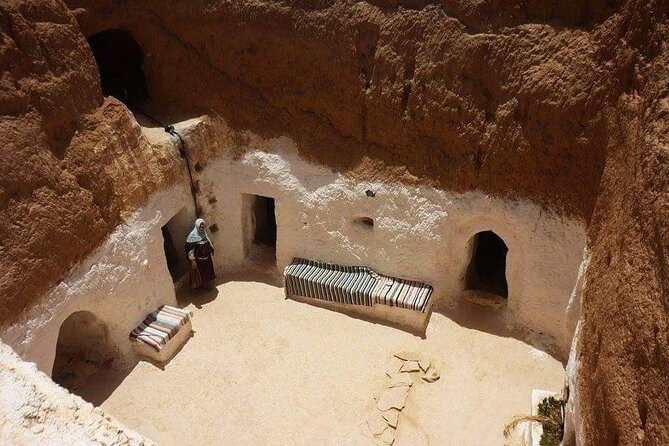
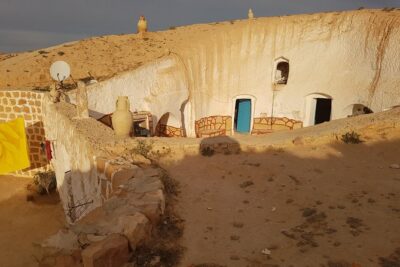
Matmata offers one of the most meaningful stops on the route. The town is known for troglodyte homes built around sunken courtyards. Rooms open into these underground pits, which provide shelter in the dry climate.
You have about 45 minutes to see the homes. The architecture is unusual, but the human side matters more. A visit can include contact with a Berber family living in a traditional troglodyte house, where visitors have been welcomed with tea, fresh bread, and honey from the family farm.
You may also see farm animals and learn about daily life in the area. This kind of encounter gives the underground homes a purpose beyond their appearance. They are not just film locations or curious buildings. They are part of a living tradition.
The schedule is short, so remain aware of the time and follow your guide’s lead. If this is the stop you most want to experience, say so at the start of the day.
El Jem closes with Roman scale
The final major stop is the Amphitheatre of El Jem, one of Tunisia’s most impressive ancient monuments. Built entirely from cut stone in a central Tunisian plain, it was designed for public spectacles and could hold an estimated 35,000 people.
Its long axis measures about 148 meters and its short axis about 122 meters. Unlike many Roman amphitheaters, it is neither carved into a hill nor built against one. It follows the Colosseum’s general model while remaining a distinct North African structure.
The visit lasts about 45 minutes. That is enough to walk through the main areas and understand the building’s scale, though you may wish for more time if you enjoy ancient architecture.
El Jem is a strong ending because it changes the subject once again. The tour begins with Islamic architecture, moves through oasis agriculture and desert geology, then finishes with Roman engineering. Few short routes in Tunisia offer such a wide range of places.
Guides, vehicles, and the pace of the trip
The quality of the guide and driver matters greatly here. You spend long hours on the road, and the trip works best when the explanations are useful, the driving is steady, and the team watches the clock without making you feel rushed.
Ahmed has been praised for giving the right amount of history and facts. Chaouki has been described as an experienced guide who encourages an early start and knows the route well. Yahya and drivers Hamsa and Usama have also been praised for professionalism, courtesy, flexibility, and safe driving.
These names may not be your assigned team, but they show the level of service the operator aims to provide. The vehicle is air-conditioned, a major comfort during long transfers through southern Tunisia.
This is a private tour for your group only. That gives you more control than a standard group departure, but it does not erase the distances. Expect full days, early mornings, and a lot of time seated between stops.
Who should pay $638.80 for this experience?
I think the price can be fair if you value convenience and range. Entrance fees, meals, the carriage ride, air-conditioned transport, and included 4×4 excursions remove several separate costs. You also avoid the work of arranging desert transport, mountain-oasis visits, hotels, and the long return route yourself.
The value is strongest for couples, families, or small groups sharing a private vehicle. It is less compelling if your main goal is a quiet stay in Tozeur or Douz, since you pay for a broad circuit rather than a single base.
The tour is a good match for you if:
- You have only three days for southern Tunisia.
- You want both cultural sites and desert scenery.
- You prefer a private vehicle to a large group coach.
- You are comfortable with 7 a.m. starts and long driving days.
- You want the option of camel riding or quad biking.
- You enjoy seeing famous sites but also want contact with local life in Matmata.
It may not suit you if you need a relaxed schedule, dislike sand, or want extensive time at each archaeological site.
Booking details worth remembering
Pickup is offered, and the listed start time is 7 a.m. Confirmation is provided at booking. Most people can participate, service animals are allowed, and the tour is near public transportation.
Free cancellation is available up to 24 hours before the start time. Cancellations made inside that window are not refunded, and changes are not accepted. The operator also requires suitable weather and a minimum number of participants, with another date or a full refund offered if the experience is canceled for either reason.
Should you book this southern Tunisia tour?
Book it if you want Tunisia’s highlights in concentrated form and you accept the pace. The strongest parts are the private transport, the range of scenery, the included 4×4 excursions, and the chance to see Matmata as a living community rather than only a famous location.
I would book this for a first visit to southern Tunisia, especially if you want Kairouan, Tozeur, the mountain oases, Douz, Matmata, and El Jem without arranging a complicated route. I would skip it only if you want slow mornings and long stays in one place.
Ask about the assigned guide, confirm the hotel names, and decide in advance if you want the 30-euro quad ride or 20-euro camel ride. With those choices settled, this is a lively, demanding, and unusually varied introduction to Tunisia’s south.
FAQ
How long is the tour?
The experience lasts three days and two nights.
Where does the tour begin?
The tour is based in Tunis and offers pickup. The listed start time is 7 a.m.
Is this a private tour?
Yes. Only your group participates in the activity.
Is transportation included?
Yes. An air-conditioned vehicle is included, along with 4×4 excursions to the Great Sand Dunes of Ong Jemel, Chebika, and Tamaghza.
Are meals included?
Two breakfasts and two dinners are included.
Are the camel ride and quad ride included?
No. The quad ride costs 30 euros per person, and the camel ride costs 20 euros per person.
Does the tour include entrance fees?
Yes. Entrance fees to the sites and museums listed in the program are included.
Can most people participate?
Yes. The tour information says most travelers can participate. Service animals are also allowed.
What happens if the tour is canceled because of weather?
You will be offered a different date or a full refund. The same options apply if the minimum number of participants is not met.
More 3-Day Experiences in Tunis
- 3 Days South Tunisia Discovery Tour with luxury camp and Meals
★ 5.0 · 31 reviews - Private 3 Day Tour in Southern Tunisia or More
★ 5.0 · 17 reviews - The Best of Tunisia, 3 Days Guided Tour with Lunch
★ 5.0 · 7 reviews - 3-Day South of Tunisia Guided Tour from Tunis
★ 4.0 · 3 reviews
Newest from Tunis
- Private Arrival Transfer: Tunis Airport to Tunis Hotel★ 4.5 · 5 reviews
- Cap Bon Guided Day Tour from Tunis★ 5.0 · 2 reviews
- Tunis Group Tour: Carthage, Sidi Bou Said, Bardo museum & Medina★ 5.0 · 5 reviews
- Walking City Tour★ 4.5 · 7 reviews
- Dougga Guided Day Tour from Tunis★ 5.0 · 5 reviews
- Tunisia 7-Day tour★ 5.0 · 6 reviews
- Unveiling the Beauty of Sidi Bou Said and Carthage Private Tour★ 5.0 · 2 reviews
- Bardo Museum , Oudhna and the roman aqueduct★ 5.0 · 4 reviews
Sahara Desert Tours, compared.
2-Day Tunisian Sahara Tour with Food & Stay from Hammamet
Read our review →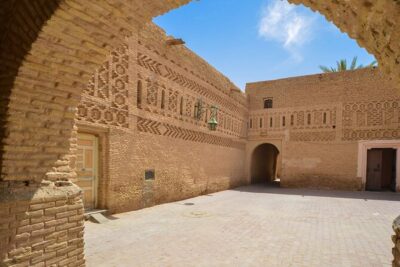
2-Day Tunisian Sahara Tour with Food & Stay from Sousse
Read our review →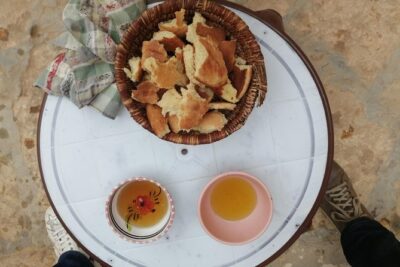
One night under the tent: Tataouine – Chenini – Ksar Ghilane – Matmata
Read our review →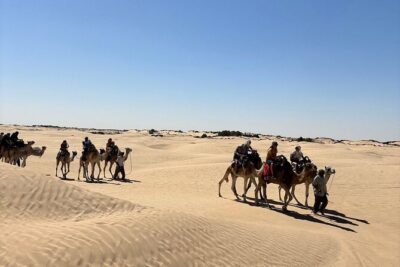
Door of the tunisian desert Ksar Ghilane and Matmata: Full one Day
Read our review →
Ksar Ghilane 1 day: The hot spring and the homestay
Read our review →
2-Day Tunisia Sahara Desert Camel Trek from Douz
Read our review →Browse the lists this tour appears in