
Reviewed · TUNIS TOURS
3-Day South of Tunisia Guided Tour from Tunis
Tunisia saves its biggest surprises for the south. This three-day desert circuit links Roman ruins, Berber homes, salt flats, palm oases, mountain waterfalls, and Kairouan in one tightly packed journey. I like the range: you move from the grand El Jem amphitheatre to the humble underground rooms of Matmata, then into the Sahara and its green oases.
I also like that meals, hotels, transport, and a guide are included, which removes much of the work from a complicated route. The main drawback is the price, $620.85 per person, especially since a direct booking with an agency in Tunis may cost about half as much. The three-day schedule also asks you to accept long road stretches and short visits at some stops.
In This Review
- Key points to know before booking
- Why this route works for a first visit to southern Tunisia
- El Jem: Roman grandeur before the desert
- Matmata: underground homes and Tatooine echoes
- Douz: the Sahara gateway
- Chott El Jerid: salt, mirages, and a short stop
- Tozeur: palm groves and a night in the oasis town
- Chebika: a mountain oasis above the desert
- Tamerza: waterfalls, cliffs, and a peaceful pause
- Kairouan: a final encounter with Islamic Tunisia
- What the $620.85 price really covers
- Food, transport, group size, and daily comfort
- Who should book this three-day circuit?
- Should you book the South of Tunisia Guided Tour?
- FAQ
- How long is the South of Tunisia guided tour?
- What is included in the tour price?
- Are drinks included?
- Is the El Jem Amphitheatre entrance ticket included?
- Can I add a camel ride or desert zoo visit?
- What is the cancellation policy?
Key points to know before booking
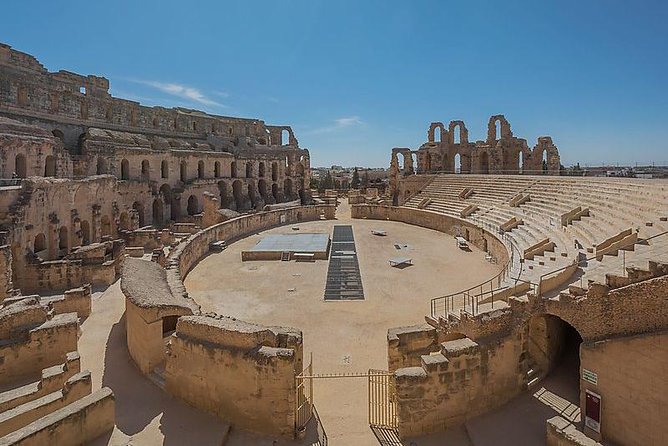
- El Jem opens the tour with a spectacular Roman amphitheatre, where you can walk through underground chambers and climb the seating levels.
- Matmata offers real troglodyte homes, including Hotel Sidi Driss, a Star Wars filming site.
- Tozeur gives you two very different experiences, a traditional caleche ride through the palm oasis and time to explore the town.
- Chebika and Tamerza bring the best natural scenery, with mountain trails, springs, waterfalls, cliffs, and palms.
- The price includes two nights, four lunches, two dinners, breakfasts, bottled water, and transport, but drinks, the El Jem entry fee, and a $3 departure tax cost extra.
- Optional upgrades add a camel ride or desert zoo visit, useful if you want more activity beyond sightseeing.
Why this route works for a first visit to southern Tunisia
Southern Tunisia is not difficult to visit, but it is spread out. El Jem, Matmata, Douz, Chott El Jerid, Tozeur, the mountain oases, and Kairouan do not make a tidy little loop that you can cover casually from Tunis.
This tour solves that problem with an air-conditioned minivan, hotel pickup and drop-off, and a Blue Badge guide. You get a single point of contact for the route, meals, and overnight stops. That matters in a region where changing transport several times can eat up much of your day.
The route also gives you a useful cross-section of Tunisia. You see Roman engineering, Berber building traditions, Islamic architecture, desert trade culture, salt-country scenery, and oasis farming. No single stop tells the whole story, but together they show how people have adapted to heat, distance, and scarce water for thousands of years.
The tradeoff is pace. This is not a slow desert retreat. It is a sightseeing sweep with several brief stops, so you should book it for variety rather than long hikes or extended time in one village.
Two or three more Tunis trips worth a look
- 3 Days South Tunisia Discovery Tour with luxury camp and Meals
★ 5.0 · 31 reviews - Private 3 Day Tour in Southern Tunisia or More
★ 5.0 · 17 reviews - The Tunisian South between Oasis and Mountain: 3 Days / 2 Nights Douz and Tozeur
★ 5.0 · 17 reviews
El Jem: Roman grandeur before the desert
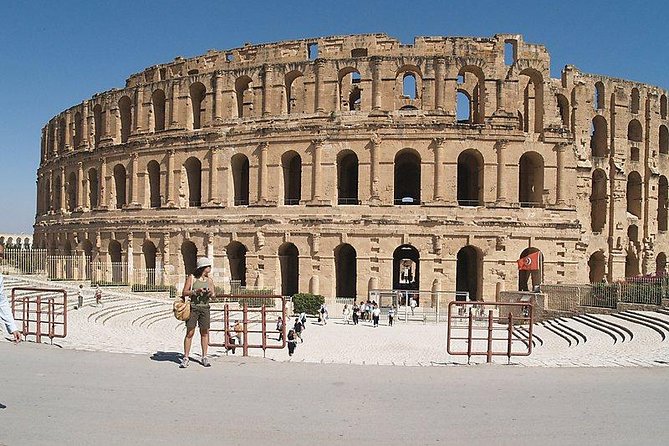
The first major stop is the El Jem Amphitheatre, a UNESCO World Heritage Site and one of North Africa’s great Roman monuments. Built in the third century, it once held up to 35,000 spectators, a remarkable capacity for a town far from Rome itself.
I like this visit because the building is not merely something to photograph from outside. You can walk through its corridors, inspect the underground chambers, and climb the seating levels. From above, the view reaches across the town and open plains.
Plan on about an hour here. That is enough to see the principal areas, but not enough for a slow archaeological study. The admission ticket is not included, so keep a little extra cash available. This is one of the clearest examples of how the tour packs several major sights into a short period.
The amphitheatre also sets up an interesting contrast. Its scale reflects the power and entertainment culture of the Roman Empire, while the later stops focus more on local homes, water, farming, and desert life.
Matmata: underground homes and Tatooine echoes
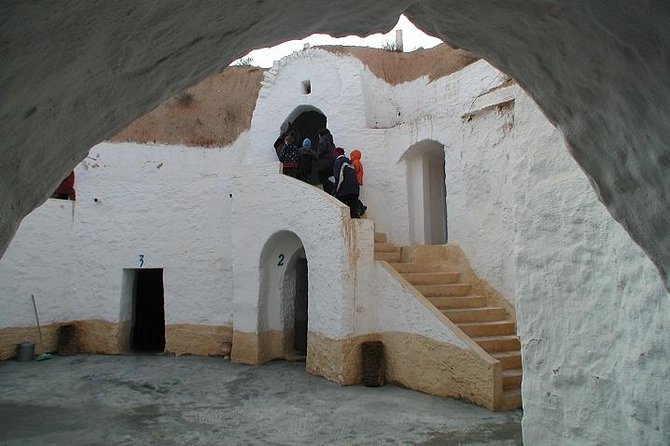
The road then leads to Matmata, famous for troglodyte homes carved into the earth. Berber communities used these underground dwellings to escape the desert heat. Their courtyards and rooms sit below ground, creating a form of architecture that is both practical and visually unusual.
You have about two hours here, which allows more breathing room than at El Jem. The cool interiors offer a welcome change from the open sun, and the visit helps you understand that these are not theatrical sets invented for film. They are homes shaped by local climate and custom.
Matmata is also closely linked to Star Wars. Hotel Sidi Driss served as Luke Skywalker’s home on Tatooine, making this an easy highlight for film fans. Even if you are not interested in the movies, the site is worthwhile because it connects popular culture with a real place and a real building tradition.
The practical point is to expect a cultural visit rather than a formal museum tour. The information provided does not promise a long lecture or a large exhibition. Your guide is important here, since the value comes from explaining how the homes work and why people built them this way.
Douz: the Sahara gateway
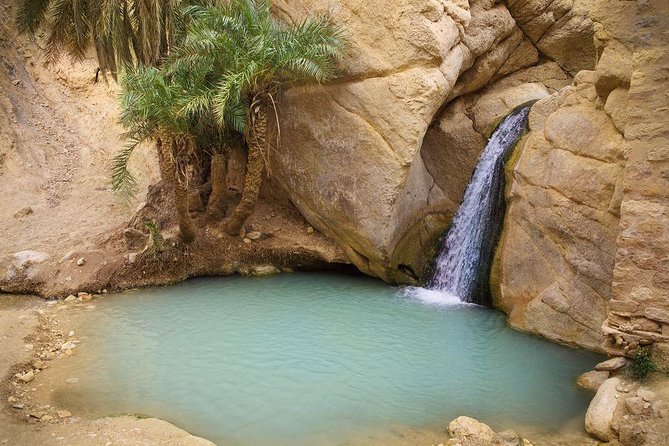
Douz is the traditional desert town often called the Gateway to the Sahara. The town is associated with sand dunes, camel caravans, and Bedouin culture. It also hosts the International Festival of the Sahara, which celebrates music, dance, and desert sports.
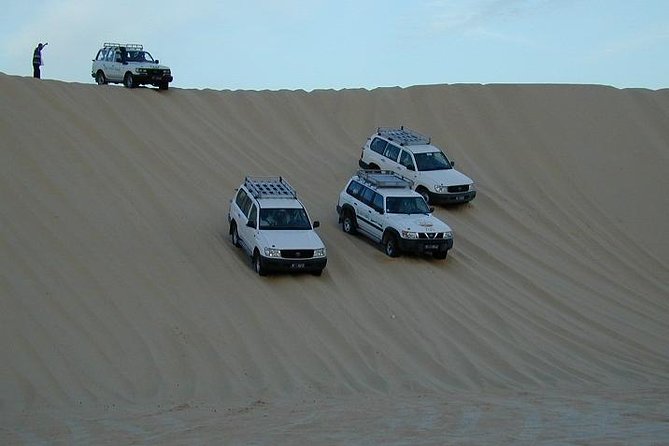
The schedule allows about two hours in Douz. That gives you time to get a sense of the town and consider an optional camel ride if you choose the upgrade. A camel outing can add the desert activity many people picture when they imagine southern Tunisia, but check exactly what is included in your selected package before booking.
The tour description also mentions a possible desert zoo upgrade. This is a useful choice for families or anyone who wants a structured attraction instead of a camel experience. The upgrade details and prices are not supplied, so confirm them in advance.
Douz is less about one monumental building and more about the transition into desert culture. After the Roman stonework and underground homes, the setting shifts toward open sand, caravan traditions, and a slower rhythm.
Further south, and a completely different kind of day out:
- Private Tour to Kairouan, El Jem & Monastir from Tunis_hammamet
★ 5.0 · 301 reviews - Private tour: Medina,Carthage ,Sidi Bou Said, Bardo Museum+lunch
★ 5.0 · 230 reviews - Carthage, Bardo Museum, Sidi Bou Said and Medina Private Day Tour
★ 4.5 · 153 reviews - Private Excursion to Testour, Dougga and Bulla Regia from Tunis.
★ 5.0 · 100 reviews
Chott El Jerid: salt, mirages, and a short stop
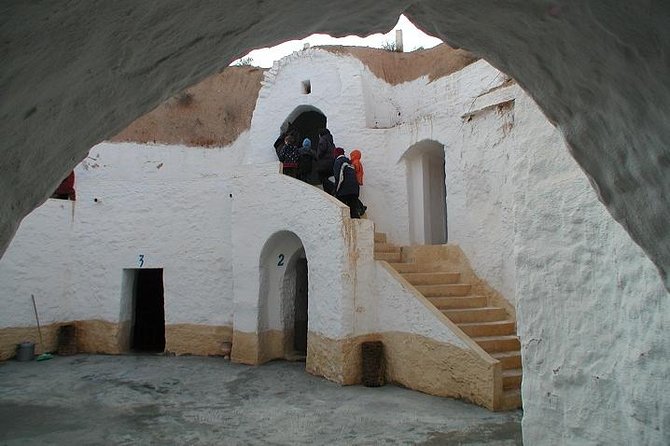
Chott El Jerid is a huge salt lake covering roughly 5,000 square kilometers. Its crusted surface can show pale salt formations, shifting colors, and mirages that make the horizon look unstable.
You get about 20 minutes here. That is enough for a photo stop and a quick look, but not enough to explore the area on foot or wait for changing light. The scenery can be especially striking at sunrise or sunset, yet the tour schedule does not guarantee that timing.
I would treat Chott El Jerid as a memorable pause between destinations rather than a full excursion. Bring your camera, water, and sun protection. Bottled water is included, but drinks beyond that are not.
Tozeur: palm groves and a night in the oasis town
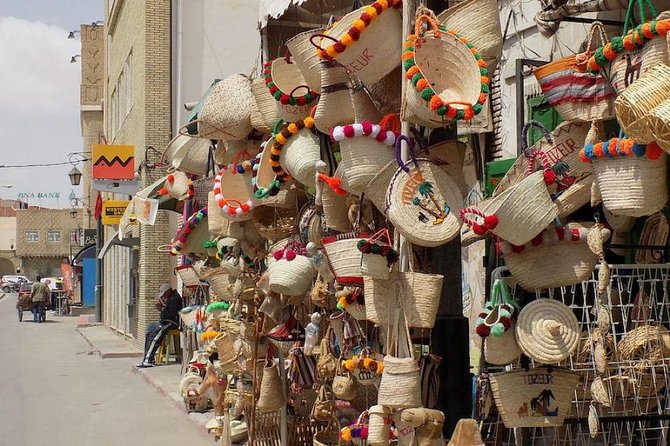
Tozeur is the base for the second night and one of the most pleasant changes of pace on the route. It is known for its palm groves and sun-dried brick architecture, with decorative patterns that give the town a strong local identity.
The schedule gives you about two hours in Tozeur. One of the most appealing features is a traditional caleche ride around the oasis. Seeing the palms from a horse-drawn carriage offers a quieter experience after the road travel, and it helps show why an oasis is more than a patch of trees. It is a working source of food, shade, and settlement.
You also have free time to explore at your own pace. That matters because guided tours can sometimes feel overly managed. Here, you have at least a little room to wander, take photographs, or browse the older parts of town.
Accommodation is included for two nights, though the supplied information does not name the hotels or describe their room standards. Food and lodging received especially strong praise, so the package appears designed to keep the basics comfortable. Still, ask for hotel names if room quality is important to you.
Chebika: a mountain oasis above the desert
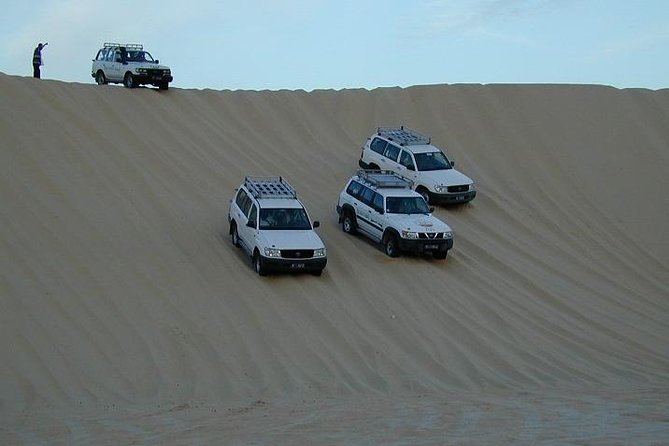
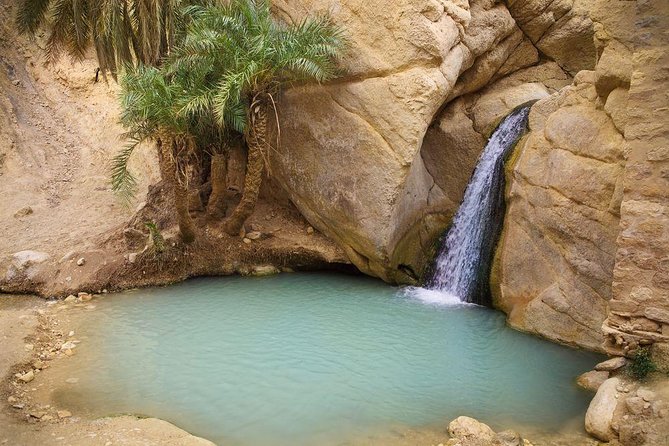
Day three begins with Chebika, known as the Mountain of Happiness. It lies near the Djebel el Negueb mountains and combines rocky cliffs, natural springs, palm groves, and the ruins of an older Berber village.
This is one of the tour’s best stops for scenery. The sharp contrast between dry rock and green palms gives Chebika its appeal. You can follow short scenic paths, look for waterfalls and rock formations, and explore the remains of the old village.
The visit lasts about 45 minutes. That is enough to see the main features, but anyone who enjoys walking may want more time. The footing around an oasis and mountain ruins may be uneven, so sturdy shoes are sensible. The entry ticket is included here.
Chebika rewards attention to water. The springs explain why people settled in this harsh setting, and the palms show how a small supply of water can change the character of an entire place.
Tamerza: waterfalls, cliffs, and a peaceful pause
Tamerza follows with a shorter 30-minute visit. This oasis town is known for waterfalls, palm groves, canyons, and rocky cliffs.
The stop is brief, so you should not expect a long hike. Instead, use the time to take in the natural setting and walk where the schedule allows. Tamerza complements Chebika well: Chebika offers ruins and spring-fed greenery, while Tamerza brings more focus to waterfalls and canyon scenery.
These mountain oases are among the tour’s most rewarding natural sights, but the limited timing is worth noting. If your main goal is hiking, photography, or quiet time beside the water, a dedicated oasis excursion would give you more freedom.
Kairouan: a final encounter with Islamic Tunisia
The last stop is Kairouan, one of Tunisia’s oldest and holiest cities. Its Great Mosque is a major work of early Islamic architecture and a UNESCO World Heritage site. The city is also known for its medina and traditional crafts.
You have about 30 minutes, which is enough for a quick introduction but not a full visit to every part of the mosque and old city. This is the tour’s most obvious time-pressure point. Kairouan deserves more than a half-hour if you want to study its architecture, shop for crafts, or walk the medina without watching the clock.
Still, the stop has value. After Roman ruins, Berber homes, and desert oases, Kairouan adds a major religious and architectural chapter. It also breaks up the return journey to Tunis with a final cultural visit.
If Kairouan is a top priority, ask how much time the guide expects to allow on your date. The stated schedule is short, and actual road conditions can affect the day.
What the $620.85 price really covers
At $620.85 per person, this is a costly way to see southern Tunisia. The price includes two nights of accommodation, breakfasts, four lunches, two dinners, bottled water, fuel charges, entrance and facility fees, an air-conditioned minivan, a Blue Badge guide, and pickup and drop-off.
That bundle has real value. You are paying for a long route with several overnight logistics, not simply a day trip with a few admission tickets. Food and hotels were praised as high quality, and you avoid arranging separate buses, taxis, meals, and desert transfers.
But the price deserves careful comparison. Direct booking with an agency in Tunis may cost about half as much, according to the feedback available for this experience. That does not automatically make this package poor value, since service standards and inclusions may differ, but it does mean you should compare like for like.
Ask whether the alternative includes the same hotels, four lunches, two dinners, guide service, entry fees, and transport. Also add the required $3 per-person departure tax and budget separately for drinks. El Jem admission is not included either.
Food, transport, group size, and daily comfort
The tour starts at 8:00 a.m. and uses an air-conditioned minivan. For this route, that transport choice is important. Southern Tunisia involves long stretches between sights, and air conditioning makes the road time easier during hot weather.
The operator information gives mixed group-size details. It says a booking can include up to 15 people, while the activity information also lists a maximum of four participants. Confirm the actual group size before you pay, since a small group can make the long drives and short stops feel far more flexible.
Meals include breakfast, four lunches, and two dinners over the three days. Drinks are not included, so carry some cash for beverages. The package is especially convenient for first-time visitors who do not want to make daily decisions about where to eat.
The tour requires at least two people per booking. A child rate is available only when the child shares with two paying adults. Most people can take part, but the information does not provide detailed mobility guidance for the ruins, mountain paths, or oasis areas.
Who should book this three-day circuit?
I would recommend it to a first-time visitor who wants to see many parts of southern Tunisia without arranging a private route. It suits you if variety matters more than lingering, and if you want Roman ruins, desert towns, film locations, salt flats, oases, and Islamic architecture in one trip.
It is also a good fit if you value having meals and accommodation bundled together. The guide and minivan reduce the planning burden, and the optional camel ride or zoo visit lets you add an activity that matches your interests.
I would hesitate if you are highly price-conscious, since a local Tunis agency may offer a similar route for much less. I would also hesitate if you prefer slow travel. The 20-minute Chott El Jerid stop, 30-minute Tamerza visit, and 30-minute Kairouan visit leave little room for spontaneous exploration.
Free cancellation is available up to 24 hours before the 8:00 a.m. start time. Changes or cancellations inside that window are not refunded, and the tour may be canceled if its minimum number is not met.
Should you book the South of Tunisia Guided Tour?
Book it if you want a well-organized first look at Tunisia’s south and accept the premium price for convenience. The strongest parts are the range of sights, the included meals and hotels, the friendly care reported from the guide service, and the chance to see places that are awkward to connect independently.
Before confirming, compare the cost with a direct Tunis agency, verify the final group size, ask for the hotel names, and check the price of the camel or zoo upgrade. If the answers are clear and you value a ready-made route, this is a rewarding three-day overview. If you want more time at Kairouan, the mountain oases, or the salt lake, arrange a slower private itinerary instead.
FAQ
How long is the South of Tunisia guided tour?
The experience lasts approximately three days and begins at 8:00 a.m. It ends back at the meeting point after the final route.
What is included in the tour price?
The price includes two nights of accommodation, breakfast, four lunches, two dinners, bottled water, a Blue Badge guide, air-conditioned minivan transport, fuel charges, landing and facility fees, and hotel pickup and drop-off.
Are drinks included?
No. Drinks are not included and must be paid for separately.
Is the El Jem Amphitheatre entrance ticket included?
No. Admission to the El Jem Amphitheatre is not included in the listed price.
Can I add a camel ride or desert zoo visit?
Yes. The experience offers upgrades for a camel ride or a visit to a desert zoo. The supplied details do not state the upgrade prices.
What is the cancellation policy?
You can cancel up to 24 hours before the experience begins for a full refund. Cancellations or changes made less than 24 hours before the start time are not refunded or accepted.
Newest from Tunis
- Private Arrival Transfer: Tunis Airport to Tunis Hotel★ 4.5 · 5 reviews
- Cap Bon Guided Day Tour from Tunis★ 5.0 · 2 reviews
- Walking City Tour★ 4.5 · 7 reviews
- Dougga Guided Day Tour from Tunis★ 5.0 · 5 reviews
- Tunis Group Tour: Carthage, Sidi Bou Said, Bardo museum & Medina★ 5.0 · 5 reviews
- Tunisia 7-Day tour★ 5.0 · 6 reviews
- Unveiling the Beauty of Sidi Bou Said and Carthage Private Tour★ 5.0 · 2 reviews
- Bardo Museum , Oudhna and the roman aqueduct★ 5.0 · 4 reviews
Tunis Tours, compared.
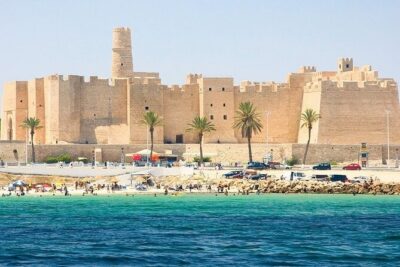
Private Tour to Kairouan, El Jem & Monastir from Tunis_hammamet
Read our review →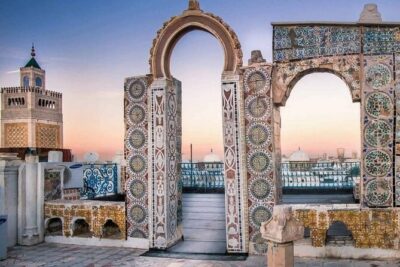
Private tour: Medina,Carthage ,Sidi Bou Said, Bardo Museum+lunch
Read our review →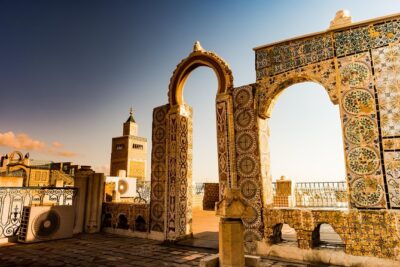
Carthage, Bardo Museum, Sidi Bou Said and Medina Private Day Tour
Read our review →
Private Excursion to Testour, Dougga and Bulla Regia from Tunis.
Read our review →
Guided Bike Tour of Carthage Archeological Site in Tunisia
Read our review →
Guided tour in the UNESCO world heritage Medina of Tunis
Read our review →
Group Guided Bike Tour of Carthage Archeological Site in Tunisia
Read our review →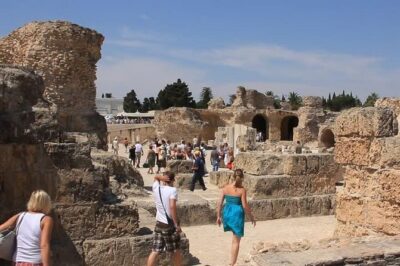
Archaelogical Site Of Carthage + Picturesque Village Of Sidi Bou Said
Read our review →Browse the lists this tour appears in