
Reviewed · CARTHAGE TOURS
Guided Bike Tour of Carthage Archeological Site in Tunisia
Carthage rewards a slower look. I like the private guide and the chance to move between scattered ruins by bicycle, especially with an electric-bike upgrade for hills and heat. I also like that the route gives real time to the Baths of Antoninus, rather than treating them as a quick photo stop. The main drawback is that you need moderate fitness, and the tour does not include hotel pickup.
This three-hour ride costs $91.89 per person. That is not the cheapest way to see Carthage, but the price includes a bicycle, helmet, safety gear, guide, taxes, and admission to the listed sites. Guide Kareem is praised for giving each place room to breathe, while Jibrane is noted for making the ancient city feel personal and easy to follow. Chedi has also led the tour in French.
In This Review
- Key points to know before you book
- Why a bicycle works so well in Carthage
- Starting at Carthage with a private guide
- Tophet: an introduction to Punic Carthage
- Punic Ports and the Mediterranean setting
- The Baths of Antoninus deserve the longest pause
- The Roman Theatre in a short visit
- Byrsa Hill and Saint Louis Cathedral
- What the guide adds to the ride
- Is $91.89 good value?
- Timing, fitness, and practical details
- Who should book this Carthage bike tour?
- Should you book it?
- FAQ
- How long does the guided Carthage bike tour last?
- What is the price of the tour?
- Is this a private tour?
- Is an electric bicycle included?
- What equipment is provided?
- Is hotel pickup included?
- Do I need to bring a passport?
- What happens if the weather is poor?
Key points to know before you book
- You see several widely scattered Carthage sites by bike, saving time and effort between the ruins.
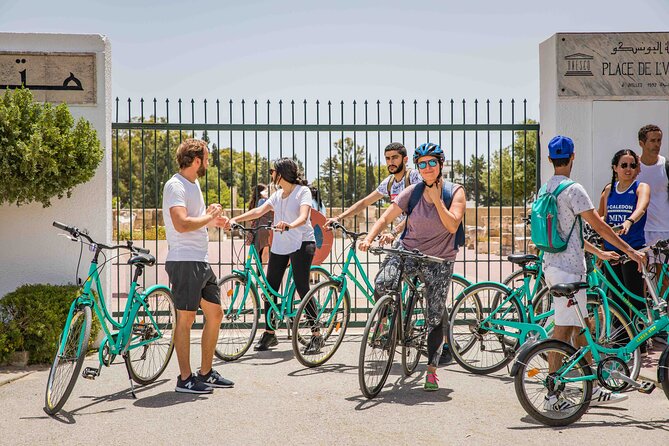
- An electric bike can make a major difference, especially on Byrsa Hill and in warm weather.
- The Baths of Antoninus receive about an hour, making them the main stop of the tour.
- This is a private experience, so only your own group participates and the guide can shape the pace.
- The Carthage Museum on Byrsa Hill is closed, and Saint Louis Cathedral is viewed from outside.
- A current passport is required, and poor weather can lead to a new date or full refund.
Why a bicycle works so well in Carthage
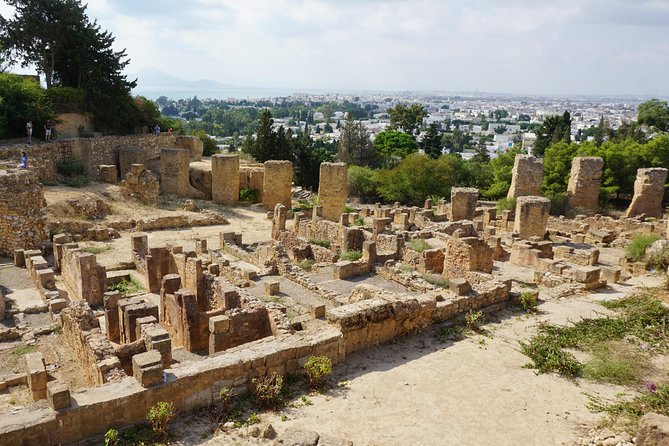
Ancient Carthage is not one compact ruin. Its archaeological remains are spread across the modern city and coastline. That makes a walking tour harder to manage, especially when the day is hot and several major sites are separated by roads and neighborhoods.
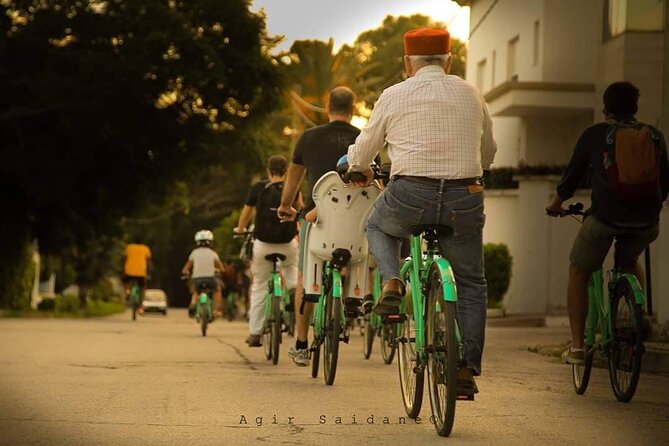
A bicycle gives you a useful middle ground. You can cover more ground than on foot while still seeing the streets and surroundings at a human pace. You are not sealed inside a vehicle, and the ride itself becomes part of the visit.
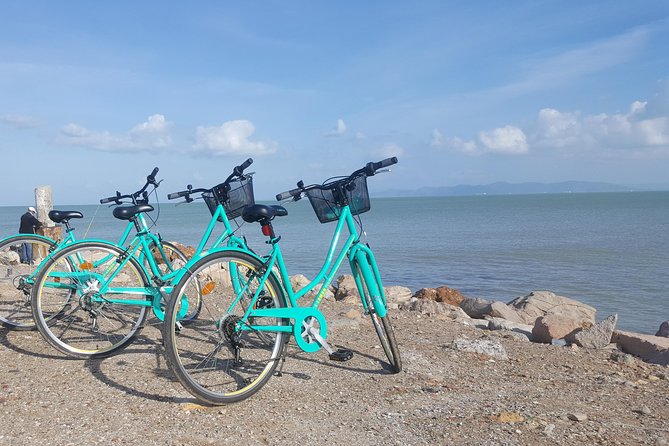
I especially like the electric-bike option. The tour includes a standard bicycle, but an electric bike can help if you are not used to hills, heat, or three hours of steady movement. One highly praised feature is the way the bikes make it easier to reach more of Carthage without arriving at every ruin already tired.
You still need moderate physical fitness. This is not a bus tour with occasional short walks. You will pedal, stop, stand, walk around archaeological remains, and handle roads shared with cars and pedestrians. A guide can help you understand how to move through local traffic, but you should be comfortable riding a bicycle before booking.
More Carthage Tours in Tunis
- Private tour: Medina,Carthage ,Sidi Bou Said, Bardo Museum+lunch
★ 5.0 · 230 reviews - Carthage, Bardo Museum, Sidi Bou Said and Medina Private Day Tour
★ 4.5 · 153 reviews - Group Guided Bike Tour of Carthage Archeological Site in Tunisia
★ 5.0 · 57 reviews
Starting at Carthage with a private guide
The meeting point is 9 Rue Hannibal at the Carthage archaeological site. The tour returns to this same point at the end, and it is near public transportation. Hotel pickup and drop-off are not included, so you need to arrange your own way to the starting point.
The private format is one of the strongest reasons to consider this outing. Only your group takes part, which gives you more room to ask questions and request a slower pace at a site that interests you. Guide Kareem is praised for offering plenty of information and time at each stop instead of hurrying people from ruin to ruin.
That matters at Carthage. The stones do not explain themselves, and several sites can look like low walls until somebody points out what you are seeing. A good guide connects the remains to the city’s Punic beginnings, its Roman rebuilding, and the later changes on Byrsa Hill.
The tour has received a 4.9 rating from 88 reviews, with 98 percent recommending it. Ratings are never a guarantee, but the pattern here is useful: the guide’s explanations and the electric bicycles receive more praise than the simple act of cycling itself. In other words, you are paying for interpretation and access to several sites, not just a rented bike.
Tophet: an introduction to Punic Carthage
The first stop is Tophet de Carthage, with about 30 minutes set aside and admission included. This sanctuary is tied to Punic culture and gives the guide a chance to explain the beliefs and customs of Carthage before the Roman period.
This is a useful opening because many visitors know Carthage mainly through its wars with Rome. Tophet shifts attention toward the city’s own traditions and religious life. Your guide can help you make sense of a site where the physical remains may be less immediately dramatic than the story attached to them.
Do not expect a large intact building. Archaeological sites often require patience, and Tophet is best understood through explanation rather than grand architecture. This is where the private format helps. If the subject raises questions, you can ask them without worrying about holding up a large group.
The stop is short, but that is probably a good balance. It introduces Punic Carthage without using too much of the morning before the larger Roman remains ahead.
Punic Ports and the Mediterranean setting
Next comes the Punic Ports and Museum, with about 30 minutes and admission included. The port area is important because Carthage was a major Mediterranean power, and its location shaped much of its political and commercial life.
The value of this stop is partly visual. You are not only looking at old masonry. You are seeing the setting that made Carthage a major seafaring city. The guide can explain how the ports fit into the city’s wider role and why control of the Mediterranean mattered so much.
The museum is included in this stop, but the information provided does not specify how much time is spent indoors or which displays are open on the day. If the museum is a priority, ask your guide at the start how the 30-minute stop will be divided.
The tour description also refers to Carthage’s sanctuary, aqueducts, and other remains. The timed route specifically lists Tophet, the Punic Ports, the Baths of Antoninus, the Roman Theatre, and Byrsa Hill. If you particularly want to see the aqueducts, ask whether they are part of your exact cycling route rather than assuming they receive a separate stop.
Further south, and a completely different kind of day out:
- Private Tour to Kairouan, El Jem & Monastir from Tunis_hammamet
★ 5.0 · 301 reviews - Private Excursion to Testour, Dougga and Bulla Regia from Tunis.
★ 5.0 · 100 reviews - Guided tour in the UNESCO world heritage Medina of Tunis
★ 5.0 · 68 reviews - Archaelogical Site Of Carthage + Picturesque Village Of Sidi Bou Said
★ 5.0 · 56 reviews
The Baths of Antoninus deserve the longest pause
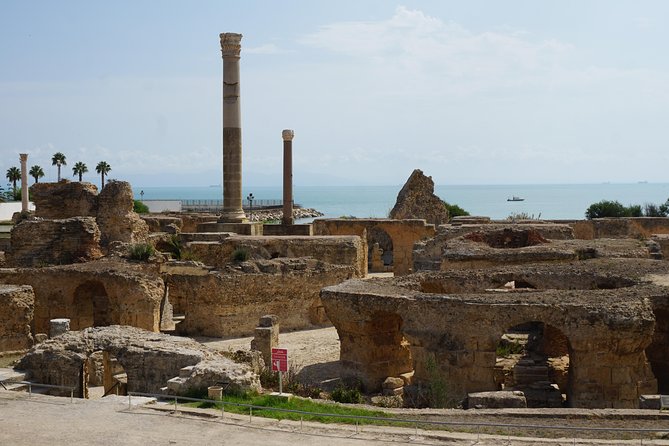
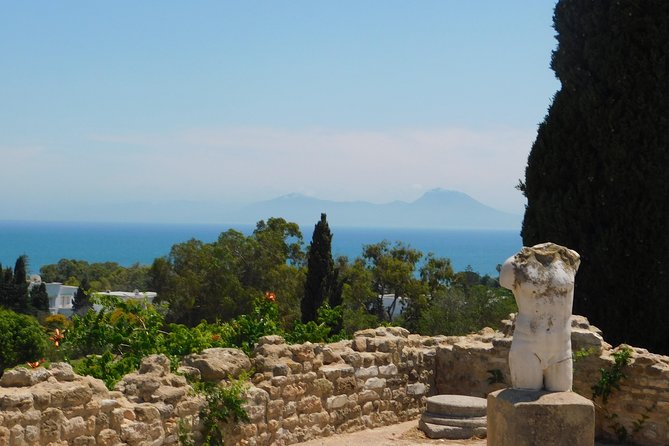
The Baths of Antoninus receive about one hour, making them the centerpiece of the ride. These Roman baths once formed one of the largest bath complexes in the Roman Empire, and their location beside the sea adds to the appeal.
You should expect ruins rather than a complete working bathhouse. The surviving remains show the scale and layout of the complex, while the guide supplies the missing context: how the baths were organized, what their different spaces were used for, and how Roman public life depended on places like this.
I like the generous timing here. A rushed visit would reduce the baths to a collection of columns and foundations. With an hour, you have time to walk through the site, study the views toward the sea, and ask how the complex functioned.
The seaside setting also gives this stop a different feel from Tophet and the ports. You move from Punic religious culture to maritime power, then into the public architecture of Roman Carthage. That sequence helps you see the city as a place that changed over time, not a single civilization frozen in place.
The heat is worth considering. Cycling and walking around exposed ruins can be tiring, especially in warm weather. The electric bike will not help once you are on foot inside the baths, but it can preserve some energy for this important stop.
The Roman Theatre in a short visit
The Roman Theatre of Carthage is scheduled for about 20 minutes. The stop is brief, but it adds another piece to the Roman city: public entertainment and performance.
A theatre is easier to understand when you imagine it as a social space rather than only an architectural ruin. Your guide can point out the shape and purpose of the structure and explain how it fitted into Roman civic life.
Twenty minutes should be enough for an introduction and a look around, but not for a long, detailed exploration. If theatre architecture is a special interest, tell the guide. The private tour gives you a better chance of adjusting the emphasis than a fixed large-group excursion would.
This stop also shows the trade-off built into a three-hour tour. You get a broad view of Carthage, but no single site, apart from the baths, can receive unlimited attention.
Byrsa Hill and Saint Louis Cathedral
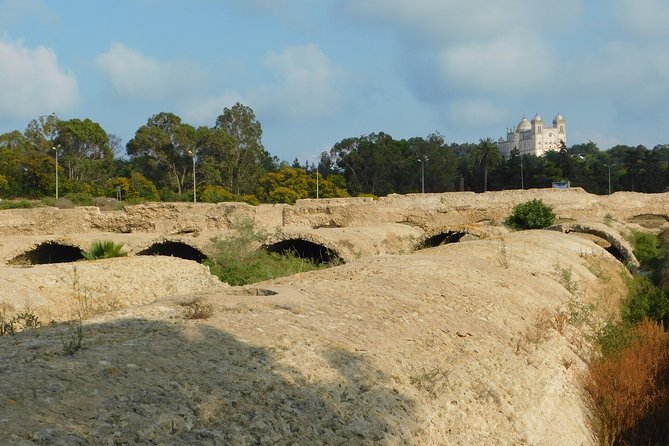
The final listed stop takes you to Byrsa Hill, where you spend about 15 minutes. The hill is linked to the Punic city and later Roman changes, so it provides an important closing point for the historical story.
The stop includes a look at Saint Louis Cathedral from the outside. You do not enter the cathedral. The Carthage Museum on the hill is also closed, so you should not book this bike tour expecting an indoor museum visit there.
The hill may be the point where the electric-bike upgrade proves most useful. The tour information specifically notes the value of electric bicycles for hills, heat, and traffic. If you are uncertain about your stamina, I would treat the upgrade as a practical tool rather than a luxury.
Fifteen minutes is enough for an exterior view and a guide’s explanation, but it is a short ending. You will not have time for an extended cathedral visit or a museum session. The reward is the hill’s connection to several periods of Carthage’s past and the chance to finish with a broader view of how the site developed.
What the guide adds to the ride
The strongest part of this experience is the human explanation. Carthage’s remains are spread out, and the meaning of a low wall or partial foundation is not always obvious. A guide can give each site a place in the larger story.
Kareem is praised for being well informed and for allowing enough time at each stop. Jibrane is credited with explaining the city and archaeological sites in a way that felt personal and involving. Chedi has led a well-regarded French-language tour, with complete explanations.
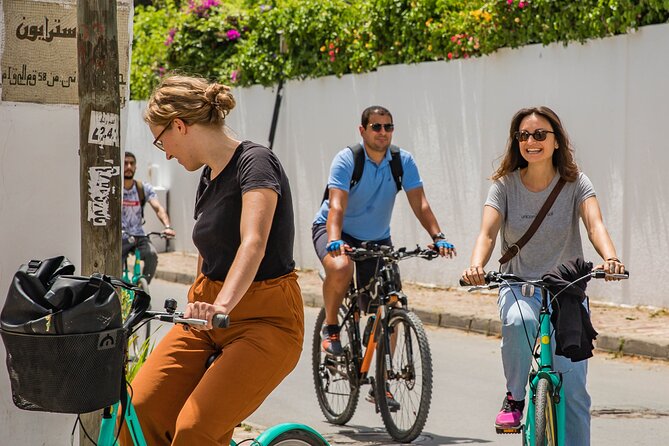
The cycling also creates a small connection with present-day Tunisian life. You ride through a modern neighborhood and learn how bicycles, cars, and pedestrians share the roads. That is a useful local detail that a vehicle-based tour would miss.
You should still make your interests clear. If you care most about Punic religion, Roman engineering, port history, or the baths, say so early. A private tour is most valuable when you use the guide’s flexibility.
Is $91.89 good value?
At $91.89 per person, this is a mid-priced private outing rather than a budget sightseeing loop. The cost includes the professional guide, bicycle, helmet, safety equipment, admission fees, taxes, and handling charges.
The price makes more sense if you value interpretation and convenience between sites. You are covering several parts of Carthage in three hours, and a private guide can keep the visit focused on your group. The electric-bike upgrade may cost extra, but it could be worthwhile if hills or heat are a concern.
The value is weaker if you mainly want a long, unhurried visit to one archaeological area or a museum-focused day. The Roman Theatre and Byrsa Hill receive short visits, and the Carthage Museum on the hill is closed. You are buying a connected overview, not an exhaustive archaeological study.
Group discounts may improve the cost for larger parties. Since this is a private activity, compare the per-person total for your group before booking. For a small group that wants a guide without joining strangers, the price may feel more reasonable.
Timing, fitness, and practical details
The tour lasts about three hours and ends back at 9 Rue Hannibal. It is near public transportation, but you must get yourself to the meeting point because hotel transfers are not included.
Bring a current valid passport. This is required on the day of the experience, so do not leave it at your hotel even if you normally carry only a photocopy while sightseeing.
Wear clothes suitable for cycling and walking among ruins. The supplied information does not specify clothing or water arrangements, so plan for a physically active morning and warm conditions. A helmet and bicycle are provided, and the experience requires moderate fitness.
The tour depends on good weather. If poor weather causes cancellation, you will be offered another date or a full refund. You can cancel for a full refund up to 24 hours before the local start time, but cancellations or changes made later are not refunded or accepted.
Who should book this Carthage bike tour?
I would choose this tour if you want a guide-led introduction to several major Carthage sites and like the idea of moving outdoors rather than sitting in a vehicle. It suits couples, families with capable cyclists, and small private groups that want to ask questions and set the pace.
It is also a good choice if you are concerned about heat or hills. The electric-bike upgrade can reduce the strain of getting between the archaeological areas, leaving you more energy for the Baths of Antoninus and the other stops.
I would think twice if you dislike cycling in traffic, have limited mobility, or want a full museum visit. The route requires active participation, the cathedral is viewed only from outside, and the museum on Byrsa Hill is closed. You should also confirm the exact route if the aqueducts are high on your wish list.
Should you book it?
Book this experience if you want personal guiding, broad site coverage, and an active way to see Carthage. The 4.9 rating, 98 percent recommendation rate, and repeated praise for guides Kareem and Jibrane point to a consistently strong teaching experience.
The electric bike is the smart upgrade for hot weather or hills. Just arrive with your passport, allow time to reach the meeting point, and accept that three hours gives you a well-shaped overview rather than a complete study of every ruin. For most first visits to Carthage, that is a fair trade.
FAQ
How long does the guided Carthage bike tour last?
The tour lasts approximately three hours.
What is the price of the tour?
The listed price is $91.89 per person. Group discounts are available.
Is this a private tour?
Yes. Only your group participates in the activity.
Is an electric bicycle included?
A bicycle is included, and you can upgrade to an electric bicycle. The electric option is intended to make hills, heat, and longer riding easier.
What equipment is provided?
The tour provides a bicycle, helmet, and necessary safety equipment.
Is hotel pickup included?
No. Hotel pickup and drop-off are not included. The tour begins and ends at 9 Rue Hannibal, Site archéologique de Carthage.
Do I need to bring a passport?
Yes. A current valid passport is required on the day of the tour.
What happens if the weather is poor?
The experience requires good weather. If it is canceled because of poor weather, you can choose a different date or receive a full refund.
More Cycling Tours in Tunis
- Self guided bike tour of Carthage archeological site
★ 4.5 · 10 reviews - Djerba Island: 1.5-Hour Quad Biking Adventure
★ 4.5 · 17 reviews - Quad Biking (ATV) in Douz Tunisia Sahara Desert
★ 5.0 · 7 reviews
Newest from Tunis
- Private Arrival Transfer: Tunis Airport to Tunis Hotel★ 4.5 · 5 reviews
- Cap Bon Guided Day Tour from Tunis★ 5.0 · 2 reviews
- Tunis Group Tour: Carthage, Sidi Bou Said, Bardo museum & Medina★ 5.0 · 5 reviews
- Walking City Tour★ 4.5 · 7 reviews
- Dougga Guided Day Tour from Tunis★ 5.0 · 5 reviews
- Tunisia 7-Day tour★ 5.0 · 6 reviews
- Unveiling the Beauty of Sidi Bou Said and Carthage Private Tour★ 5.0 · 2 reviews
- Bardo Museum , Oudhna and the roman aqueduct★ 5.0 · 4 reviews
Carthage Tours, compared.
VIP Tour: Tunis Medina/Bardo, Sidi Bou Said, Carthage |PICKUP ALL
Read our review →
Private tour: Medina,Carthage ,Sidi Bou Said, Bardo Museum+lunch
Read our review →Private tour: Medina,Carthage ,Sidi Bou Said, Bardo Museum+lunch
Read our review →
Carthage, Bardo Museum, Sidi Bou Said and Medina Private Day Tour
Read our review →
1 day excursion Tunis Sidi Bousaid Carthage departure from Sousse
Read our review →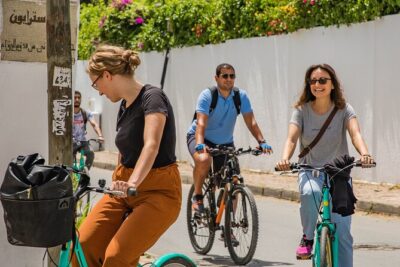
Group Guided Bike Tour of Carthage Archeological Site in Tunisia
Read our review →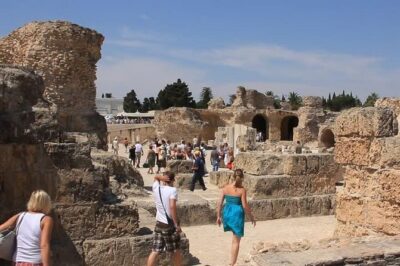
Archaelogical Site Of Carthage + Picturesque Village Of Sidi Bou Said
Read our review →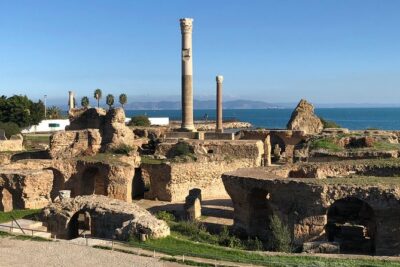
Browse the lists this tour appears in