
Reviewed · KAIROUAN & DOUGGA TOURS
Private Excursion to Testour, Dougga and Bulla Regia from Tunis.
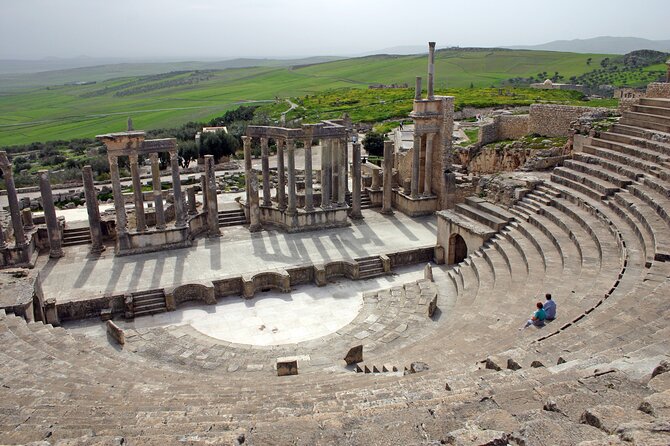
Roman ruins without the crowds. This private day trip takes you from Tunis into northwestern Tunisia for three very different stops: the Andalusian village of Testour, the superb Roman city of Dougga, and the underground villas of Bulla Regia. I especially like Dougga’s wide range of surviving buildings and Bulla Regia’s unusual below-ground homes, with mosaics still in place. The main drawback is the pace: Testour may feel rushed, while Dougga and Bulla Regia require walking over uneven ground and steep steps.
The private format gives you room to ask questions and adjust the day when possible. Guides such as Chaouki, Yahya, Iskander, Rabia, and Yosra have received strong praise for their historical knowledge and friendly manner. Still, the quality of the driver matters on a long road day, and one serious complaint concerned unsafe driving, so I would raise that concern immediately if needed.
In This Review
- The day at a glance
- Why this Tunis day trip is worth considering
- Testour and its unusual Andalusian minaret
- Dougga: the main event after three hours
- Bulla Regia and the world below ground
- The road between the sites
- What the private format really changes
- Who will enjoy this excursion most
- Practical details before you book
- Should you book the Testour, Dougga, and Bulla Regia tour?
- FAQ
- What is the price of the excursion?
- How long does the tour last?
- What time does the tour start?
- Is pickup available?
- Is this a private tour?
- Are entrance tickets included?
- How much time is spent at Dougga?
- How much time is spent at Bulla Regia?
- Can most people participate?
- What happens if the weather is poor?
The day at a glance
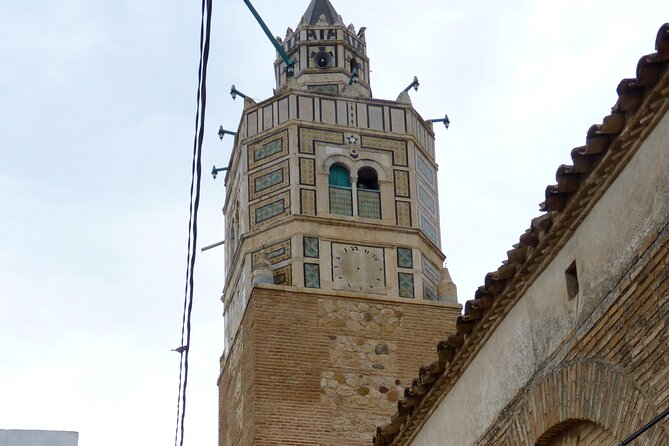
- Testour’s counterclockwise clock: See an unusual octagonal minaret influenced by Andalusian and Spanish architecture.
- Dougga for three hours: Walk through one of North Africa’s best-preserved small Roman cities, including its theater, Capitol, forum, baths, and mausoleum.
- Bulla Regia’s underground houses: Look for mosaics and rooms built below ground to help manage the hot climate.
- A private vehicle and guide: Only your own group takes part, with pickup offered from Tunis.
- A demanding but rewarding schedule: The excursion lasts about eight hours, with plenty of walking at both archaeological sites.
- A strong overall rating: The experience is rated 4.9 out of 5 from 100 ratings, with 97 percent recommending it.
Why this Tunis day trip is worth considering
Tunis has excellent museums and historic quarters, but some of Tunisia’s most impressive ancient sites lie well beyond the capital. Dougga and Bulla Regia are not quick add-ons. Reaching them takes a full day, and arranging transport between them can be awkward without a private vehicle.
This excursion solves that problem in one sweep. You leave Tunis at about 8:00 a.m., travel through the countryside, and spend most of the day at two major archaeological sites. You are not simply looking at isolated columns. You are walking through streets, public buildings, religious centers, houses, and entertainment spaces that show how towns worked in ancient North Africa.
I like the private setup because these ruins reward questions. At Dougga, you may want to pause over the difference between Roman and earlier Libyco-Punic traditions. At Bulla Regia, you may want extra time with a mosaic or an underground room. A private guide can usually respond better than a large group tour with a fixed script.
The price is listed at $127.95 per person. That is not bargain transportation in Tunisia, but it includes the private excursion format, a driver, a guide, and admission to the two archaeological sites. For a couple or small group that wants to avoid arranging a car, entrance tickets, and site interpretation separately, the price can make sense.
Still, compare the cost against your group size. A private tour becomes better value when shared by several people. If you are alone, it is a premium way to see these sites. The price also sets a high expectation for the guide and driving service, so speak up if either falls short.
More Kairouan & Dougga Trips in Tunis
- Private Tour to Kairouan, El Jem & Monastir from Tunis_hammamet
★ 5.0 · 301 reviews - Daytrip to Kairouan and El Jem Colosseum
★ 4.5 · 55 reviews - Kairouan and El Jem Private Day Tour
★ 4.5 · 38 reviews
Testour and its unusual Andalusian minaret
Testour is the shortest and least developed stop, but it gives the day a cultural change of pace. The village was founded by Moorish people in the early 17th century, and its architecture reflects Andalusian influence brought from Spain.
The Grand Mosque is the main sight. Its minaret rises about 23 meters and has an unusual octagonal form. Small paired windows, glazed inscriptions, and a mechanical clock decorate the tower. Most striking of all, the clock hands turn counterclockwise.
The minaret is often compared with bell towers in southern Spain, particularly those connected with Aragonese design. It is a good reminder that Tunisia’s story is not only Roman, Carthaginian, or Arab. Communities arriving from Iberia also left a visible mark here.
You should set your expectations carefully. Testour is described as a panoramic visit, and the actual stop can be brief, sometimes around ten minutes according to one account. That may be enough for a quick look at the mosque and a short walk, but it is not enough for a full town visit.
If Testour matters to you, ask at the start of the day how much time is planned there. Some people have been able to enjoy a tea break, shopping, or a little extra time around the mosque. Others felt the village received only a passing glance. This is the clearest place where a private tour may offer flexibility, but you need to request it early.
Dougga: the main event after three hours
Dougga is the strongest part of the excursion for most history-minded visitors. UNESCO added it to the World Heritage List in 1997, describing it as the best-preserved small Roman city in North Africa.
That description makes sense once you begin walking through the site. Dougga preserves a full urban center rather than one isolated monument. You can see the Capitol, forum, market area, wind rose square, theater, circus, public baths, houses, triumphal arch, and Libyco-Punic Mausoleum.
The Capitol is one of the visual highlights. From its elevated position, you get broad views across the surrounding countryside, and the setting helps explain why Dougga feels larger than a standard ruin field. The forum and nearby monuments also give you a clear sense of how political and religious life was organized.
The theater is another essential stop. Like the other major structures, it helps you picture Dougga as a functioning town, not just a collection of weathered stones. Public entertainment, civic business, worship, bathing, and domestic life all occupied their own spaces.
Allow the full three hours here if you can. The site is spread out, and rushing through it would defeat the purpose of coming this far from Tunis. The ruins are remarkably open, so your guide’s explanation helps connect the visible remains with the ancient city they once formed.
You should also prepare for physical walking. The ground is uneven, and there are steep, irregular steps in places. Most people who are comfortable walking for several hours can participate, but this is not a flat museum visit. Good shoes, water, and sun protection will improve the experience.
Guiding quality matters most at Dougga. Chaouki has been praised for detailed explanations, historical insight, and even taking photographs during the day. Iskander has also been praised for explaining both the sites and Tunisia more broadly. Rabia and Yosra have received similar praise for being friendly, clear, and well prepared.
Bulla Regia and the world below ground
Bulla Regia gives you a different view of ancient life. The site lies near Jendouba in northwestern Tunisia and preserves more than 17 centuries of settlement.
The town began with the Numidians, at least by the end of the sixth century BC, and later became a royal residence. During the Roman period it changed status several times, first as an autonomous town, then as a municipality under the Flavian emperors, and later as a Roman colony under Hadrian.
Its most memorable feature is the underground housing. These homes were built below ground, a clever response to the heat. The lower rooms also protected domestic spaces from the strongest sun and created a different kind of interior architecture from what you see at Dougga.
The mosaics are a major reason to visit. Several surviving floors and decorative details give Bulla Regia a more intimate feel than Dougga. At Dougga, the scale and civic buildings dominate. At Bulla Regia, you spend more time imagining household life.
The site also includes important religious buildings. You can see the Capitol, the Temple of Apollo, two Christian basilicas, and the Church of Alexander. These remains show how the town changed as religious and political life shifted across the centuries.
Bulla Regia is smaller in the portion currently exposed, and not every underground area is easy to see. That can be frustrating if you arrive expecting a fully open subterranean town. The reward is the contrast: Dougga gives you monumental scale, while Bulla Regia offers mosaics, houses, and a closer look at private life.
The scheduled visit is about two hours. That is enough to see the main features with a guide, but you may wish for more time if you enjoy architectural details or photography. One practical advantage of the private format is that your guide can help focus the visit on what interests you most.
More Private Tours in Tunis
- Private tour: Medina,Carthage ,Sidi Bou Said, Bardo Museum+lunch
★ 5.0 · 230 reviews - Carthage, Bardo Museum, Sidi Bou Said and Medina Private Day Tour
★ 4.5 · 153 reviews - Private Day Tour Tunis Medina Carthage Sidi Bou Said Bardo Museum
★ 5.0 · 30 reviews - Full Day Dougga & Bulla Regia Via Testour Private tour with Lunch
★ 5.0 · 29 reviews
The road between the sites
This is an eight-hour day, and the drive is part of the experience. You pass through rural Tunisia and smaller towns, gaining a view of daily life beyond Tunis and the coast.
One account describes seeing a weekly market and trying local mandarin oranges. Another mentions stopping for a traditional lunch in a small town. These details are not guaranteed parts of every departure, so you should not book this excursion expecting a fixed food program. In particular, one person noted that no cheese tasting was offered.
The road did not feel too long to some people, especially with conversation and explanations from the guide. For others, the transport service was the weak link. One complaint described high speeds and the driver taking attention away from the road. The operator responded that the matter would be investigated and that vehicles are electronically limited, but the concern is still worth noting.
If you feel uncomfortable with the driving, say so clearly and promptly. Your safety is more important than arriving a few minutes sooner. A good private tour should feel relaxed on the road, especially after several hours walking among ruins.
What the private format really changes
A private tour does not magically add hours to the day, but it can make the schedule more personal. You travel only with your own group, and the guide can answer questions without a dozen other voices competing for attention.
The format is especially useful for families, couples, and small groups with different interests. One person can focus on Roman engineering, another on mosaics, and another on local architecture. The guide can also help with photographs, explain unfamiliar terms, and point out details you might walk past alone.
There is a trade-off. A private trip costs more than joining a larger vehicle, and the day still has a fixed backbone. Testour, Dougga, and Bulla Regia are far enough apart that spending much longer at one stop may shorten another.
I would ask two questions before leaving Tunis: How long will we have in Testour? And will there be time for a meal stop? Those answers will help you decide how to pace yourself.
Who will enjoy this excursion most
This is a strong choice if you have at least three days in Tunisia and want to go beyond the capital. It suits anyone interested in Roman, Numidian, Libyco-Punic, Andalusian, and early Christian history.
You should book it if you value access to major sites without arranging long-distance transport yourself. It is also a good fit if you prefer a private conversation with a guide rather than a large scheduled group.
You may want a different plan if you dislike long drives, uneven steps, or tightly packed sightseeing days. It is also less suitable if Testour is your main interest, since the village often receives much less time than Dougga and Bulla Regia.
The best guides make a real difference. Chaouki, Yahya, Iskander, Rabia, and Yosra have all been singled out for warmth, clear explanations, and strong command of Tunisian history. Guide assignments can change, so treat those names as examples rather than a promise.
Practical details before you book
Pickup is offered, the start time is 8:00 a.m., and confirmation is received when you book. Mobile tickets are available, group discounts are offered, and service animals are allowed.
Most people can participate, but remember the steep and uneven steps at the archaeological sites. Wear shoes with a firm grip and bring water. The day requires enough stamina for several hours outside, even though the total excursion lasts about eight hours.
The tour requires good weather. If poor weather cancels the outing, you will be offered another date or a full refund. You can cancel for a full refund up to 24 hours before the start time. Changes or cancellations made less than 24 hours before departure are not accepted for a refund.
Should you book the Testour, Dougga, and Bulla Regia tour?
I would book this excursion for a small group that wants Tunisia’s best ancient ruins without the hassle of independent transport. Dougga alone is a powerful reason to go, and Bulla Regia adds something genuinely different with its mosaics and underground houses.
The value is strongest when two or more people share the private price and when your guide is active, clear, and willing to shape the day around your interests. Before setting off, confirm the Testour timing, ask about the meal arrangement, and make sure the driving feels safe.
If you want a relaxed village walk or a deep study of one archaeological site, this schedule may feel too compressed. If you want a full day of major ruins, changing cultures, countryside views, and very few crowds, it is one of the more rewarding day trips from Tunis.
FAQ
What is the price of the excursion?
The listed price is $127.95 per person. Group discounts are offered.
How long does the tour last?
The excursion lasts approximately eight hours.
What time does the tour start?
The stated start time is 8:00 a.m.
Is pickup available?
Yes, pickup is offered.
Is this a private tour?
Yes. Only your own group participates in the activity.
Are entrance tickets included?
Admission tickets are included for Dougga and Bulla Regia.
How much time is spent at Dougga?
The planned visit to Dougga lasts about three hours.
How much time is spent at Bulla Regia?
The planned visit to Bulla Regia lasts about two hours.
Can most people participate?
Most people can participate, and service animals are allowed. You should be prepared for steep, uneven steps and extended walking at the archaeological sites.
What happens if the weather is poor?
If poor weather causes cancellation, you will be offered a different date or a full refund. You can also cancel up to 24 hours before the start time for a full refund.
More Kairouan & Dougga Trips in Tunis
- Private Guided Tour of Dougga and Testour Mosque
★ 4.5 · 15 reviews - Dougga and Bulla Regia Guided Tour From Tunis
★ 4.5 · 11 reviews - Private Day Tour , Kairouan & Amphitheatre of el Jem From Tunis /Hammamet/Sousse
★ 4.5 · 8 reviews - Roman Archeology Guided Tour Thuburbo Majus & Uthina
★ 4.5 · 7 reviews
Newest from Tunis
- Private Arrival Transfer: Tunis Airport to Tunis Hotel★ 4.5 · 5 reviews
- Cap Bon Guided Day Tour from Tunis★ 5.0 · 2 reviews
- Tunis Group Tour: Carthage, Sidi Bou Said, Bardo museum & Medina★ 5.0 · 5 reviews
- Walking City Tour★ 4.5 · 7 reviews
- Dougga Guided Day Tour from Tunis★ 5.0 · 5 reviews
- Tunisia 7-Day tour★ 5.0 · 6 reviews
- Unveiling the Beauty of Sidi Bou Said and Carthage Private Tour★ 5.0 · 2 reviews
- Bardo Museum , Oudhna and the roman aqueduct★ 5.0 · 4 reviews
Kairouan & Dougga Tours, compared.
Fun VIP Tour: El Jem, Kairouan, Monastir/Sousse (PICKUP ALL City)
Read our review →
Private Tour to Kairouan, El Jem & Monastir from Tunis_hammamet
Read our review →
Full Day Dougga & Bulla Regia Via Testour Private tour with Lunch
Read our review →
Private and Guided Tour to Kairouan and El Jem and Monastir
Read our review →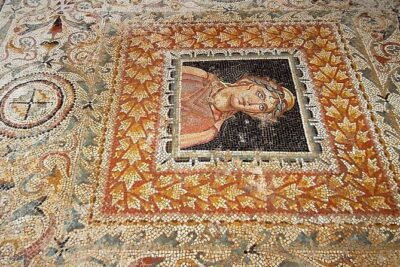
Private Day Trip to Testour, Dougga and Bulla Regia from Hammamet
Read our review →
Kairouan & El Djem Guided Day Trip with Lunch from Hammamet
Read our review →Browse the lists this tour appears in