
Reviewed · KAIROUAN & DOUGGA TOURS
Private Day Trip to Testour, Dougga and Bulla Regia from Hammamet
Ancient Tunisia rewards the curious. This private day trip links Testour’s Andalusian character with two major Roman sites, Dougga and Bulla Regia, giving you a strong mix of architecture, archaeology, and local life in one long outing. I like the chance to see Dougga with a dedicated guide, and I like that the private format lets your own group set the pace within the day’s schedule.
The main drawback is the length. The advertised duration is about eight hours, but one account records an 11.5-hour day, so you should be ready for a very full schedule and substantial time on the road. Still, with a starting price of $133.57 per person, this can be good value if you want serious historical sightseeing without arranging several separate excursions.
In This Review
- Key points to know before booking
- Why this route is worth your day
- Testour and the counterclockwise clock
- Dougga, Tunisia’s grand archaeological centerpiece
- Bulla Regia and the long story of a royal center
- Guides, drivers, and the private format
- Timing, cost, and what the day feels like
- Who should book this experience
- Should you book the Testour, Dougga, and Bulla Regia trip?
- FAQ
- What time does the tour start?
- How long does the experience last?
- Is this a private tour?
- Are admission tickets included?
- Can I cancel for a full refund?
- What happens if poor weather cancels the tour?
Key points to know before booking
- Testour adds a human touch: You see an Andalusian-style village, its unusual clock tower, and local food rather than only Roman ruins.
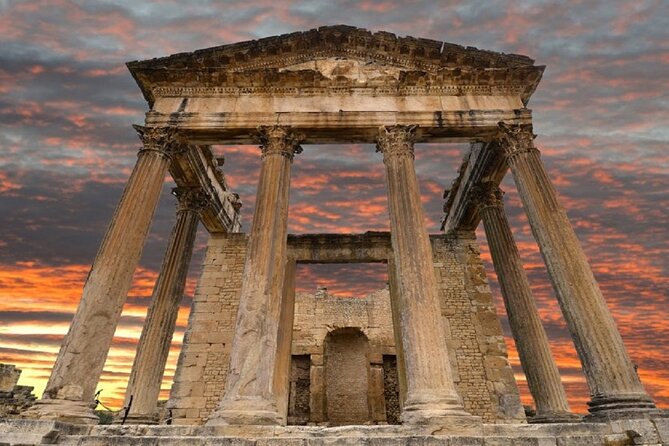
- Dougga is the main event: The UNESCO-listed site preserves a theater, Capitol, forum, baths, houses, triumphal arch, and Libyco-Punic mausoleum.
- Bulla Regia offers a different story: Its Numidian, royal, Roman, and Christian remains make it more than a second set of ruins.
- Private guiding matters here: Guides such as Faouzi, Mohamed, Chaoukni, and Chaoukni’s colleagues have been praised for clear explanations and careful assistance.
- Plan for a long day: The 7:30 am start, three stops, and remote sites can push the day well beyond the stated eight hours.
- The tour has a strong record: It carries a 5.0 rating from 21 reviews, with 100 percent recommending it.
Why this route is worth your day
From Hammamet, this excursion reaches the northwest of Tunisia, far beyond the usual beach and resort circuit. You are not simply ticking off three attractions. You are following several layers of Tunisian history, from an Andalusian Muslim settlement to a major Roman city and then an older Numidian center that later became part of the Roman world.
I especially like the way the stops contrast with one another. Testour is a living town with a distinctive cultural identity. Dougga gives you grand public buildings and a clear sense of how a Roman city worked. Bulla Regia is quieter in feel and more focused on religious buildings and the long development of one settlement.
The private setup is important. Only your group takes part, and pickup is offered. That gives the day a more personal feel than a large coach outing, particularly when you need extra help walking or want your guide to explain a detail that catches your eye.
The $133.57 per person price needs to be judged against the time saved and the sites included. You receive a guided route to three places that would be awkward to combine on your own from Hammamet, with admission included at Dougga and Bulla Regia. If your group has two or more people, the private arrangement becomes easier to justify because you are paying for a dedicated vehicle and guide rather than a seat on a standard group tour.
More Kairouan & Dougga Trips in Hammamet
- Private and Guided Tour to Kairouan and El Jem and Monastir
★ 4.5 · 22 reviews - Kairouan & El Djem Guided Day Trip with Lunch from Hammamet
★ 4.0 · 18 reviews - Private Day Tour , Kairouan & Amphitheatre of el Jem From Tunis /Hammamet/Sousse
★ 4.5 · 8 reviews
Testour and the counterclockwise clock
Testour is the first stop, and it changes the mood before the ancient sites begin. The village was founded by Moorish people at the start of the 17th century, and its Great Mosque reflects Andalusian design.
The minaret is the feature to watch for. It rises 23 meters, has an octagonal form, and includes small paired windows with glazed inscriptions. At the top is a mechanical clock whose hands turn counterclockwise, an odd and memorable detail that makes the building easy to recognize.
The tower has been compared with bell towers in southern Spain, especially those linked to Aragonese design. You do not need to be an architecture specialist to appreciate the contrast with the mosques and minarets you may have seen elsewhere in Tunisia.
The stop is described as a panoramic tour, so you should not expect the same extended archaeological visit you receive at Dougga or Bulla Regia. That is not a weakness. Testour works well as a short cultural pause, giving you a sense of the town’s Andalusian identity before the Roman remains take over the day.
Food adds another reason to pay attention here. The experience includes a cheese tasting featuring a regional specialty, and one account also describes a stop for pomegranate juice. Another memorable roadside moment involved seeing a Berber woman bake bread in an old furnace, followed by eating the bread with local olive oil.
That bread stop is not listed as a guaranteed part of the formal program, so you should treat it as a possible extra rather than a promise. The same applies to the pomegranate juice. The cheese tasting is the clearly stated food feature.
Dougga, Tunisia’s grand archaeological centerpiece
Dougga deserves the longest attention, and the planned two-hour visit is helpful. The site was added to the UNESCO World Heritage List in 1997 and is described as the best-preserved small Roman city in North Africa.
That label makes sense once you see how many parts of the city remain visible. You can expect to walk among the Capitol, forum, market area, theater, circus, public baths, private houses, triumphal arch, and the Place of the Rose of the Winds.
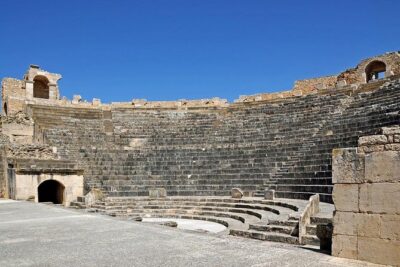
The Capitol is one of the major sights. It anchors the monumental center and helps you understand the scale of the ancient city. The theater is another highlight, with its preserved rows and open setting. A guide can make the difference here because a Roman theater is far easier to appreciate when you understand how it related to public life, performance, and the city’s layout.
The site also preserves the Libyco-Punic Mausoleum, which adds an important local layer to a place often described mainly through its Roman remains. Dougga was not a Roman city dropped onto an empty site. Its remains show how an indigenous foundation developed under Roman rule.
That is what makes Dougga more rewarding than a quick stop for photographs. The forum and public buildings show imperial planning, while the Libyco-Punic monument points to earlier traditions. You can see the city as a place shaped by several political and cultural periods.
Give yourself sturdy footwear and a patient pace. The supplied details do not specify the walking conditions, but the number of buildings and the size of the archaeological area mean you should expect an active visit rather than a short stroll from a parking area. The guide can help you focus on the key structures during the two-hour window.
The guides praised most strongly for this route include Faouzi and Mohamed. Faouzi is described as thorough and well informed, while Mohamed is praised for combining historical explanation with a friendly manner. Chaoukni is also singled out for a punctual hotel pickup and for explaining local plants during the drive.
These names matter because the quality of the explanation is a central part of the experience. Dougga has enough surviving stonework to impress you without help, but a good guide turns disconnected ruins into a readable city.
Bulla Regia and the long story of a royal center
Bulla Regia follows Dougga, with about two hours planned at the site. It lies a few kilometers north of Jendouba in northwestern Tunisia and offers a different kind of historical experience.
The settlement was founded by the Numidians no later than the end of the sixth century BC. It soon became a royal residence, then changed status under Roman rule. It was autonomous at the beginning of the Roman period, became a municipality under the Flavian emperors, and was made a Roman colony under Hadrian, who ruled from AD 117 to 138.
That sequence gives your guide plenty to explain. Bulla Regia is not only about Roman construction. It lets you follow the changing status of a place as local power, Roman administration, and later Christian communities shaped the site.
The formal highlights listed here are mainly religious buildings. You can see the Capitol, the Temple of Apollo, two Christian basilicas, and the Church of Alexander. These remains give Bulla Regia a different emphasis from Dougga, where public spaces and civic monuments dominate.
The site also carries a later Christian story. By the end of the fifth century, its inhabitants were judged bad Christians by Augustine. That detail can lead to a useful discussion about religious change and the tensions within late antique communities.
I would not expect Bulla Regia to feel like a smaller copy of Dougga. Its value lies in the chronological spread and the religious remains. If you have already spent two hours walking through Dougga, you may feel the limits of a long day by the time you arrive. The second visit is still worthwhile, but you should pace yourself early rather than spending all your energy at the first site.
More Private Tours in Hammamet
- Private tour: Medina,Carthage ,Sidi Bou Said, Bardo Museum+lunch
★ 5.0 · 194 reviews - A Private Night at Desert Douz Tozeur
★ 5.0 · 29 reviews - Private day tour Sidi Bousaid, Carthage and Hammamet departing from sousse
★ 4.5 · 15 reviews - 3-Day Private Excursion to the Sahara departing from Hammamet
★ 4.5 · 10 reviews
Guides, drivers, and the private format
The strongest part of this experience is the personal service. Your group has its own guide and driver, and the schedule is not built around a large busload of strangers. That makes it easier to ask questions and to spend more time on the parts of the sites that interest you.
One account specifically praises a guide for helping a friend with walking difficulties. Another describes a guide who adjusted the order of sightseeing when rain was approaching so the important areas could be seen before the weather worsened.
That kind of attention is valuable on a day with three stops. The formal information says most people can participate, and service animals are allowed. If anyone in your group has walking concerns, mention them when arranging the trip so the team understands what support may be needed.
The driving is another part of the experience to consider. You will cover a wide route between Hammamet, Testour, Dougga, and Bulla Regia, and one account reports a collision with another car that caused delays. No serious injuries were reported, but any road incident is a reminder to keep expectations realistic and allow the day to unfold slowly.
This is an isolated negative account among otherwise very positive feedback, but it is still relevant when you compare private day trips. Ask yourself how comfortable you are with a long road day and changing arrival times. The driver has been praised in other accounts for being safe, efficient, and dependable, but traffic and road conditions can still affect the schedule.
Timing, cost, and what the day feels like
The listed start time is 7:30 am. That early departure is necessary because the route includes three separate stops and two major archaeological sites, each with around two hours allocated.
The advertised duration is approximately eight hours, but you should not treat that as a strict finish time. One account describes an 11.5-hour day. The difference may come from road conditions, extended visits, food stops, or the pace of a private group.
I would protect the rest of your evening. Do not book an important dinner, show, or transfer immediately after the stated return time. A flexible plan will make the long day much more enjoyable.
At $133.57 per person, the value is strongest for people who want a guided archaeological route and do not want to arrange separate transport to remote sites. Admission to Dougga and Bulla Regia is included, and the private format means your group receives the guide’s attention throughout the day.
The price is less attractive if you only want a quick look at one Roman site. Dougga alone can fill a serious history day, and the addition of Bulla Regia creates a demanding schedule. Still, for someone staying in Hammamet who wants to connect several important places in one outing, the cost is reasonable.
The tour is often booked around 33 days in advance. That suggests you should reserve early if your dates are fixed, particularly if you want a private departure during a busy holiday period.
Who should book this experience
I would choose this tour if you enjoy ancient history, architecture, and long days with a clear purpose. It suits couples, families, and small groups who want their own guide rather than a standard group outing.
It is especially good for anyone who wants to see more than the familiar resort side of Tunisia. Testour provides local culture and food, Dougga offers the grandest ruins, and Bulla Regia adds Numidian, Roman, and Christian layers.
You should think twice if you dislike early starts, long drives, uneven archaeological sites, or changing return times. The schedule is ambitious, and the amount of walking may be tiring even with a helpful guide.
The route can also work for older people if the private team can adjust the pace. One guide gave extra help to a person with walking difficulties, but you should discuss mobility needs before the day begins rather than assuming the sites will be easy.
Should you book the Testour, Dougga, and Bulla Regia trip?
Book it if Dougga is high on your Tunisia list and you want to add two very different stops without planning transport yourself. The private format, included admissions, strong guide feedback, and cultural stop in Testour give the day real value.
I would book with a flexible evening afterward and a willingness to spend much of the day on the road. If you want only a relaxed half-day outing, this is the wrong choice. If you want a concentrated look at Tunisia’s ancient and Andalusian past, it is one of the more rewarding full-day options from Hammamet.
FAQ
What time does the tour start?
The stated start time is 7:30 am.
How long does the experience last?
The advertised duration is approximately eight hours. One account describes an 11.5-hour day, so you should allow extra time for delays or a longer schedule.
Is this a private tour?
Yes. Only your group participates in the activity.
Are admission tickets included?
Admission tickets are included for Dougga and Bulla Regia.
Can I cancel for a full refund?
Yes. You can cancel at least 24 hours before the local start time for a full refund. Cancellations or changes made less than 24 hours before departure are not accepted for a refund.
What happens if poor weather cancels the tour?
The experience requires good weather. If poor weather causes cancellation, you will be offered another date or a full refund.
More Day Trips in Hammamet
- Tunis, Sidi Bousaid and Carthage day trip from Hammamet
★ 4.5 · 44 reviews - Day trip to Cape Bon
★ 4.0 · 5 reviews - Day Trip to Cap Bon
★ 5.0 · 2 reviews - 1 day excursion Tunis Sidi Bousaid Carthage departure from Sousse
★ 5.0 · 87 reviews
More Kairouan & Dougga Trips in Hammamet
- Kairouan & El Jem Small Group Tour from Tunis, Hammamet or Sousse
★ 5.0 · 6 reviews - Kairouan, El Djem, Monastir Self-Guided Excursion from Hammamet
★ 4.5 · 5 reviews - Kairouan, El Djem and Monastir Guided Excursion from Hammamet
★ 5.0 · 5 reviews - Zaghouan, Thuburbo Majus and Dougga Private Self-Guided Excursion from Hammamet
★ 5.0 · 2 reviews
Newest from Hammamet
- Kairouan & El Jem Small Group Tour from Tunis, Hammamet or Sousse★ 5.0 · 6 reviews
- 4-Day Private Tour: Sahara and Djerba Island from Tunis and Hammamet★ 5.0 · 4 reviews
- 2days 4×4 SAFARI from Sousse, Hammamet,Tunis – 4*hotel accommodation★ 3.5 · 6 reviews
- Enfidha Private Arrival Airport Transfer to Hammamet★ 4.5 · 4 reviews
- 3DAYS 4×4 safari from Sousse/Hammamet/Tunis 100km deep in desert camp★ 4.5 · 3 reviews
- Transfer from Airport Tunis Carthage To Hammamet★ 5.0 · 2 reviews
- Kairouan, El Djem, Monastir Self-Guided Excursion from Hammamet★ 4.5 · 5 reviews
- From Hammamet: Sahara Desert Overnight Camping★ 4.5 · 2 reviews
Kairouan & Dougga Tours, compared.
Fun VIP Tour: El Jem, Kairouan, Monastir/Sousse (PICKUP ALL City)
Read our review →
Private Tour to Kairouan, El Jem & Monastir from Tunis_hammamet
Read our review →
Private Excursion to Testour, Dougga and Bulla Regia from Tunis.
Read our review →
Full Day Dougga & Bulla Regia Via Testour Private tour with Lunch
Read our review →
Private and Guided Tour to Kairouan and El Jem and Monastir
Read our review →
Kairouan & El Djem Guided Day Trip with Lunch from Hammamet
Read our review →Browse the lists this tour appears in