
Reviewed · KAIROUAN & DOUGGA TOURS
Kairouan, El Djem, Monastir Self-Guided Excursion from Hammamet
A day of Tunisia’s greatest contrasts. This private excursion links Kairouan’s Islamic monuments, El Djem’s vast Roman amphitheater, and Monastir’s modern national story in one long, rewarding outing. I like the private vehicle and the chance to cover three very different places without changing buses. I also like that the route includes both major sights and smaller stops, such as the Aghlabid Basins and the Mosque of the Barber.
The main tradeoff is time. Ten hours sounds generous, but the route covers a lot of ground, and entrance fees, lunch, and a professional guide are not included. You will need to manage your schedule carefully, especially in Monastir.
In This Review
- Key points to know before booking
- Why this route works from Hammamet
- Kairouan’s Aghlabid Basins reveal an old water system
- The Mosque of the Barber brings Kairouan’s spiritual side close
- Kairouan’s medina is the best place to slow down
- El Djem’s amphitheater is the day’s big visual reward
- The El Djem museum adds mosaics and domestic life
- Monastir combines Bourguiba, the ribat, and the marina
- What the private driver format really means
- Meals, tickets, and the real cost
- Who should book this 10-hour excursion?
- Should you book it?
- FAQ
- What time does the excursion start?
- How long does the excursion last?
- Is transportation private?
- How many people can join?
- Is a professional guide included?
- What happens if I cancel?
Key points to know before booking
- Three eras in one day: See Kairouan’s Arab-Muslim monuments, El Djem’s Roman remains, and Monastir’s Punic, Roman, and modern landmarks.
- Private transport for up to three people: The $303.51 price is per group, not per person, which makes the arithmetic much better for a small party.
- El Djem is the day’s major centerpiece: The amphitheater and archaeological museum together receive about three hours.
- This is self-guided: A professional guide is not included, so you should be ready to explore independently or confirm the cost of any optional local guide before accepting.
- Monastir receives the shortest visit: The hour includes the mausoleum, ribat, marina, and time near Bourguiba’s birthplace, so you may need to choose your priorities.
- Book with a time buffer: Free cancellation is available until 24 hours before departure, but changes made inside that window are not accepted.
Why this route works from Hammamet
Hammamet is a pleasant base for the coast, but it does not put Tunisia’s major inland monuments right outside your door. This excursion solves that problem with one private road day. Pickup is offered, the start time is 8:30 a.m., and the air-conditioned vehicle matters on a full itinerary that runs about 10 hours.
I like the route because it does not repeat the same kind of sight. Kairouan gives you religious architecture, old streets, and sacred traditions. El Djem shifts the story to Roman Africa, with one of the most striking ancient structures in Tunisia. Monastir then adds a coastal setting and the legacy of Habib Bourguiba, the first president of the Tunisian Republic.
The trip is private, so only your group participates. That gives you more control than a large coach outing, though the excursion is still built around a fixed route. If you want to linger at every monument, this may feel rushed. If you want a strong first look at central Tunisia, the range is the point.
The price is $303.51 for up to three people. For one person, that is expensive. For two or three, private transportation across a long route can make the cost reasonable, especially with bottled water, insurance, taxes, and an air-conditioned vehicle included. You still need to budget for lunch, museum and monument tickets, personal spending, tips, and any guide you arrange.
More Kairouan & Dougga Trips in Hammamet
- Private and Guided Tour to Kairouan and El Jem and Monastir
★ 4.5 · 22 reviews - Private Day Trip to Testour, Dougga and Bulla Regia from Hammamet
★ 5.0 · 21 reviews - Kairouan & El Djem Guided Day Trip with Lunch from Hammamet
★ 4.0 · 18 reviews
Kairouan’s Aghlabid Basins reveal an old water system
The first stop is the Bassins Aghlabites, outside Kairouan’s medina walls. These large ninth-century reservoirs date from the beginning of the second half of the ninth century and are regarded as one of the major hydraulic works in the history of the Muslim world.
You have about 30 minutes here. That is enough to understand the scale and purpose of the basins, but not much time for a slow architectural study. Admission is not included, so confirm the current fee with the driver before entering or photographing from the available public areas.
This is a useful opening stop because it explains how an important inland city could grow in a dry setting. The basins are not as immediately famous as the Great Mosque or El Djem, but they give the day a practical beginning. Sacred cities need water, and this site shows the engineering behind Kairouan’s importance.
The Mosque of the Barber brings Kairouan’s spiritual side close
Next comes the Mosque Sidi Sahbi, commonly called the Mosque of the Barber. It is also known as the mausoleum of Sidi Sahbi and sits outside the walls of the medina.
The name comes from the tradition that Sidi Sahbi, a companion of the Prophet Muhammad, kept several hairs from the Prophet’s beard. The supplied tour information identifies the site as the Mosque of the Barber, but it does not promise an included guide or a detailed religious explanation. You should expect to look closely at the complex and ask the driver about local arrangements if you want more context.
You have one hour here, and admission is listed as free. That makes this one of the easier stops to enjoy without adding to your entrance budget. I would use the time to notice the decorative details, courtyards, and atmosphere rather than rushing through for a quick photograph.
As with any religious site, dress and behavior matter. The information provided does not set out a formal dress code, so modest clothing is a sensible choice. Since this is a mausoleum and mosque, keep your voice low and follow any instructions at the entrance.
Kairouan’s medina is the best place to slow down
The medina receives another hour. This is where the day becomes less about a single monument and more about the shape of an old Tunisian city. You can walk narrow streets, browse markets, and visit the Mosque of the Three Gates.
Kairouan is considered the fourth holy city of Islam and Tunisia’s spiritual capital. Its medina has been on the UNESCO World Heritage List since December 9, 1988, meeting five of the six evaluation criteria used for inscription.
That status is important, but you do not need to treat the medina like a checklist. I would use this hour to get a sense of the city’s scale and rhythm. The narrow lanes make a short walk feel more intimate than a broad modern avenue, while the markets offer a chance to see daily commerce alongside historic buildings.
One hour is not enough for every lane, shop, and religious building. You may also find that browsing markets takes longer than expected. Keep an eye on the meeting time, since El Djem is the day’s largest stop and delays here can reduce your time at the amphitheater.
Because the tour is self-guided, you should decide what matters most before entering the medina. If you want photographs and a short walk, the hour works well. If you want a detailed religious or architectural tour, ask about an optional local guide and agree on the price in advance. A reported problem involved a local guide quote becoming much higher than expected, so do not accept a vague verbal arrangement.
Further south, and a completely different kind of day out:
- Private tour: Medina,Carthage ,Sidi Bou Said, Bardo Museum+lunch
★ 5.0 · 194 reviews - Quad ride on the hills of Hammamet
★ 4.0 · 104 reviews - 2-Day Tunisian Sahara Tour with Food & Stay from Hammamet
★ 4.5 · 80 reviews - Tour to the Medina of Hammamet and the Spice Market of Nabeul
★ 4.0 · 45 reviews
El Djem’s amphitheater is the day’s big visual reward
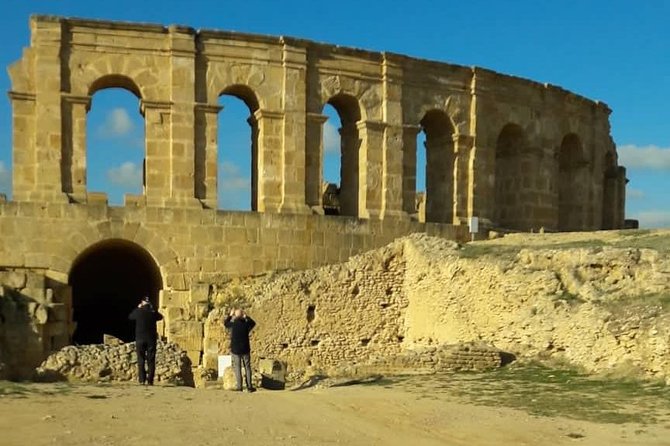
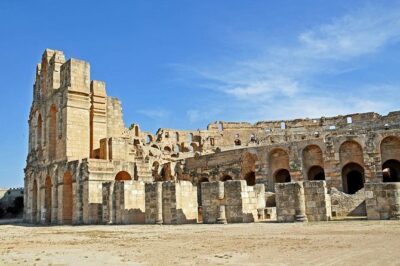
The drive to El Djem leads to the ancient city of Thysdrus, once one of the most prosperous cities in Roman Africa. The amphitheater is the main event, and the schedule gives it two hours.
Built in the third century AD, the amphitheater could hold about 30,000 spectators. It is described as the third-largest in the Roman world after the amphitheaters in Rome and Capua. It was classified as a World Heritage site in 1972.
The scale is what makes this stop work so well. You can walk through the structure, look down toward the arena, and imagine how the seating once organized thousands of people. The monument is not just a pile of old stone. Its corridors and tiers show how Roman entertainment, public status, and engineering came together.
Two hours is a sensible amount of time for the amphitheater. You can see the major areas without treating the visit as a race. Admission is not included, so keep cash or another accepted payment method ready, and ask the driver about the current ticket price before the day begins.
El Djem is also where the self-guided format becomes most noticeable. A guide could explain the building’s functions and the city around it, but you can still get a strong experience by reading the signs and taking your time. If you want a deeper archaeological explanation, arrange that separately rather than assuming one is part of the package.
The El Djem museum adds mosaics and domestic life
The Archaeological Museum of El Djem follows the amphitheater, with one hour allocated for the visit. It occupies a reconstructed Roman villa and presents Roman mosaics, statues, terracotta figures, perfume containers, and other glass objects.
This museum changes the scale of the day. The amphitheater shows public spectacle and mass entertainment. The villa and its objects offer a closer look at private life, decoration, trade, and craft. I would not skip it simply because the amphitheater is more famous.
The collection includes Roman mosaics and objects from the period described in the tour information as extending from the 11th century to the 5th century. Since the wording of that date range is unusual, ask on site for the exact collection dates if chronology matters to you.
Admission is not included. You should also remember that the museum adds another hour to the El Djem visit, so this is not a quick photo stop. The schedule gives you about three hours in total for the amphitheater and museum, which is one reason El Djem may be the highlight of the whole day.
One published account singled out El Djem and its museum as the strongest part of the excursion. I agree with that assessment as a planning point: if the day begins to run late, protect your El Djem time rather than cutting the amphitheater and museum equally.
Monastir combines Bourguiba, the ribat, and the marina
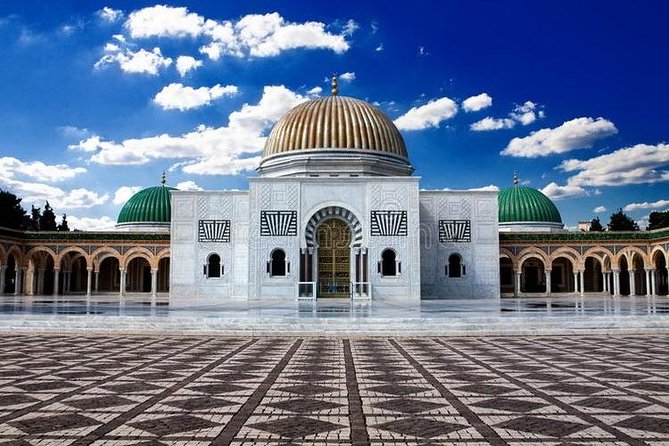
The final destination is Monastir, an ancient Punic and Roman city once known as Ruspina. The visit includes a passage in front of Habib Bourguiba’s birthplace, a visit to his mausoleum, and free time around the ribat and marina.
You have about one hour here. That is the tightest portion of the schedule because it includes several separate sights. The mausoleum is connected to Bourguiba, the first president of the Tunisian Republic, and gives the stop a modern national focus. The ribat brings you back to Tunisia’s older defensive and religious architecture. The marina provides a more open coastal setting.
I would decide your Monastir priority before arrival. If the mausoleum matters most, go there first. If you want the ribat, confirm how much time remains after the mausoleum. The information provided says there is free time to visit the ribat and marina, but it does not promise enough time for a full visit to every site.
One account raised a concern that the driver tried to discourage a stop in Monastir and that there was not enough time to visit the ribat after the mausoleum. That makes a useful planning lesson: tell the driver clearly that Monastir is part of the booked route, and agree on the order of stops at the start of the day.
What the private driver format really means
This is private transportation, not a guided tour. Your vehicle is air-conditioned, bottled water is included, and only your group participates. The driver can keep the day moving, but a professional guide is specifically excluded.
That distinction matters in Kairouan. The city has several religious and historic sites, and a guide could help explain what you are seeing. You should not assume the driver will provide a full historical tour. If an optional local guide is offered, confirm the total cost, currency, length of service, and exact sights covered before agreeing.
The private format is still a major benefit. You avoid a large group and can discuss the timing of lunch, photographs, and short pauses. But flexibility has limits because three destinations must fit into 10 hours. I would treat this as a private sightseeing transfer with planned visits, rather than as a fully guided cultural tour.
There is also a safety point worth taking seriously. One report described a driving speed of 150 kilometers per hour and questioned whether it was within local limits. I cannot confirm the exact speed or circumstances, but you should feel free to ask for safe driving and say so plainly if the pace feels uncomfortable.
Meals, tickets, and the real cost
Lunch is not included, and the tour information does not name a restaurant or provide a fixed meal break. Ask the driver early in the day when lunch will happen. Since the route is long, waiting until everyone is hungry may leave you with fewer choices.
Entrance fees are also not included for the Aghlabid Basins, El Djem amphitheater, El Djem museum, and Monastir attractions. The Mosque of the Barber and Kairouan medina entries are listed as free, though access arrangements can change. Carry money for tickets, food, and personal purchases.
At $303.51 per group of up to three, the value improves with two or three people sharing the vehicle. You are paying for a long private route, not for admission to every monument or for a guide. I would compare the price with the cost and inconvenience of arranging separate transport to three cities, then add a realistic allowance for tickets and lunch.
The operator is taximami. Confirmation is received at booking, and free cancellation is available until 24 hours before the 8:30 a.m. start time. Inside that window, refunds are not available and changes are not accepted.
Who should book this 10-hour excursion?
I would recommend this day to you if you want to see several major Tunisian sites from Hammamet and prefer a private vehicle to a coach. It suits couples, families, or a small group of up to three people who enjoy setting their own pace and exploring without a formal guide.
It is also a good fit if El Djem is high on your list. The amphitheater and museum receive enough scheduled time to make the long drive worthwhile.
I would hesitate if you dislike full road days, want long meals, or prefer detailed explanations at every monument. The self-guided format requires some preparation, and Monastir may feel too brief if you want to see the mausoleum, ribat, and marina at leisure.
Should you book it?
Book this excursion if your priority is range: Kairouan’s sacred city, El Djem’s Roman amphitheater, and Monastir’s modern and coastal landmarks in one day. The private vehicle, bottled water, insurance, and group pricing give it fair value for two or three people.
Before departure, confirm the pickup details, ticket costs, lunch plan, and whether any guide is optional. Set a clear schedule for Monastir, and do not be shy about requesting safe driving. With those points settled, this is a strong choice for seeing central Tunisia when your time in the country is limited.
FAQ
What time does the excursion start?
The stated start time is 8:30 a.m.
How long does the excursion last?
The excursion lasts approximately 10 hours.
Is transportation private?
Yes. The experience includes private transportation in an air-conditioned vehicle, and only your group participates.
How many people can join?
The $303.51 price covers one group of up to three people.
Is a professional guide included?
No. A professional guide is not included. Any optional local guide arrangement and price should be confirmed before accepting.
What happens if I cancel?
You can cancel at least 24 hours before the start time for a full refund. Cancellations or changes made less than 24 hours before the start time are not accepted for a refund.
More Self-Guided Tours in Hammamet
- Tunis, Carthage and Sidi Bou Said Self-Guided Excursion from Hammamet
★ 4.5 · 4 reviews - Cap-Bon Self-Guided Excursion from Hammamet
★ 4.5 · 3 reviews - Self guided bike tour of Carthage archeological site
★ 4.5 · 10 reviews
More Kairouan & Dougga Trips in Hammamet
- Private Day Tour , Kairouan & Amphitheatre of el Jem From Tunis /Hammamet/Sousse
★ 4.5 · 8 reviews - Kairouan & El Jem Small Group Tour from Tunis, Hammamet or Sousse
★ 5.0 · 6 reviews - Kairouan, El Djem and Monastir Guided Excursion from Hammamet
★ 5.0 · 5 reviews - Zaghouan, Thuburbo Majus and Dougga Private Self-Guided Excursion from Hammamet
★ 5.0 · 2 reviews
Newest from Hammamet
- Kairouan & El Jem Small Group Tour from Tunis, Hammamet or Sousse★ 5.0 · 6 reviews
- 4-Day Private Tour: Sahara and Djerba Island from Tunis and Hammamet★ 5.0 · 4 reviews
- 2days 4×4 SAFARI from Sousse, Hammamet,Tunis – 4*hotel accommodation★ 3.5 · 6 reviews
- Enfidha Private Arrival Airport Transfer to Hammamet★ 4.5 · 4 reviews
- 3DAYS 4×4 safari from Sousse/Hammamet/Tunis 100km deep in desert camp★ 4.5 · 3 reviews
- Transfer from Airport Tunis Carthage To Hammamet★ 5.0 · 2 reviews
- Kairouan, El Djem and Monastir Guided Excursion from Hammamet★ 5.0 · 5 reviews
- From Hammamet: Sahara Desert Overnight Camping★ 4.5 · 2 reviews
Kairouan & Dougga Tours, compared.
Fun VIP Tour: El Jem, Kairouan, Monastir/Sousse (PICKUP ALL City)
Read our review →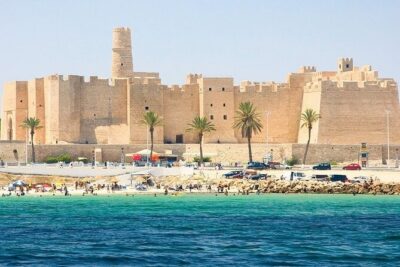
Private Tour to Kairouan, El Jem & Monastir from Tunis_hammamet
Read our review →
Private Excursion to Testour, Dougga and Bulla Regia from Tunis.
Read our review →
Full Day Dougga & Bulla Regia Via Testour Private tour with Lunch
Read our review →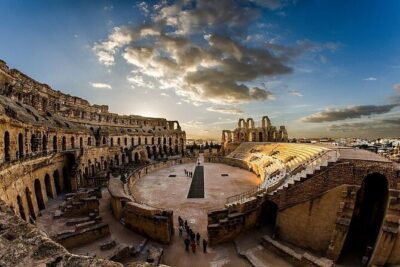
Private and Guided Tour to Kairouan and El Jem and Monastir
Read our review →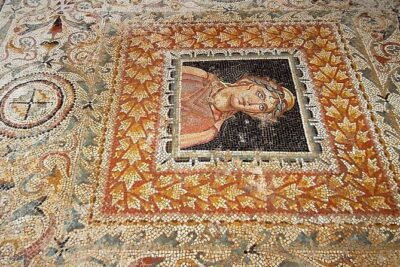
Private Day Trip to Testour, Dougga and Bulla Regia from Hammamet
Read our review →Browse the lists this tour appears in