
Reviewed · KAIROUAN & DOUGGA TOURS
Kairouan, El Djem and Monastir Guided Excursion from Hammamet
Tunisia’s past unfolds in three very different places. This private, roughly 10-hour excursion links Kairouan’s Islamic monuments, El Djem’s vast Roman amphitheater, and Monastir’s modern national story in one long day. I like the strong mix of culture and architecture, and I like having a private vehicle with hotel pickup rather than piecing together several separate journeys.
The guide service has earned praise for clear explanations, punctual pickup, and language skills, including Spanish and French. Guides named in the feedback include Mtir and Taib. The main catch is the pace: three destinations in one day means you will see important highlights, but you will not have endless time in each place. Lunch and several entrance fees also come from your own pocket.
In This Review
- Key points to know before booking
- Why this long day works from Hammamet
- Kairouan’s Aghlabite Basins and water story
- Sidi Sahbi, the Mosque of the Barber
- Kairouan’s medina and the three-gated mosque
- Entering El Djem’s third-century amphitheater
- Roman mosaics inside the El Djem museum
- Monastir, Bourguiba, and the marina
- Guide quality and the private format
- Price, pace, and what the $292.47 covers
- Who should book this excursion?
- Should you book it?
- FAQ
- How long does the excursion last?
- Where does the tour begin?
- Is this a private tour?
- What transportation is provided?
- Is a guide included?
- Are entrance fees included?
- Is lunch included?
- Which Kairouan stops are included?
- Can I cancel for a full refund?
Key points to know before booking
- Kairouan gives the day its spiritual heart, with the Aghlabite Basins, Sidi Sahbi Mosque, and the old medina.
- El Djem’s amphitheater is the visual star, a third-century Roman arena built to hold about 30,000 spectators.
- The private format suits families and couples, since only your group takes part and the itinerary can be individualized.
- The archaeological museum adds real depth, with Roman mosaics, statues, terracotta pieces, and glass objects in a reconstructed villa.
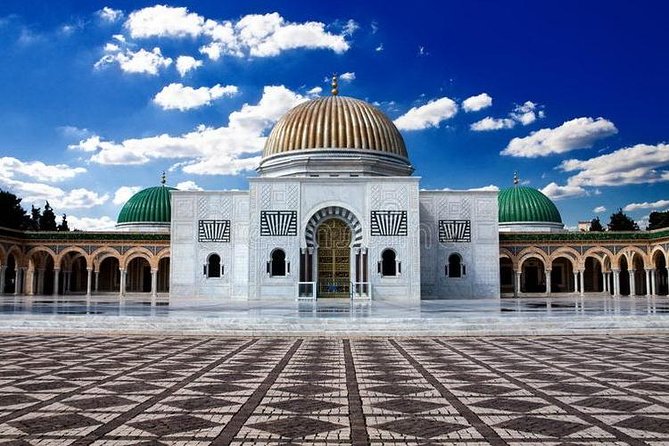
- Monastir changes the tone, moving from ancient Punic and Roman roots to the mausoleum of Habib Bourguiba, Tunisia’s first president.
- Budget for lunch and paid admissions, especially at El Djem and Monastir.
Why this long day works from Hammamet
Hammamet is a pleasant base, but its resort setting can make Tunisia feel smaller than it is. This outing reaches inland Kairouan, central Tunisia’s Roman past at El Djem, and the coastal city of Monastir. You get three historical chapters without arranging several transfers yourself.
The private transportation matters here. Ten hours is a serious day on the road, and an air-conditioned vehicle gives you a more comfortable place to rest between stops. Bottled water and all taxes are included. Since only your own group joins, the guide can respond to your interests more easily than on a large coach excursion.
The itinerary is packed, but its variety keeps the day from feeling repetitive. Kairouan is about religious history and traditional urban life. El Djem is about Roman engineering and spectacle. Monastir brings in twentieth-century Tunisia, along with a marina and major coastal monuments.
I would choose this trip if you want a strong first look at central and eastern Tunisia. I would not choose it if you prefer to spend a whole day slowly exploring one medina or museum.
More Kairouan & Dougga Trips in Hammamet
- Private and Guided Tour to Kairouan and El Jem and Monastir
★ 4.5 · 22 reviews - Private Day Trip to Testour, Dougga and Bulla Regia from Hammamet
★ 5.0 · 21 reviews - Kairouan & El Djem Guided Day Trip with Lunch from Hammamet
★ 4.0 · 18 reviews
Kairouan’s Aghlabite Basins and water story
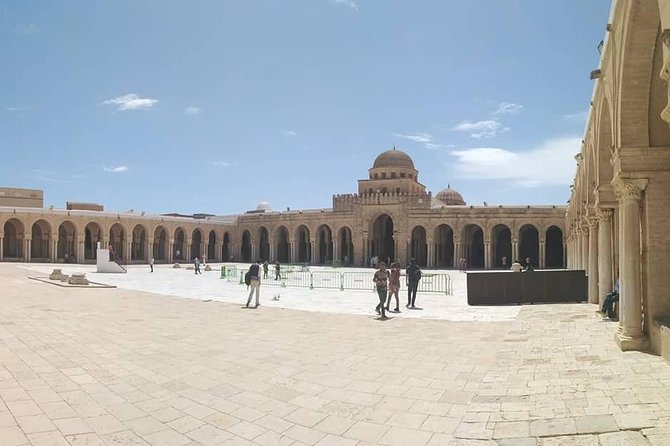
The first stop is the Bassins Aghlabites, outside Kairouan’s medina walls. These great water reservoirs date from the beginning of the second half of the ninth century and are regarded as major hydraulic works in the history of the Muslim world.
You have about 30 minutes here. That is enough for an introduction, photographs, and an explanation of how the reservoirs supported Kairouan. The stop works best when you think beyond the shape of the basins themselves. A city needs water before it can become a religious and political center, and these structures show the practical side of Kairouan’s rise.
Admission is listed as free. Because this is an outdoor opening stop, comfortable shoes and protection from the sun make sense. The short visit also helps keep the full-day schedule moving.
Sidi Sahbi, the Mosque of the Barber
Next comes the Mosque of Sidi Sahbi, also known as the Mosque of the Barber. It sits outside the medina and is linked to the mausoleum of Sidi Sahbi. You have around an hour here, giving the guide time to explain the site instead of treating it as a quick photo stop.
The name comes from the tradition surrounding Sidi Sahbi, who is associated with the Prophet Muhammad and is said to have kept hairs from the Prophet’s beard. The supplied details identify the place as a mausoleum and mosque, so your visit centers on its religious meaning and architecture.
I like this stop because it gives Kairouan a human and devotional dimension. The Aghlabite Basins explain how the city functioned. Sidi Sahbi helps explain why the city matters to Muslims. The two visits work well together.
Admission is listed as free, but you should still follow the guide’s advice about respectful behavior. Dress and conduct matter at religious sites, even when entry does not carry a separate charge.
Kairouan’s medina and the three-gated mosque
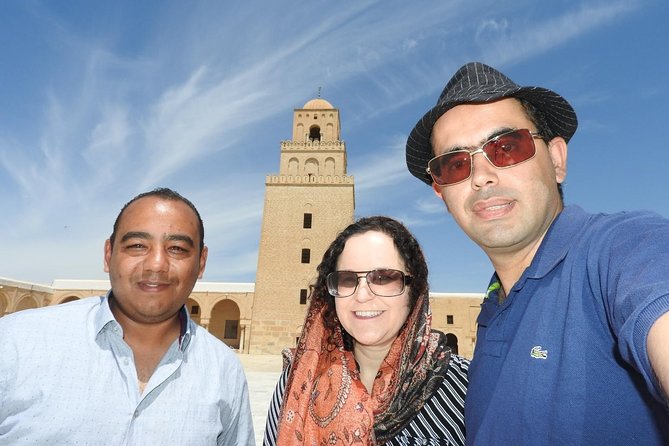
The Kairouan medina gets another hour. Here you walk through narrow streets and markets, including a visit to the Mosque of the Three Gates. The medina has been on the UNESCO World Heritage List since December 9, 1988.
This is the part of the Kairouan visit where you get a sense of the old city as a living place, not simply a group of monuments. Narrow lanes and market areas can make the city feel more immediate than a formal museum. Your guide can also help you read the layout and point out details that are easy to miss while walking.
The three-gated mosque is especially useful for visitors who want to see how Islamic architecture appears in an urban setting. The supplied itinerary does not promise entry into every interior, so listen to the guide’s instructions on what is open during your visit.
An hour goes quickly. You can expect an overview rather than a slow shopping session or a detailed architectural study. If you want time for purchases, keep them modest and avoid letting the market stop swallow the schedule. El Djem still requires two substantial visits later in the day.
Further south, and a completely different kind of day out:
- Private tour: Medina,Carthage ,Sidi Bou Said, Bardo Museum+lunch
★ 5.0 · 194 reviews - Quad ride on the hills of Hammamet
★ 4.0 · 104 reviews - 2-Day Tunisian Sahara Tour with Food & Stay from Hammamet
★ 4.5 · 80 reviews - Tour to the Medina of Hammamet and the Spice Market of Nabeul
★ 4.0 · 45 reviews
Entering El Djem’s third-century amphitheater
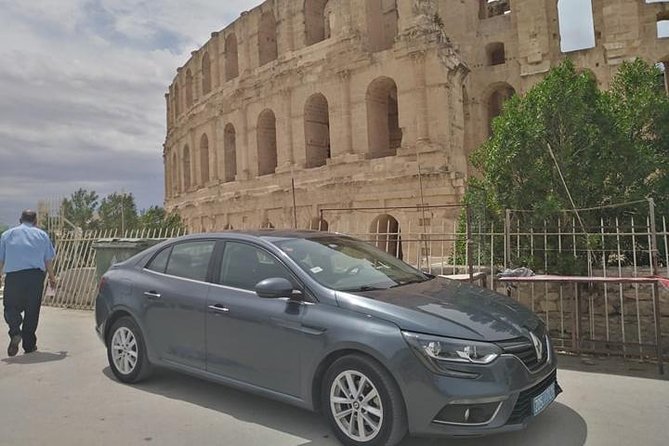
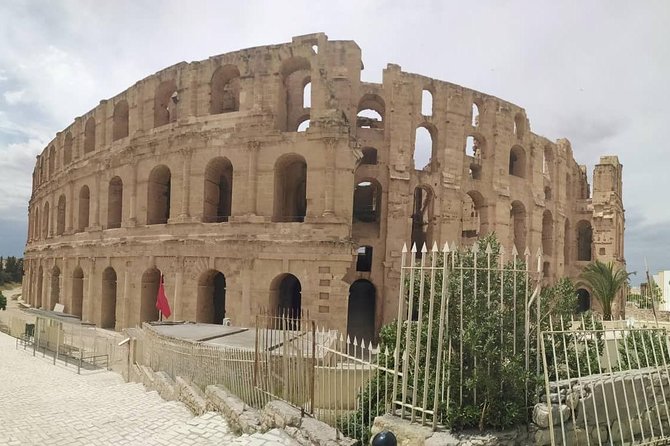
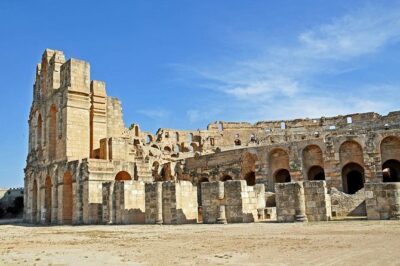
El Djem is the day’s big Roman moment. The city was known in antiquity as Thysdrus and was one of the prosperous cities of Roman Africa. The amphitheater was founded in the third century AD and is listed as a UNESCO World Heritage site.
The arena could hold about 30,000 spectators, making it the third-largest Roman amphitheater by size after those of Rome and Capua, according to the tour information. Even without a long explanation, the scale is hard to miss. The stone structure gives you a clear sense of how much money and labor Roman North Africa could command.
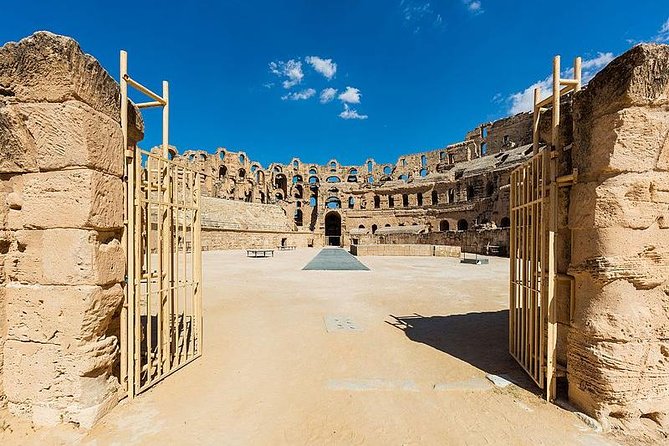
You have two hours for the amphitheater. That is the most generous single stop of the day, and rightly so. You can examine the exterior, enter the seating areas, and look into the lower passages used to support the shows. The size of the arena is the main lesson: this was not a small provincial venue.
I would take your time with the relationship between the arena and the surrounding town. El Djem is not just a Roman ruin sitting in isolation. It reflects the wealth of Thysdrus and the public appetite for spectacle in the Roman world.
The entrance fee is not included, so add it to your day’s budget. The tour includes all fees and taxes in its general inclusions, but the itinerary specifically excludes admission to museums and exhibitions. That distinction is worth checking at booking and on the day.
Roman mosaics inside the El Djem museum
The Archaeological Museum of El Djem follows the amphitheater, with about one hour set aside. The museum occupies a reconstructed Roman villa and displays Roman mosaics, statues, terracotta statuettes, perfume vials, and other glass objects.
This is an excellent pairing. The amphitheater shows Roman public life on a huge scale. The museum brings you into a more private setting, where floors, household objects, decoration, and small personal items fill out the picture.
The listed collection covers a period from the eleventh century to the fifth century, though that wording is unusual for a Roman collection and may be worth clarifying with the guide. The important point is that you will see more than a few broken columns. The mosaics and domestic objects make ancient life easier to picture.
The museum has a separate entrance cost, also not included. If you are choosing between rushing through the amphitheater and museum, I would protect time for both. The arena delivers the immediate impact, while the villa gives the visit detail and texture.
Monastir, Bourguiba, and the marina
The final stop is Monastir, a former Punic and Roman city known in antiquity as Ruspina. The visit includes a passage in front of the birthplace of Habib Bourguiba, Tunisia’s first president, followed by a visit to his mausoleum and free time around the ribat and marina.
This shift from ancient Rome to modern Tunisia gives the day a useful change of subject. The Bourguiba mausoleum connects Monastir to the country’s modern political identity. You are no longer looking only at distant history. You are also seeing the public memory of a national leader.
The ribat brings the focus back to earlier centuries. The itinerary says you have free time to visit the ribat and marina, but it also lists Monastir admission fees as not included. Plan for a possible entrance charge rather than assuming every part of the stop is covered.
One hour is enough for a focused look, not an unhurried afternoon beside the water. You may need to choose between the ribat, the mausoleum, and marina time depending on the exact schedule and your guide’s arrangements. If the sea views matter most to you, say so early.
Monastir is also the point where fatigue can catch up with you. After Kairouan and El Djem, I would use the marina time for a calm pause rather than trying to squeeze in every possible sight.
Guide quality and the private format
The most praised part of this experience is the service. The guide is described as informative, precise, and open to discussion. Mtir is specifically praised for excellent French and for bringing broad cultural knowledge to the day. Another booking included an experienced Spanish-speaking guide, which is useful if Spanish is your preferred language.
The private setup is more than a label. Your group alone participates, so the day can have an individualized itinerary within the listed stops. A family may need a little more time at the amphitheater. A history-focused couple may want extra explanation at the museum. The guide cannot turn a ten-hour trip into a two-day tour, but private transport gives you more room than a fixed-seat bus.
Pickup is offered, and confirmation is received at booking. The vehicle is air-conditioned and private, with bottled water provided. Past feedback also highlights pickup at the indicated hotel time and the absence of extra costs in the service experience. Still, you should remember that lunch, personal expenses, and listed entrance fees remain yours.
Price, pace, and what the $292.47 covers
The price is $292.47 per group of up to two people. For a couple, that works out to about $146.24 each before lunch and admissions. That is not a bargain-basement day trip, but the comparison should be made with the full package in mind.
You are paying for private transportation, an air-conditioned vehicle, a professional guide, bottled water, taxes, and pickup service. You also avoid arranging transport between three widely separated destinations. For two people who value comfort, direct routing, and questions answered along the way, the price can be reasonable.
The value becomes stronger if you would otherwise need several taxis or separate guided visits. It becomes weaker if your main goal is simply to reach El Djem as cheaply as possible. A shared group tour, if available for your dates, could cost less, but it would not offer the same private setting.
Set aside money for:
- Lunch
- Entrance to the El Djem amphitheater
- Entrance to the El Djem archaeological museum
- Any Monastir museum or exhibition fees
- Personal purchases and other expenses
The free admissions listed for the Aghlabite Basins, Sidi Sahbi Mosque, and Kairouan medina help offset some of those costs.
Who should book this excursion?
I think this tour fits a couple, family, or small private group based in Hammamet that wants maximum historical variety in one day. It is especially useful for a first visit, when you want a broad sense of Tunisia rather than a deep study of one city.
It also suits people who appreciate a guide’s interpretation. The sights are strong on their own, but the day makes more sense when someone explains the link between Kairouan’s religious importance, Thysdrus’s Roman wealth, and Monastir’s modern national story.
You should think twice if you dislike early starts, long road days, or scheduled sightseeing. The duration is approximately 10 hours, and the itinerary leaves little room for extended shopping or spontaneous detours. The private format helps, but it does not remove the distance between the destinations.
Free cancellation is available up to 24 hours before the start time for a full refund. Cancellations or changes made within 24 hours are not refunded or accepted, so keep that deadline in mind.
Should you book it?
Book this excursion if you want a well-rounded Tunisia day trip from Hammamet with private transport and a guide who can explain what you are seeing. Kairouan supplies the spiritual center, El Djem delivers the unforgettable scale, and Monastir adds a modern chapter.
The strongest reason to book is the combination. Few single-day outings give you an Islamic holy city, one of North Africa’s great Roman monuments, a museum of mosaics, and Monastir’s Bourguiba memorial in one route.
Skip it if you want slow travel. For everyone else, the packed schedule is a fair trade for the range of places you reach.
FAQ
How long does the excursion last?
The excursion lasts approximately 10 hours.
Where does the tour begin?
The tour is based in Hammamet, and pickup is offered.
Is this a private tour?
Yes. Only your group participates, and the price covers up to two people.
What transportation is provided?
Private transportation is provided in an air-conditioned vehicle.
Is a guide included?
Yes. A professional guide is included. The service has included French and Spanish-speaking guides, with Mtir and Taib named in the available feedback.
Are entrance fees included?
No. Entrance fees to museums or exhibitions are not included. The itinerary specifically lists admission to the El Djem amphitheater and archaeological museum as extra, and Monastir admission fees are also not included.
Is lunch included?
No. Lunch is not included, so you should budget for it separately.
Which Kairouan stops are included?
The visit includes the Aghlabite Basins, the Mosque of Sidi Sahbi, and the Kairouan medina, including the Mosque of the Three Gates.
Can I cancel for a full refund?
Yes. You can cancel at least 24 hours before the experience begins for a full refund. Cancellations made less than 24 hours before the start time are not refunded.
More Kairouan & Dougga Trips in Hammamet
- Private Day Tour , Kairouan & Amphitheatre of el Jem From Tunis /Hammamet/Sousse
★ 4.5 · 8 reviews - Kairouan & El Jem Small Group Tour from Tunis, Hammamet or Sousse
★ 5.0 · 6 reviews - Kairouan, El Djem, Monastir Self-Guided Excursion from Hammamet
★ 4.5 · 5 reviews - Zaghouan, Thuburbo Majus and Dougga Private Self-Guided Excursion from Hammamet
★ 5.0 · 2 reviews
Newest from Hammamet
- Kairouan & El Jem Small Group Tour from Tunis, Hammamet or Sousse★ 5.0 · 6 reviews
- 4-Day Private Tour: Sahara and Djerba Island from Tunis and Hammamet★ 5.0 · 4 reviews
- 2days 4×4 SAFARI from Sousse, Hammamet,Tunis – 4*hotel accommodation★ 3.5 · 6 reviews
- Enfidha Private Arrival Airport Transfer to Hammamet★ 4.5 · 4 reviews
- 3DAYS 4×4 safari from Sousse/Hammamet/Tunis 100km deep in desert camp★ 4.5 · 3 reviews
- Kairouan, El Djem, Monastir Self-Guided Excursion from Hammamet★ 4.5 · 5 reviews
- Transfer from Airport Tunis Carthage To Hammamet★ 5.0 · 2 reviews
- From Hammamet: Sahara Desert Overnight Camping★ 4.5 · 2 reviews
Kairouan & Dougga Tours, compared.
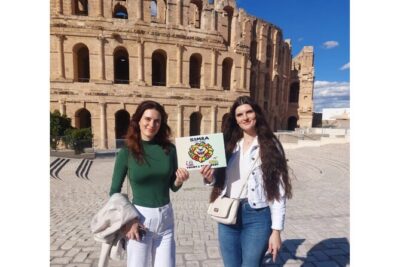
Fun VIP Tour: El Jem, Kairouan, Monastir/Sousse (PICKUP ALL City)
Read our review →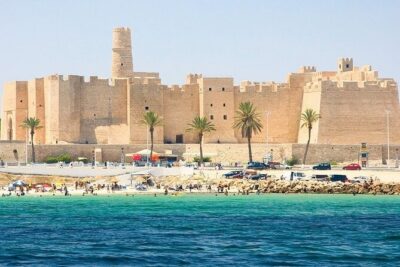
Private Tour to Kairouan, El Jem & Monastir from Tunis_hammamet
Read our review →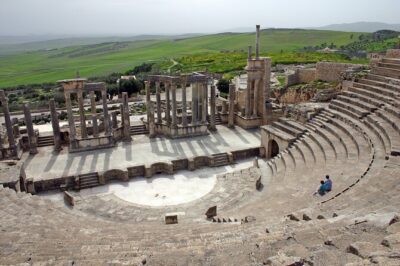
Private Excursion to Testour, Dougga and Bulla Regia from Tunis.
Read our review →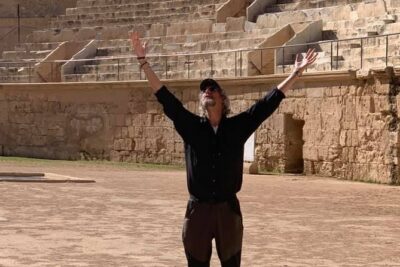
Full Day Dougga & Bulla Regia Via Testour Private tour with Lunch
Read our review →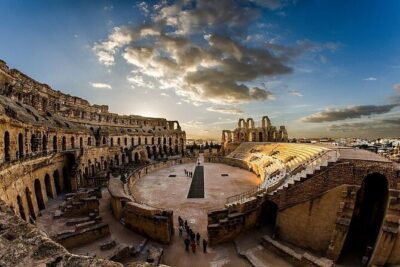
Private and Guided Tour to Kairouan and El Jem and Monastir
Read our review →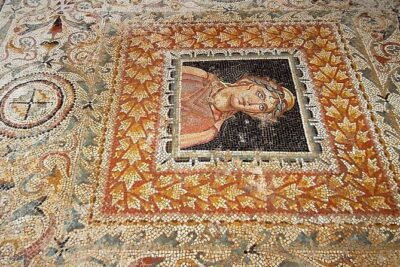
Private Day Trip to Testour, Dougga and Bulla Regia from Hammamet
Read our review →Browse the lists this tour appears in