
Reviewed · KAIROUAN & DOUGGA TOURS
Zaghouan, Thuburbo Majus and Dougga Private Self-Guided Excursion from Hammamet
Ancient waterworks, Roman ruins, and a UNESCO site fill one long day. I like the private vehicle and the freedom to spend three hours at both Thuburbo Majus and Dougga, rather than being rushed through with a large group. I also like that the driver handles the long road from Hammamet while you focus on the sites. The main tradeoff is simple: no local guide is included, so you will need to read signs, use your own guidebook, or arrange help separately.
This is a history-heavy outing, not a relaxed sightseeing loop. The route links the Zaghouan water source and aqueduct with two major Roman settlements, giving you a useful sense of how water, roads, temples, baths, markets, and public buildings supported Roman life in Tunisia. Lunch is extra, but the driver can suggest a place to eat.
In This Review
- Key points at a glance
- Why this private Hammamet day trip works
- Zaghouan’s Water Temple and the start of the aqueduct
- The aqueduct stop near Zaghouan
- Three hours among the ruins of Thuburbo Majus
- Dougga, the day’s major archaeological prize
- What the $279.58 group price really covers
- Food, timing, and the practical side of the day
- The guide question: independence or added support?
- Who should book this excursion?
- Should you book the Zaghouan, Thuburbo Majus, and Dougga trip?
- FAQ
- Where does the excursion begin?
- How long does the excursion last?
- How many people can join the private tour?
- Is a local guide included?
- Is lunch included?
- What is included in the price?
- Are entrance fees included?
- Can I cancel for a full refund?
Key points at a glance
- Three major stops in one private day: Zaghouan, Thuburbo Majus, and Dougga are covered in roughly eight to ten hours.
- The Water Temple explains the route: This was the source of an aqueduct that carried water toward Roman cities, including Carthage.
- Thuburbo Majus rewards slow exploration: Three hours allows time for the Capitol, forum, baths, temples, villas, and market square.
- Dougga is the grand finale: The 65-hectare UNESCO-listed site contains some of North Africa’s best-preserved Roman monuments.
- You pay for transport and flexibility, not guiding: Entrance fees and lunch are extra, and no local guide is included.
- Best for a small group: The $279.58 price covers up to three people, making the cost easier to justify when shared.
Why this private Hammamet day trip works
The strength of this excursion is its clear theme. You are not simply ticking off three old sites. You begin at the source of a major Roman water system, see part of the aqueduct on the road, then visit two cities that depended on Roman engineering and public planning.
That connection gives the day shape. At the Water Temple, you can think about where the water began. At the aqueduct stop, you see how it moved. At Thuburbo Majus and Dougga, you see how Roman towns used water for baths, fountains, homes, and public life.
I also like the private format. Only your group takes part, and the vehicle is air-conditioned. You can spend more time at the Capitol if architecture interests you, or move along sooner if you have had enough of another temple. This matters because the two archaeological sites are large and can feel tiring if you are trying to keep pace with strangers.
Still, private transport does not mean private guiding. The driver takes you to the places, but a local guide in English, French, Italian, German, Spanish, or Russian is not part of the package. If you want detailed explanations of inscriptions, religious practices, construction methods, and political history, plan to bring reading material or arrange a guide separately.
More Kairouan & Dougga Trips in Hammamet
- Private and Guided Tour to Kairouan and El Jem and Monastir
★ 4.5 · 22 reviews - Private Day Trip to Testour, Dougga and Bulla Regia from Hammamet
★ 5.0 · 21 reviews - Kairouan & El Djem Guided Day Trip with Lunch from Hammamet
★ 4.0 · 18 reviews
Zaghouan’s Water Temple and the start of the aqueduct
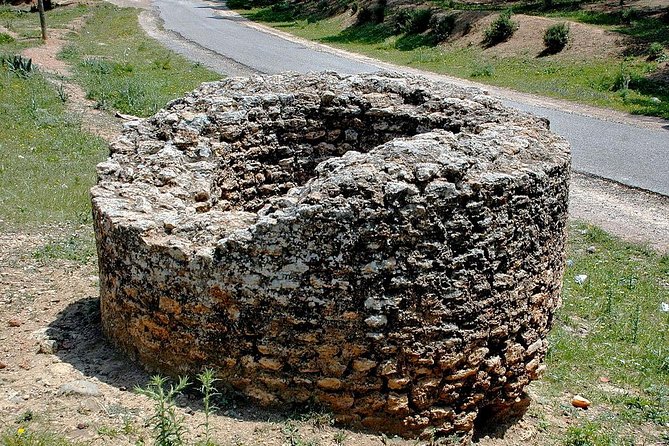
The first stop is the Water Temple in Zaghouan, where the important water source begins. The visit is planned for about one hour, and admission is listed as free.
This is a strong opening because it gives you a practical way to understand Roman power. Armies and roads matter, but reliable water mattered just as much. From this source, an aqueduct carried water to several Roman cities, including Carthage. You are looking at the beginning of a system that helped support urban life over a long distance.
Without a guide, you may need to take a little initiative here. Look closely at the setting and consider the basic question: how did water move from this source toward distant cities? That question will make the later ruins easier to read. The stop is not as extensive as Dougga, but it supplies the engineering context that ties the whole outing together.
The listed visit lasts one hour, which should give you time to see the temple without turning the first stop into a rushed photo break. Admission is free, so there is no extra site fee at this point.
The aqueduct stop near Zaghouan
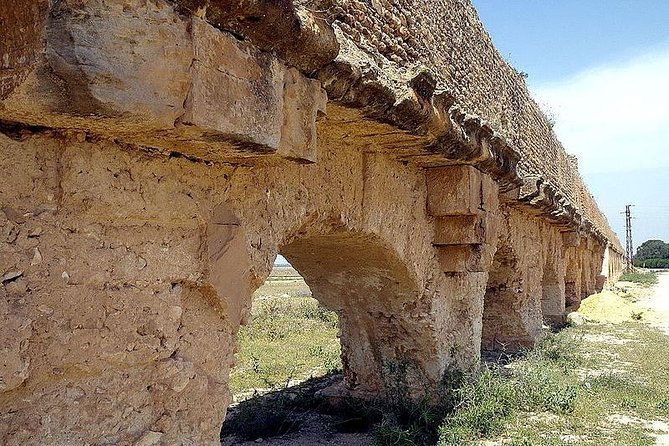
About halfway toward Thuburbo Majus, the route pauses at L’aqueduc de Zaghouan for around 30 minutes. This is another free stop, and it offers a look at the Roman aqueduct that distributed water from the Water Temple toward cities such as Thuburbo Majus and Carthage.
Thirty minutes is enough for a focused look, but not a full archaeological visit. Think of it as a visual link between the source and the cities. The aqueduct is more meaningful after seeing the Water Temple first, and it prepares you to notice water systems when you reach the Roman settlements.
I would not expect this stop to carry the same weight as Dougga or Thuburbo Majus. Its value comes from the story it completes. If you enjoy Roman engineering, it may be one of the most satisfying parts of the route. If you prefer temples, theaters, and grand civic buildings, you may find the short visit plenty.
Three hours among the ruins of Thuburbo Majus
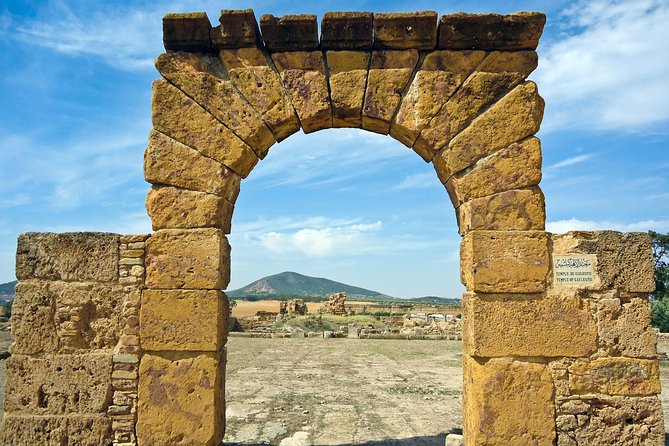
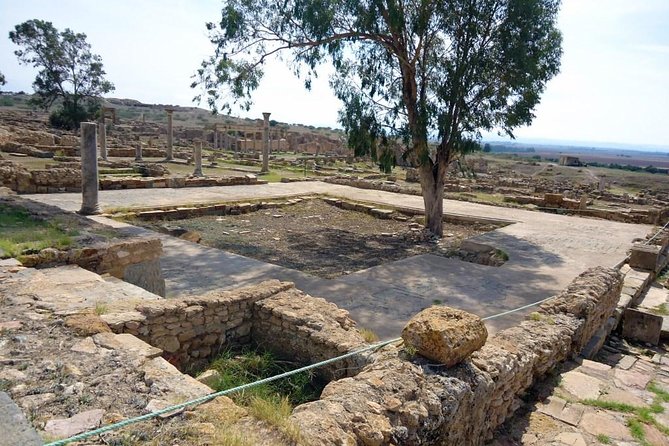
Thuburbo Majus receives about three hours, and that is a sensible amount of time. The ancient Roman city includes the Capitol, forum, Villa of Neptune, Palestra of the Petronii, Temple of Mercury, Byzantine church, summer baths, winter baths, and market square.
The range of buildings is what makes this stop useful. You are not seeing one isolated monument. You can move from civic space to religious buildings, from private decoration to public bathing, and from Roman structures to later Byzantine use. That variety helps you picture the city as a working place rather than a pile of disconnected stones.
The Capitol and forum give you the formal public side of the city. The baths show how water shaped daily routines, which brings the aqueduct story back into focus. The Villa of Neptune offers a more domestic angle, while the Palestra of the Petronii points to exercise and social life.
The site is not simply a quick stop on the way to Dougga. Three hours gives you room to explore at a human pace, though the lack of an included guide means the meaning of each building may not always be obvious. I would bring a site map or reliable historical notes if you want to understand the layout instead of just photographing individual ruins.
Admission is not included. The listed entrance fee is 3 euros per person for the archaeological sites, so budget for this extra cost at Thuburbo Majus and Dougga. The price is modest, but it is worth knowing about before you set out.
More Private Tours in Hammamet
- Private tour: Medina,Carthage ,Sidi Bou Said, Bardo Museum+lunch
★ 5.0 · 194 reviews - A Private Night at Desert Douz Tozeur
★ 5.0 · 29 reviews - Private day tour Sidi Bousaid, Carthage and Hammamet departing from sousse
★ 4.5 · 15 reviews - 3-Day Private Excursion to the Sahara departing from Hammamet
★ 4.5 · 10 reviews
Dougga, the day’s major archaeological prize
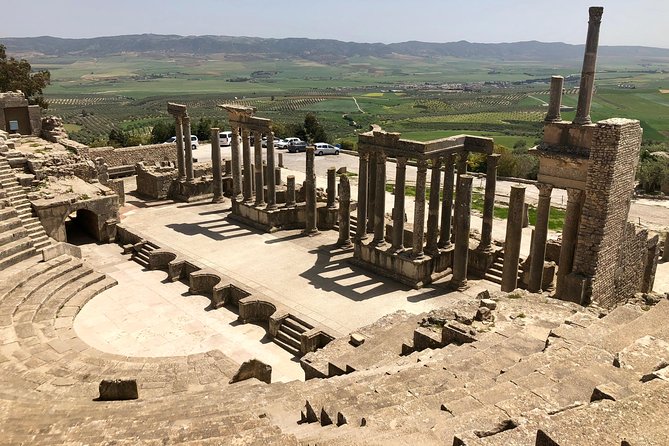
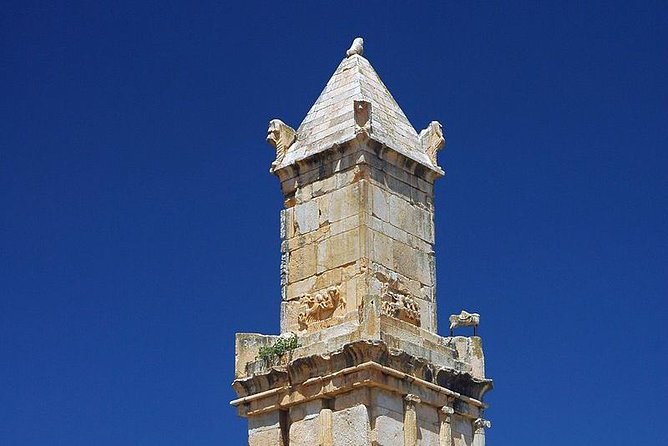
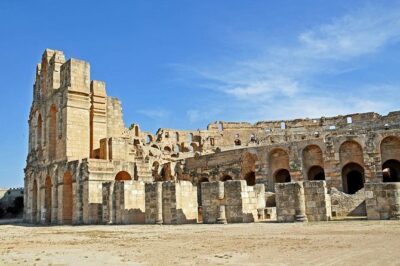
Dougga is scheduled for another three hours. The site covers 65 hectares and is listed as a UNESCO World Heritage site. It is described as the most preserved Roman city in North Africa, and its collection of monuments gives this final stop real weight.
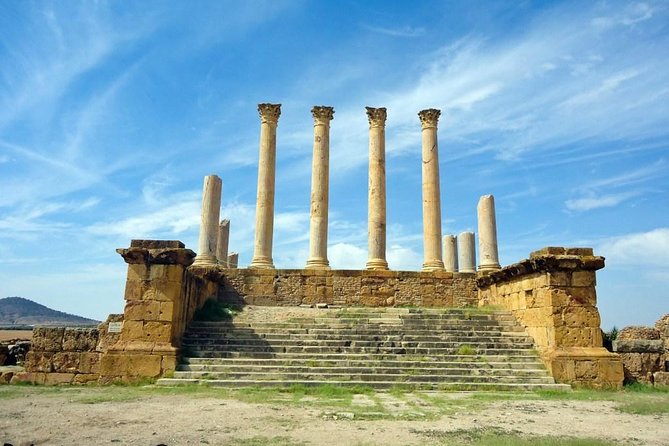
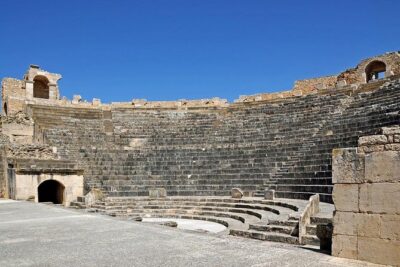
The Capitol is one of the key sights, but it is only part of the visit. You can also see the Wind Rose, the Libyco-Punic Mausoleum, dolmens, the market, the Villa of the Trifolium, and temples dedicated to Mercury, Minerva, and Saturn.
This mix matters because Dougga brings together different periods and traditions. The Libyco-Punic Mausoleum and dolmens point beyond the Roman period, while the temples, forum areas, and villas show the city under Roman influence. You get a broader picture of the region than you would from a single Roman monument.
Three hours is enough for a substantial visit, but Dougga is a large site. You will need to choose your priorities. If this is the main reason you booked the excursion, tell the driver that you want to use the full time here. The private format should make that possible, although the total day still has to fit within the approximate eight to ten-hour schedule.
Dougga can also be the most tiring stop. The physical demand is listed as moderate, and the site size means you should be ready for plenty of walking. Comfortable shoes and water are sensible choices. One bottled-water serving per passenger is included, but it is still wise to pay attention to your own needs during a full day among exposed ruins.
What the $279.58 group price really covers
The price is $279.58 per group of up to three people. That works out to about $93.19 per person if three people share the vehicle. For two people, the effective cost is about $139.79 each, while a solo customer carries the full group price.
You are paying for a private, air-conditioned vehicle, private transportation, parking fees, gratuities, and one bottle of water per passenger. Pickup is offered in Hammamet, which removes the need to arrange separate transport to the starting point.
The value is strongest for three people who want a private day and do not want to rent a car or manage the route themselves. It is also useful if you care about setting your own pace. The price is harder to justify for one person, especially because entrance fees, lunch, and local guiding are not included.
The missing guide is the key budget question. If you are happy to explore with written information, the arrangement can work well. If interpretation is central to your trip, add the cost of a guide before deciding. The available guide languages are English, French, Italian, German, Spanish, and Russian, but that service is separate.
Food, timing, and the practical side of the day
Lunch is not included. The driver can recommend suitable places, which is helpful, but you should still treat the meal as an added expense and allow time for it within the day.
The overall duration is approximately eight to ten hours. That is a full outing, especially with three hours at each major archaeological site. You should not book this expecting a short morning activity or a gentle resort break. It is best approached as a dedicated history day from Hammamet.
Pickup is offered, and the vehicle is air-conditioned. Those details matter on a long route, since you will spend a substantial part of the day moving between sites. Private transportation also lets your group avoid the fixed rhythm of a large coach.
The experience allows service animals, and a moderate level of physical fitness is recommended. Nothing in the details suggests that the sites are designed for minimal walking, so anyone with mobility concerns should ask for more information before booking.
The guide question: independence or added support?
This excursion is described as self-guided, and the local guide is not included. That can be a benefit if you prefer independence. You can study a monument at your own speed, pause for photographs, and decide how much historical detail you want.
It can also be a drawback at Dougga and Thuburbo Majus, where the number of monuments is large and the layout may not explain itself. A guide could connect the Capitol, baths, temples, villas, and water system in a way that makes the ruins easier to understand.
There is one encouraging detail in the available feedback: a French-language comment praised a competent and friendly guide and called the region especially interesting to discover. Since the current package details exclude a local guide, I would not treat that praise as a promise that a guide will accompany every booking. Instead, ask before departure if you want guided interpretation and confirm what language is available.
Who should book this excursion?
I would recommend it to a small group of up to three people who want to see several important sites in one day without driving themselves. It suits people who like Roman architecture, ancient engineering, temples, baths, and large archaeological areas.
It is also a good match for you if flexibility matters more than a polished, lecture-style tour. The private vehicle lets you control the pace, and the driver can help with practical matters such as parking and lunch suggestions.
I would hesitate if you want a fully guided historical experience with detailed commentary at every monument. I would also hesitate if you dislike long days, extensive walking, or extra costs beyond the advertised group price.
The most sensible preparation is simple: bring water, sun protection, comfortable shoes, and reading material about the sites. Since the day includes both free and paid stops, carry money for the archaeological entrance fees and lunch.
Should you book the Zaghouan, Thuburbo Majus, and Dougga trip?
Book it if you want an efficient private route from Hammamet and you are comfortable exploring ancient sites without a local guide. The Water Temple and aqueduct give the journey a clear theme, Thuburbo Majus offers a broad Roman city experience, and Dougga supplies the major finale.
The strongest value comes when three people split the $279.58 group price. Before paying, confirm that the self-guided format suits you, then plan for the 3 euro per-person archaeological entrance fee, lunch, and any guide you may want separately. For history-minded visitors, this is a demanding but rewarding day with a practical route and plenty of time at the two main sites.
FAQ
Where does the excursion begin?
Pickup is offered from Hammamet, Tunisia.
How long does the excursion last?
The full experience lasts approximately eight to ten hours.
How many people can join the private tour?
The price covers a private group of up to three people.
Is a local guide included?
No. A local guide is not included. Guide services may be available in English, French, Italian, German, Spanish, and Russian, but they are listed as an extra.
Is lunch included?
No. Lunch is not included, though the driver can recommend places to eat.
What is included in the price?
The package includes an air-conditioned vehicle, private transportation, bottled water with one bottle per passenger, gratuities, and parking fees.
Are entrance fees included?
No. Entrance fees are separate. The listed fee is 3 euros per person for the archaeological sites.
Can I cancel for a full refund?
Yes. You can cancel at least 24 hours before the experience start time for a full refund. Changes or cancellations made less than 24 hours before the start time are not accepted or refunded.
More Self-Guided Tours in Hammamet
- Tunis, Carthage and Sidi Bou Said Self-Guided Excursion from Hammamet
★ 4.5 · 4 reviews - Cap-Bon Self-Guided Excursion from Hammamet
★ 4.5 · 3 reviews - Self guided bike tour of Carthage archeological site
★ 4.5 · 10 reviews
More Kairouan & Dougga Trips in Hammamet
- Private Day Tour , Kairouan & Amphitheatre of el Jem From Tunis /Hammamet/Sousse
★ 4.5 · 8 reviews - Kairouan & El Jem Small Group Tour from Tunis, Hammamet or Sousse
★ 5.0 · 6 reviews - Kairouan, El Djem, Monastir Self-Guided Excursion from Hammamet
★ 4.5 · 5 reviews - Kairouan, El Djem and Monastir Guided Excursion from Hammamet
★ 5.0 · 5 reviews
Newest from Hammamet
- Kairouan & El Jem Small Group Tour from Tunis, Hammamet or Sousse★ 5.0 · 6 reviews
- 4-Day Private Tour: Sahara and Djerba Island from Tunis and Hammamet★ 5.0 · 4 reviews
- 2days 4×4 SAFARI from Sousse, Hammamet,Tunis – 4*hotel accommodation★ 3.5 · 6 reviews
- Enfidha Private Arrival Airport Transfer to Hammamet★ 4.5 · 4 reviews
- 3DAYS 4×4 safari from Sousse/Hammamet/Tunis 100km deep in desert camp★ 4.5 · 3 reviews
- Transfer from Airport Tunis Carthage To Hammamet★ 5.0 · 2 reviews
- Kairouan, El Djem, Monastir Self-Guided Excursion from Hammamet★ 4.5 · 5 reviews
- From Hammamet: Sahara Desert Overnight Camping★ 4.5 · 2 reviews
Kairouan & Dougga Tours, compared.
Fun VIP Tour: El Jem, Kairouan, Monastir/Sousse (PICKUP ALL City)
Read our review →
Private Tour to Kairouan, El Jem & Monastir from Tunis_hammamet
Read our review →
Private Excursion to Testour, Dougga and Bulla Regia from Tunis.
Read our review →
Full Day Dougga & Bulla Regia Via Testour Private tour with Lunch
Read our review →
Private and Guided Tour to Kairouan and El Jem and Monastir
Read our review →
Private Day Trip to Testour, Dougga and Bulla Regia from Hammamet
Read our review →Browse the lists this tour appears in