Reviewed · BARDO MUSEUM TOURS
Carthage, Bardo Museum, Sidi Bou Said and Medina Private Day Tour
Four Tunisian highlights, one busy day. This tour links Roman Carthage, the Bardo Museum, Sidi Bou Said, and the old medina, making it a useful first look at Tunis and its surroundings. I like the private car, hotel pickup, and the chance to set the pace with your own guide. I also like the mix of ruins, art, markets, mosques, and sea views.
The main caution is time. Seven or eight hours is enough to see the major sights, but not enough for a slow wander through every corner of the medina or Carthage. You should also confirm exactly what your booking includes, since guide service, lunch, entrance fees, and the private arrangement can depend on the option selected.
In This Review
- Key points to know before booking
- Why this day trip works for a first visit
- Starting among the ruins of Carthage
- The aqueduct and Baths of Antoninus
- Sidi Bou Said: blue-and-white streets and sea views
- The Bardo Museum and its Roman mosaics
- Entering Tunis through Bab el Bhar
- Walking the Medina of Tunis
- Zitouna Mosque and Saint Louis Cathedral
- Guide quality, driver service, and the private format
- Is $30 good value?
- Timing, comfort, and who should book
- Practical ways to improve the day
- Should you book this Tunis day tour?
- FAQ
- How long does the tour last?
- Where does hotel pickup apply?
- Is cruise-port pickup included?
- Is the tour private?
- Is lunch included?
- Are entrance fees included?
- Is a licensed guide included?
- Is the Bardo Museum open every day?
- Can I cancel for a full refund?
Key points to know before booking
- Four major stops in one day: You visit Carthage, Sidi Bou Said, the Bardo Museum, and Tunis Medina, with several smaller sights along the way.
- Private transport from your hotel: A climate-controlled, insured vehicle is provided for hotel pickup and drop-off in Tunis or Hammamet.
- Carthage is spread out: The ruins are not one single compact monument, so the vehicle helps you reach separate archaeological areas.
- The Bardo is the art highlight: Its Roman mosaics and ancient objects give context that the open-air ruins cannot.
- Sidi Bou Said supplies the scenic break: Blue-and-white buildings, cafés, galleries, and Mediterranean views soften the pace after the museum and ruins.
- Check the option details: Lunch, a licensed guide, museum admission, and Carthage admission may be included only with selected packages.
Why this day trip works for a first visit
Tunis can feel like several destinations stitched together. The modern capital opens into the old medina, Carthage sits along the coast, Sidi Bou Said offers a pretty seaside setting, and the Bardo gathers Tunisia’s finest archaeological art under one roof.
This tour saves you from arranging transport between all four. That matters because Carthage is spread across a broad area, while the medina is best explored on foot. A private driver can handle the roads and wait while you visit each site, leaving you to focus on the sights.
I especially like the balance of indoor and outdoor stops. Carthage gives you open ruins and coastal views. The Bardo provides shade and close-up detail. The medina offers local trade and religious architecture. Sidi Bou Said gives you time for coffee, lunch, and photographs.
The pace, though, is purposeful rather than leisurely. One hour in Sidi Bou Said and one hour in the medina can pass quickly. If you love shopping or want extended time at the ruins, tell your guide early and agree on priorities.
More Bardo Museum Visits in Tunis
- Private tour: Medina,Carthage ,Sidi Bou Said, Bardo Museum+lunch
★ 5.0 · 230 reviews - Tunis: Carthage, Bardo Museum, Sidi Bou Said & Medina Group Tour
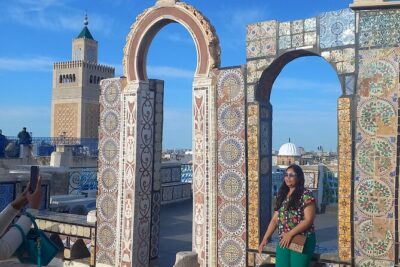
★ 4.5 · 33 reviews - Private Day Tour Tunis Medina Carthage Sidi Bou Said Bardo Museum
★ 5.0 · 30 reviews
Starting among the ruins of Carthage
The main Carthage visit lasts about two hours, followed by separate stops at the aqueduct and the Baths of Antoninus. This gives you a broad introduction to the ancient city instead of confining you to one excavation.
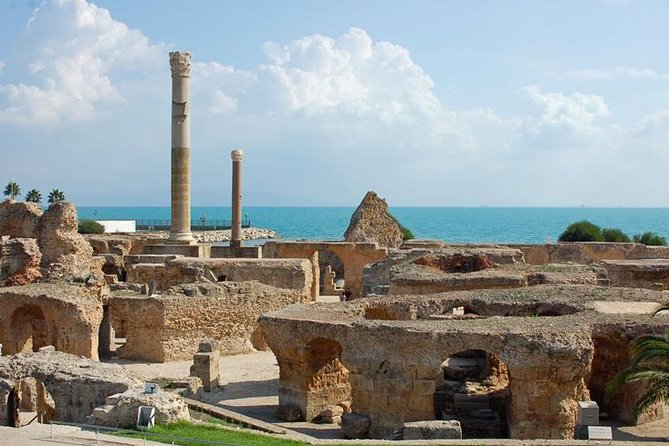
Carthage was destroyed by Rome in 146 BC, yet the surviving remains show how organized and substantial the city was. Excavations have revealed five-story homes, sewage systems, city walls, and other traces of urban life. The walls once stretched about 21 miles, or 34 kilometers, around Byrsa Hill.
That scale explains why a car and guide are useful. The archaeological site is not a single ruin with one obvious entrance and exit. You may move between areas with different kinds of remains, and your guide can explain how they fit into the larger city.
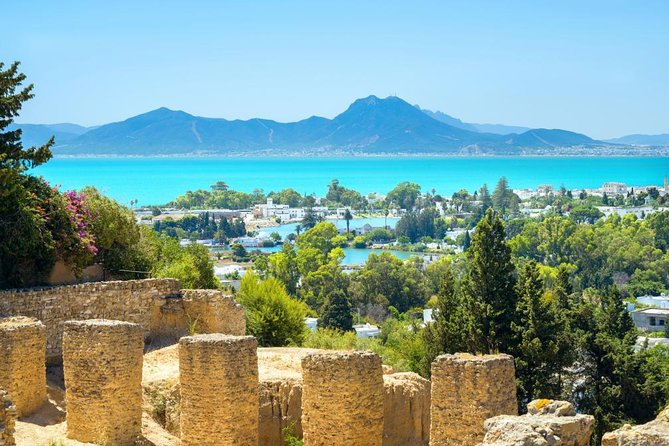
Byrsa Hill also offers sweeping views toward the coast. This is one of the best places to pause and understand Carthage’s setting. The ruins are important, but the position above the Mediterranean is part of the experience.
Keep your expectations realistic. If you have already visited exceptionally preserved Roman cities, some parts of Carthage may seem low or fragmentary. Its appeal comes from the size, setting, and layers of civilization rather than one perfectly intact monument.
The aqueduct and Baths of Antoninus
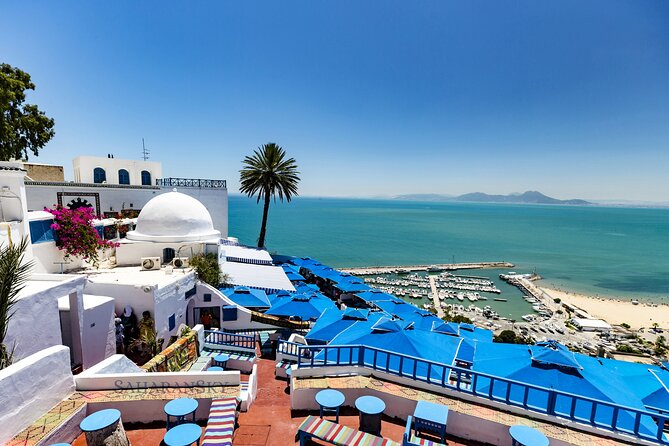
The Carthage Aqueduct receives about 30 minutes. The stop helps show how the city was supplied with water, and it adds variety after the first archaeological area.
The Baths of Antoninus also receive about 30 minutes. These were part of a large Roman bathing complex, and the remains help you picture the public life of ancient Carthage. The ruins are open and extensive, so your guide’s explanation is especially useful when walls and foundations are difficult to interpret.
The schedule does not allow a long, independent archaeological study. If you have a particular interest in Roman engineering or bath complexes, ask to spend more time here and reduce time at another stop. The tour can be adjusted more easily when you state your preferences at the beginning.
Sidi Bou Said: blue-and-white streets and sea views
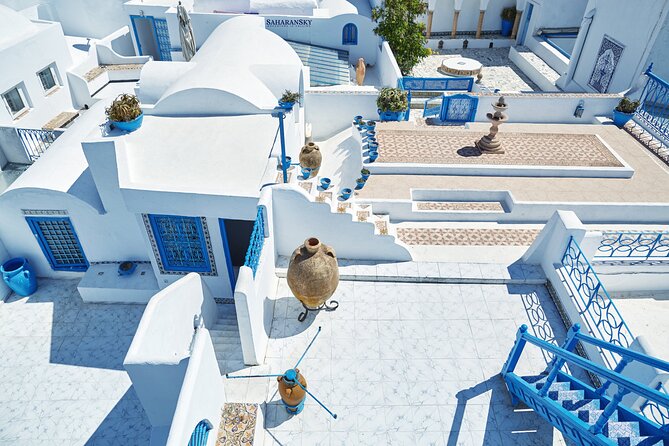
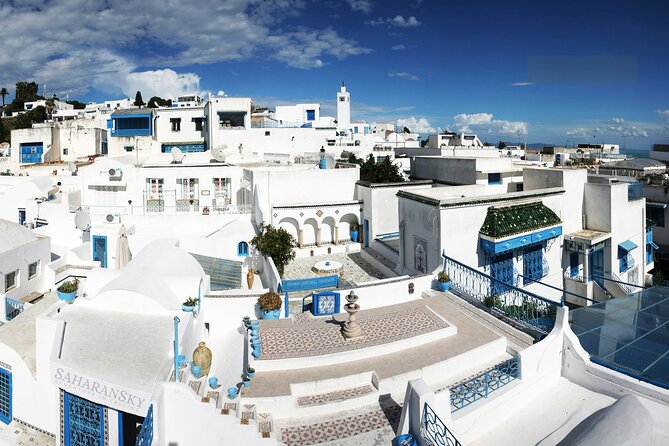
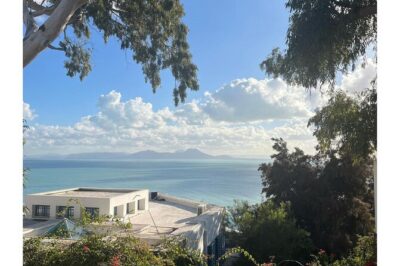
Sidi Bou Said is the most immediately photogenic stop. Its cobbled streets and blue-and-white houses sit on a promontory above the Mediterranean. Small galleries, cafés, and Tunisian restaurants line the town, giving you a welcome change from the archaeological sites.
One hour is enough for a walk, photographs, and perhaps a short café stop. It is not enough for a relaxed afternoon. The town’s charm comes from its simple visual details: painted doors, white walls, blue trim, and views over the water.
Lunch may be served along the coast if you choose the option that includes it. Several people have particularly enjoyed a local restaurant suggested by the driver or guide, but lunch is not included in every package. Confirm this before paying, especially if food is central to your plans.
Vegetarian meals are available if requested at booking. You should also provide any other dietary requirements in advance. Bringing a small snack is sensible if you choose to skip lunch so you can keep more time for Carthage or the medina.
More Carthage Tours in Tunis
- Guided Bike Tour of Carthage Archeological Site in Tunisia
★ 5.0 · 88 reviews - Group Guided Bike Tour of Carthage Archeological Site in Tunisia
★ 5.0 · 57 reviews - Archaelogical Site Of Carthage + Picturesque Village Of Sidi Bou Said
★ 5.0 · 56 reviews - Historical Tour of Ancient Carthage
★ 5.0 · 51 reviews
The Bardo Museum and its Roman mosaics
The National Museum of Bardo is the indoor centerpiece of the day. You receive about an hour inside, with admission included only in selected options.
The museum is noted for having the world’s largest collection of Roman mosaics. These floors and panels are not just decorative pieces. They show the subjects, patterns, daily scenes, and artistic skill of the ancient Mediterranean world in a way that complements the broken remains at Carthage.
An hour can work if your guide keeps you moving through the principal rooms. It may feel short if you want to read every label or study each mosaic at length. One useful arrangement is to follow the guide for the main explanation, then use any remaining free time to return to the rooms that caught your attention.
The Bardo is closed on Mondays. This is one of the most important practical checks before booking. If your available day is Monday, ask how the schedule will change, rather than assuming the museum visit will be replaced automatically.
Entering Tunis through Bab el Bhar
Bab el Bhar, also called Porte de France, marks the boundary between modern Tunis and the old medina. The gate itself is a brief stop of about 15 minutes, but it gives you a clear visual transition from the newer city into the historic center.
The gate has a lowered arch and a crenellated parapet. It is a useful orientation point before walking into the narrow streets. Your driver will not be able to follow you through the market lanes, so this is where the walking portion becomes more important.
The short visit works best as an introduction, not a full monument tour. Take a moment to look back toward the modern city and then forward into the medina. The contrast is part of what makes Tunis easy to understand.
Walking the Medina of Tunis
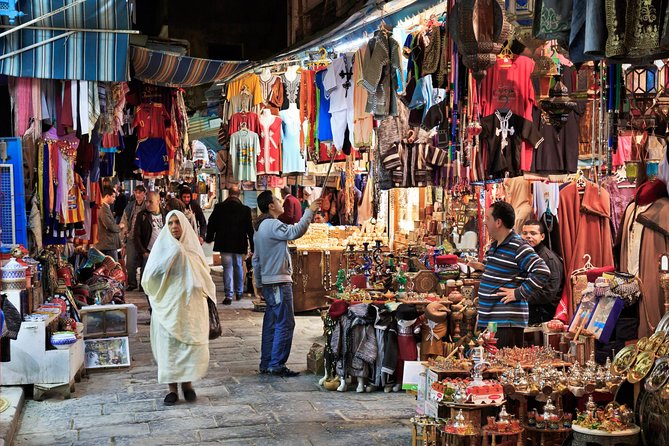
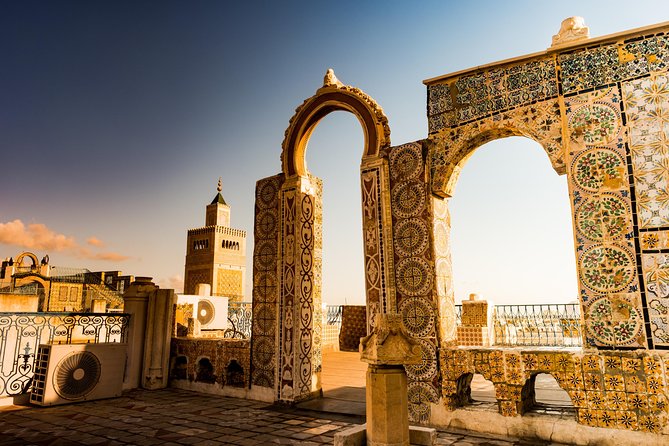
The medina is a UNESCO-listed old city, and the tour gives you about an hour inside. Your guide leads you toward Zitouna Mosque, the traditional cap-makers market, and the colorful perfume market.
This is where a guide can add real value. Narrow lanes can feel confusing, and the medina is not simply a row of souvenir stalls. It includes religious buildings, traditional trades, food shops, and small commercial passages that are easier to appreciate when someone explains what you are seeing.
The cap-makers market offers a glimpse of a long-standing local craft. The perfume market adds another sensory layer, with displays of fragrances and related products. You may also be taken into shops with rooftop views. Several visitors appreciated the chance to browse without aggressive selling, but shopping stops can still use time that you might prefer to spend walking.
If you want a more genuine look at the medina, say so clearly. Ask for time to wander rather than visiting several shops. If you enjoy buying gifts, ask your guide which shops are worth your attention and set a budget before the sales pitch begins.
Zitouna Mosque and Saint Louis Cathedral
Zitouna Mosque receives about 20 minutes as a separate point of interest, and it also appears within the medina walk. It is one of the central landmarks of the old city and helps explain why the medina developed around religious, commercial, and civic life.
Access rules can vary, so do not assume every interior area is open to every visitor. Your guide can explain what you can see and how to behave respectfully.
Saint Louis Cathedral is viewed from outside only. The exterior adds another layer to Tunis’s religious and colonial-era story, but it is a short visual stop rather than a cathedral visit. Expect a glance and an explanation, not an extended interior tour.
Guide quality, driver service, and the private format
The strongest part of this experience is the human service when the right guide is assigned. Guides named in feedback include Boubou, also called Boutheina, as well as Mohammed and Nour. Boubou received especially warm praise for clear explanations, local contacts, and good photo locations.
A strong guide makes a large difference at Carthage and in the medina. Without context, a broken wall is just a broken wall. With a good explanation, it becomes part of a city plan, a water system, or a vanished public building.
The driver matters too. Hichem, Ali, Eammon, and Jamel were praised for punctuality, patience, safe driving, and useful suggestions. One advantage of the private vehicle is the ability to adjust the order of stops and decide how long to stay, within the limits of the day.
There have also been complaints about late pickup, unclear meeting points, and bookings that did not operate as private tours. In one case, a cruise-port meeting point caused confusion, and port pickup costs extra. To protect yourself, confirm the pickup location, guide name, WhatsApp contact, group size, and included services before the day begins.
The advertised experience is private, meaning only your group should participate. Because there have been isolated mix-ups involving shared transport or an additional passenger, get that point confirmed in writing if privacy is important to you.
Is $30 good value?
At $30 per person, this looks inexpensive for a full day with transport between Tunis, Carthage, Sidi Bou Said, and the Bardo. The value is strongest when your package includes a licensed guide, lunch, entrance fees, and hotel transfers.
Do not compare the headline price with a fully loaded private tour until you check the options. The driver-only version may not include guiding, lunch, or admissions. A low price can become less attractive if you must add each major cost separately.
For a couple or small group, private transport can be good value because you avoid arranging several taxis and can set the order of the day. For larger groups, group discounts may improve the price further. The main tradeoff is that you are paying for breadth, not an unhurried visit to each place.
Timing, comfort, and who should book
The full day lasts approximately seven to eight hours. You will spend part of it in the vehicle, especially if traffic slows movement through Tunis. A climate-controlled car is welcome in warm weather and gives you a secure place to leave purchases while walking.
You should be comfortable walking on cobbled streets and uneven archaeological ground. Most people can participate, and service animals are allowed. Still, the itinerary includes hills, open ruins, narrow lanes, and a fair amount of standing, so ask about any mobility concern before booking.
I would recommend this for a first visit, a short stay in Tunis, or anyone who wants a quick but meaningful overview. It suits people who prefer a guide’s explanation to independent research and families or small groups that value door-to-door transport.
I would be more cautious if you want a slow museum visit, serious archaeology, or hours of unplanned shopping. In that case, a shorter tour focused on one or two areas may suit you better.
Practical ways to improve the day
Tell the guide your priorities before leaving the hotel. You might choose more time at the Bardo and Carthage, or give Sidi Bou Said a longer lunch break and shorten the shopping portion.
If you are using a guidebook, bring it for the free moments. One person enjoyed the driver-only format because the itinerary could be shaped around personal interests, but a licensed guide is the better choice if you want explanations at each site.
Book a day other than Monday if the Bardo is essential. Confirm vegetarian or other dietary needs in advance, and do not assume lunch is included unless your selected option says so.
The tour usually receives a high rating of 4.5 from 153 ratings, but the service can depend heavily on the booking option and day-of coordination. Check every inclusion, keep the provider’s contact details handy, and confirm the meeting point clearly.
Should you book this Tunis day tour?
Book it if you want the efficient version of Tunis: ancient Carthage, Roman mosaics, a blue-and-white coastal town, and the old medina in one day. The mix is excellent, and the private car can make a spread-out itinerary far easier.
Choose the guided option with lunch and admissions if you want the best value. I would also confirm that the tour remains private, especially during busy holiday periods, and clarify the pickup point if you are arriving by cruise ship.
The tour is not perfect for slow sightseeing. It is a full plate, and you may need to accept a tight schedule. But for a first taste of Tunisian archaeology, art, food, markets, and coastal scenery, it gives you a lot for the time and money.
FAQ
How long does the tour last?
The experience lasts approximately seven to eight hours.
Where does hotel pickup apply?
Hotel pickup and drop-off are offered from hotels in Tunis or Hammamet.
Is cruise-port pickup included?
No. Pickup from the cruise port requires an additional fee.
Is the tour private?
The experience is described as private, with only your group participating. Because there have been occasional booking issues involving shared arrangements, confirm the group size before the tour if privacy is important.
Is lunch included?
Lunch is included only if you select the option that includes it. A local coastal restaurant may be used, and vegetarian meals are available when requested in advance.
Are entrance fees included?
Admission to Carthage and the Bardo Museum is included only if you select the option with entrance fees.
Is a licensed guide included?
A licensed tour guide is included if you select the guided option. Other options may provide a driver without guiding, lunch, or entrance fees.
Is the Bardo Museum open every day?
No. The Bardo Museum is closed on Mondays.
Can I cancel for a full refund?
Yes. You can cancel at least 24 hours before the local start time for a full refund. Cancellations or changes made within 24 hours are not refunded or accepted.
More Private Tours in Tunis
- Private Tour to Kairouan, El Jem & Monastir from Tunis_hammamet
★ 5.0 · 301 reviews - Private Excursion to Testour, Dougga and Bulla Regia from Tunis.
★ 5.0 · 100 reviews - Kairouan and El Jem Private Day Tour
★ 4.5 · 38 reviews - Full Day Dougga & Bulla Regia Via Testour Private tour with Lunch
★ 5.0 · 29 reviews
More Medina Walks in Tunis
- Guided tour in the UNESCO world heritage Medina of Tunis
★ 5.0 · 68 reviews - Daytrip Carthage Sidi Bousaid Bardo and Tunis Medina
★ 5.0 · 20 reviews - Private Tour Sidi bou Said Medina Carthage & bardo Museum
★ 4.5 · 13 reviews - Picturesque Village Of Sidi Bou Said + Tunis Old Medina
★ 4.5 · 13 reviews
Newest from Tunis
- Private Arrival Transfer: Tunis Airport to Tunis Hotel★ 4.5 · 5 reviews
- Cap Bon Guided Day Tour from Tunis★ 5.0 · 2 reviews
- Tunis Group Tour: Carthage, Sidi Bou Said, Bardo museum & Medina★ 5.0 · 5 reviews
- Walking City Tour★ 4.5 · 7 reviews
- Dougga Guided Day Tour from Tunis★ 5.0 · 5 reviews
- Tunisia 7-Day tour★ 5.0 · 6 reviews
- Unveiling the Beauty of Sidi Bou Said and Carthage Private Tour★ 5.0 · 2 reviews
- Roman Archeology Guided Tour Thuburbo Majus & Uthina★ 4.5 · 7 reviews
Bardo Museum Tours, compared.
VIP Tour: Tunis Medina/Bardo, Sidi Bou Said, Carthage |PICKUP ALL
Read our review →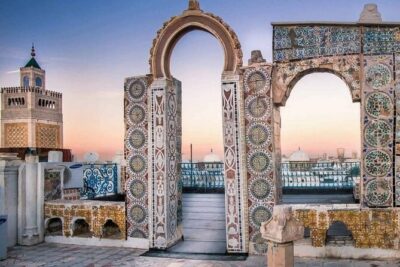
Private tour: Medina,Carthage ,Sidi Bou Said, Bardo Museum+lunch
Read our review →Private tour: Medina,Carthage ,Sidi Bou Said, Bardo Museum+lunch
Read our review →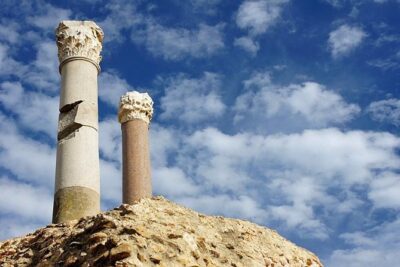
Carthage, Bardo Museum, Sidi Bou Said & Medina Group Tour
Read our review →
From Hammamet or Tunis: Carthage, Bardo, Sidi Bou said and Medina
Read our review →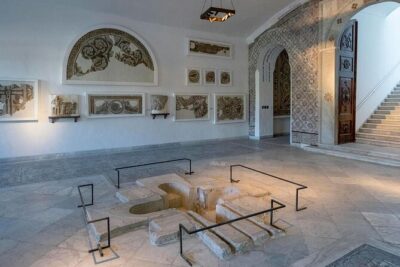
Private Day Tour Tunis Medina Carthage Sidi Bou Said Bardo Museum
Read our review →Private tour: Medina,Carthage ,Sidi Bou Said, Bardo Museum+lunch
Read our review →