
Reviewed · KAIROUAN & DOUGGA TOURS
Roman Archeology Guided Tour Thuburbo Majus & Uthina
Roman ruins without the crowds. This seven-hour private tour links three major sites south and west of Tunis, including Uthina’s newly excavated amphitheater, the immense Zaghouan aqueduct, and Thuburbo Majus with its fine Capitol and bath complexes. I especially like the private air-conditioned transport and the chance to explore places that receive far less attention than Carthage or El Jem.
I also like the strong historical focus. Guide Fathi, a retired professor, has a gift for explaining Tunisia’s Roman past in a clear, lively way. The main caution is that the aqueduct may be a short roadside stop rather than a full visit, and the advertised visit to the Andalusian medina of Zaghouan is not given a separate time in the listed schedule.
In This Review
- Key points to know before booking
- Why this Roman ruins tour is worth your time
- Uthina and its newly excavated amphitheater
- The Laberii villa and its mosaic floors
- Zaghouan aqueduct: a 132-kilometer Roman water line
- Zaghouan’s Andalusian medina and the schedule question
- Thuburbo Majus and the four Corinthian columns
- Two bath complexes and the shape of Roman daily life
- The guide and the value of a private vehicle
- Is $140.96 per person good value?
- Who should book this experience?
- Should you book the Thuburbo Majus and Uthina tour?
- FAQ
- How long is the Roman archaeology tour?
- Where does the tour take place?
- Is hotel pickup offered?
- Is this a private tour?
- How much does the tour cost?
- Is transportation included?
- Is WiFi available during the tour?
- Are entrance fees included?
- Is lunch included?
- How long is the visit to Uthina?
- How long is the aqueduct stop?
- How long is the visit to Thuburbo Majus?
- Can I cancel for a full refund?
Key points to know before booking
- Uthina’s 20,000-seat amphitheater is the dramatic opening stop, with about 90 minutes at the archaeological site.
- The Zaghouan aqueduct stretches 132 kilometers and once carried about 30 million liters of water each day to Carthage.
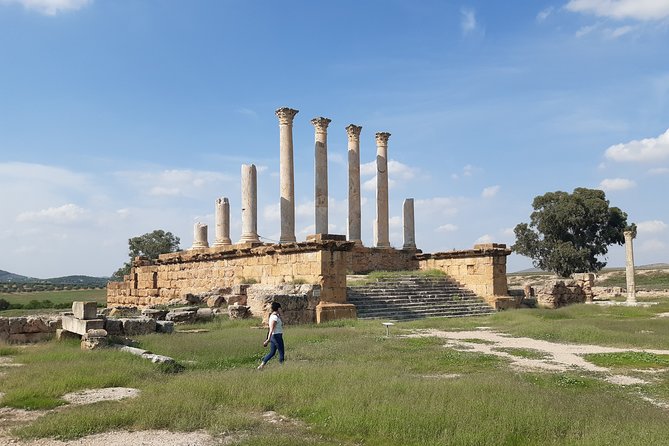
- Thuburbo Majus has a remarkably well-preserved Capitol, with four surviving Corinthian columns facing the Forum.
- The Laberii villa covers 2,300 square meters and contains around 30 rooms decorated with mosaics.
- This is a private tour, so your group alone participates and start and end times can be flexible.
- The price is $140.96 per person, with lunch not included and group discounts available.
Why this Roman ruins tour is worth your time
Tunisia has no shortage of ancient sites, but many visitors stick to Carthage, Dougga, and El Jem. This tour takes a different route. It focuses on Uthina and Thuburbo Majus, two Roman cities where you can better sense the scale of North Africa’s provincial towns and the skill behind their public buildings.
I like the variety. You are not looking at one more forum and one more temple all day. You get an amphitheater, villas, mosaics, baths, a Capitol, a huge water system, and possibly a short stop in Zaghouan’s Andalusian medina. Each site answers a different question about Roman life: how people were entertained, where they lived, how cities managed water, and how local communities presented themselves as Roman citizens.
The tour is also a good match for anyone who prefers a private day out to a fixed group excursion. Your party travels in a private, air-conditioned vehicle with WiFi on board. The schedule can be adjusted to some degree, which matters when you want to spend more time at a site or start and finish at convenient hours.
The drawback is pace. Seven hours sounds generous, but the sites cover a large area and driving takes time. You should expect an overview of several important places, not a slow archaeological study of every building. Lunch is not included, and the exact treatment of the Zaghouan aqueduct should be clarified before you go.
More Kairouan & Dougga Trips in Tunis
- Private Tour to Kairouan, El Jem & Monastir from Tunis_hammamet
★ 5.0 · 301 reviews - Private Excursion to Testour, Dougga and Bulla Regia from Tunis.
★ 5.0 · 100 reviews - Daytrip to Kairouan and El Jem Colosseum
★ 4.5 · 55 reviews
Uthina and its newly excavated amphitheater
Uthina, also called Oudhna, lies about 30 kilometers south of Tunis on high ground above the old routes leading toward Carthage from the south and west. Its position helps explain its importance. This was not an isolated settlement tucked away from the main currents of North African life. It occupied a useful point along the routes that connected inland areas with Carthage.
The city may have begun in the Berber period, judging from its name. It was later punished and romanized, then passed through short periods of Vandal and Byzantine control before its final decline after the Arab conquest in the seventh century. That long sequence gives the site more depth than a simple Roman stop.
You have about 90 minutes here, with admission included. The ruins cover more than 100 hectares, so you will not see every corner in such a short visit. Instead, the focus is likely to be on the most impressive buildings and the parts that best explain the city’s public life.
The highlight is the amphitheater. It could once hold around 20,000 spectators, a surprising figure for a city that many modern visitors have never heard of. The structure has been only recently fully excavated, which gives it a sense of discovery that more famous Roman arenas often lack.
I would give Uthina your full attention. The amphitheater helps you picture the sound and scale of Roman entertainment, while the wider ruins show how much city remains beneath the soil. If you enjoy archaeology, this is probably the most memorable stop on the route.
The main limitation is the amount of time. Uthina is large, and 90 minutes can pass quickly. Listen closely to the guide’s explanation of the site plan, since the ruins may otherwise feel spread out and difficult to connect.
The Laberii villa and its mosaic floors
The Laberii villa deserves special attention within the Uthina visit. It covers roughly 2,300 square meters and contains about 30 rooms, giving you a clear picture of the size and ambition of an elite Roman home.
Its mosaics are the main attraction. Tunisia is famous for Roman mosaic work, and the Laberii villa shows why. These floors were not minor decoration. They signaled wealth, taste, and a connection to the wider Roman world.
You should look closely at the arrangement of the rooms as well as the individual images. A villa of this size was more than a private residence in the modern sense. It was a place for domestic life, status, reception, and display. The preserved floors make that social side easier to understand.
This is one reason a guide adds real value here. A bare mosaic can look attractive for a few minutes, but an explanation of how the rooms worked gives the villa meaning. Fathi’s background as a retired professor is especially useful for a stop like this, where the details matter as much as the photographs.
Zaghouan aqueduct: a 132-kilometer Roman water line
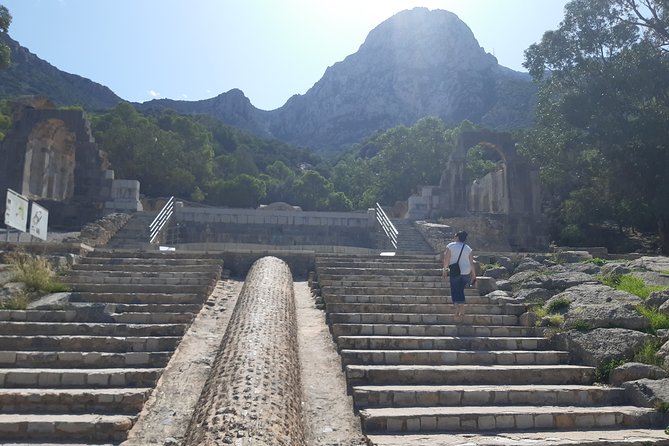
The Zaghouan aqueduct is one of the tour’s most impressive subjects, even if your actual stop may be brief. Built at the beginning of the second century AD, it carried water from the Zaghouan area to Carthage over a route measuring 132 kilometers.
That distance is hard to grasp until you consider the terrain. The channel ran at ground level in some places, underground in others, and across raised arcades that could reach more than 20 meters high. The system carried an estimated 30 million liters of water per day.
The aqueduct supplied Carthage, with much of the water stored in huge vaulted reservoirs at Maalga before it moved on to the Baths of Antonine. This was not a decorative monument. It was basic city infrastructure built on a massive scale, and it reveals how seriously Roman engineers treated public water.
The listed time here is only 20 minutes, and admission is free. One important practical point comes from the tour’s handling of this stop: the aqueduct may be viewed while driving past unless you specifically ask to stop. If this structure is a main reason you are booking, tell the guide in advance that you want time for a closer look.
The aqueduct stop also helps connect the ruins. Roman cities did not function on temples and theaters alone. They needed water, storage, baths, fountains, and systems that could serve large populations. This brief visit gives you that wider picture.
Further south, and a completely different kind of day out:
- Private tour: Medina,Carthage ,Sidi Bou Said, Bardo Museum+lunch
★ 5.0 · 230 reviews - Carthage, Bardo Museum, Sidi Bou Said and Medina Private Day Tour
★ 4.5 · 153 reviews - Guided Bike Tour of Carthage Archeological Site in Tunisia
★ 5.0 · 88 reviews - Guided tour in the UNESCO world heritage Medina of Tunis
★ 5.0 · 68 reviews
Zaghouan’s Andalusian medina and the schedule question
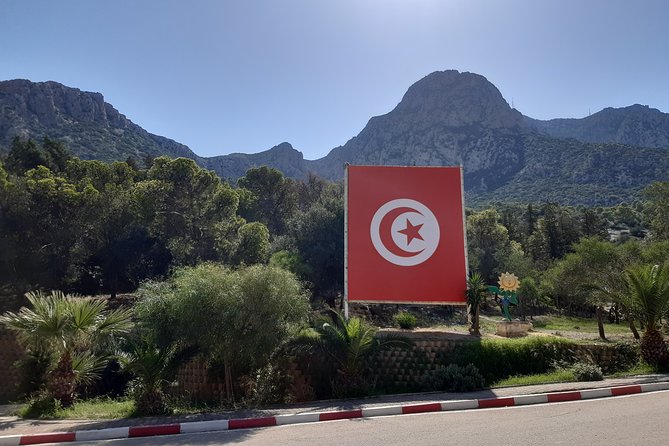
The tour description includes a visit to the Andalusian medina of Zaghouan. That offers a useful change of pace after the Roman sites, shifting your attention from antiquity to a later chapter of Tunisian urban life.
However, the timed itinerary gives a duration for Uthina, the aqueduct, and Thuburbo Majus, but not a separate duration for the medina. That means you should confirm whether it is a dedicated walking stop, a brief visit connected with the aqueduct, or simply part of the route when time allows.
This is not a deal breaker, but it is worth settling before booking. If you care most about Roman archaeology, you may prefer extra time at Uthina or Thuburbo Majus. If you enjoy seeing how Tunisian towns developed after the Roman period, the medina could add welcome variety.
Thuburbo Majus and the four Corinthian columns
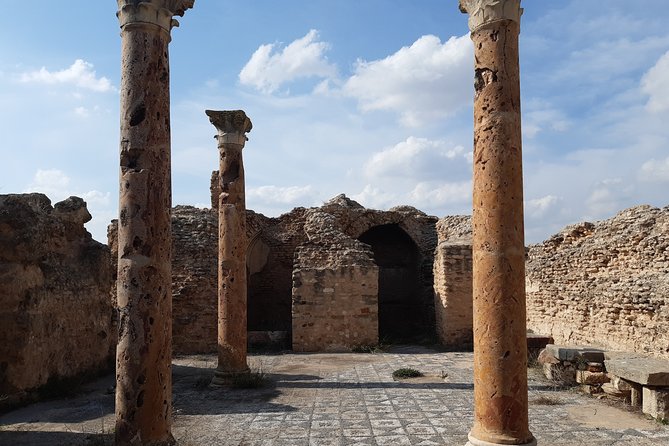
Thuburbo Majus is the final major archaeological stop, with about an hour scheduled and admission included. The city began before North Africa became part of the Roman Empire, then grew into one of Tunisia’s finest Roman sites.
It was founded on a hillside above a fertile valley, a setting that gives the ruins a strong sense of place. The city declined around the middle of the third century, then enjoyed a major revival in the fourth century. During that later period, it proudly called itself Respublica Felix Thuburbo Majus, or the happy republic of Thuburbo Majus.
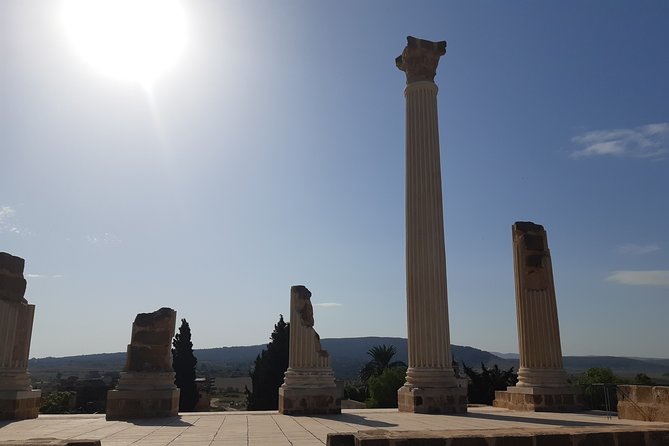
The Capitol is the star. In a Roman city, the Capitol was the most important temple, and the one here is among the best preserved in Tunisia. Six Corinthian columns once formed its front. Four remain intact, rising above the broad staircase that leads toward the Forum.
This is the sort of building that makes Roman civic life easy to picture. The staircase, columns, and open Forum were designed to impress. The city wanted residents and visitors to see its order, wealth, and loyalty to Roman culture.
Thuburbo Majus is larger than you might expect, so one hour is useful but limited. I would use the time to understand the Capitol first, then move toward the public buildings and baths. If you prefer wandering without a clock, ask the guide how much flexibility is possible.
Two bath complexes and the shape of Roman daily life
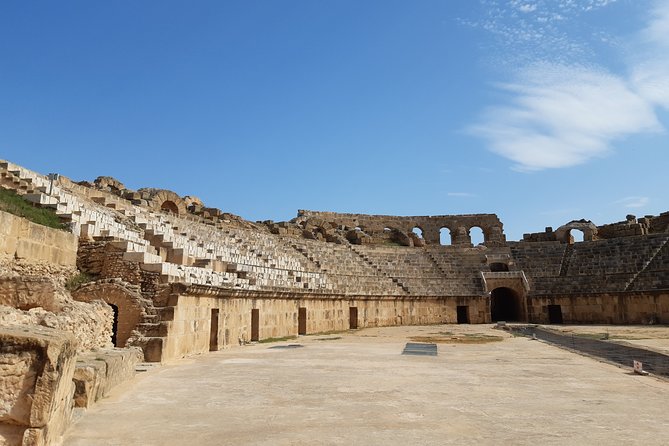
One unusual feature of Thuburbo Majus is its pair of bathing establishments. The city had one complex for winter and another for summer.
That detail says a great deal about Roman life. Baths were not simply places to wash. They were social centers, exercise spaces, and symbols of civic prosperity. Maintaining two facilities suggests that bathing was woven into the city’s daily rhythm and that local leaders wanted public life to continue comfortably through changing seasons.
You may find that the baths are less immediately striking than the Capitol, especially if you have already seen larger complexes elsewhere in Tunisia. Still, they are important because they show how ordinary routines fit into the city’s grand public design.
This is also where a guide can help you read the ruins. Without context, walls and foundations can blur together. With a clear explanation, you begin to see separate rooms, circulation areas, and the difference between a religious monument and a public service building.
The guide and the value of a private vehicle
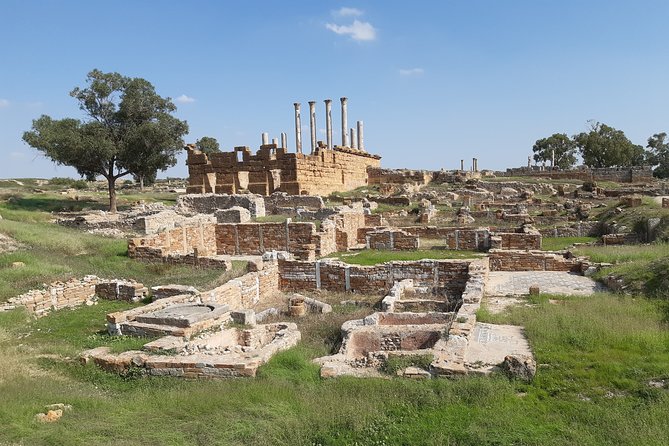
Fathi is the guide most directly associated with this experience. He is a retired professor with a strong command of Tunisia’s Roman sites and a clear passion for teaching. That background is a major asset because the tour depends on explanation, not just transport between ruins.
I would choose this outing for the guide as much as for the sites. Uthina and Thuburbo Majus are large and less familiar than Tunisia’s headline attractions. A guide who can explain their political, civic, and architectural roles helps you get far more from the same hour on the ground.
Private transport also improves the day. The vehicle is air-conditioned, which matters in Tunisia’s heat, and WiFi is available on board. Pickup is offered, and the private format means only your group participates. One useful benefit is flexibility with start and end times, a point that can make the difference between a relaxed day and a rushed one.
Still, private does not mean every part of the schedule is open-ended. The route includes several distant places, and the total duration is about seven hours. Tell the provider what matters most to you before departure, especially if you want a full aqueduct stop or extra time at Uthina.
Is $140.96 per person good value?
At $140.96 per person, this is not the cheapest way to see Roman ruins around Tunis. The price includes private transportation, an air-conditioned vehicle, WiFi, admission fees, and a guide for a full day. Lunch is extra.
For a solo visitor or couple, the cost may feel high compared with a standard group outing. The value improves if you are traveling with family or friends, especially since group discounts are offered. You are paying for a private vehicle, a flexible format, and access to three substantial archaeological stops rather than a single short excursion.
I also think the price makes more sense for visitors who care about interpretation. If you only want quick photos of ruins, a less expensive option may be enough. If you want the amphitheater, villa mosaics, aqueduct system, Capitol, and baths explained by a local history specialist, the package is easier to justify.
The rating is 4.7 from seven published ratings, which points to a strong overall response but is still a small sample. The most consistent strengths are the guide’s teaching ability, the flexible schedule, and the quiet, uncrowded feel of the sites. The clearest weakness is the possibility of seeing the aqueduct mainly from the vehicle.
Who should book this experience?
I would recommend this tour to archaeology fans, first-time visitors who want context for Roman Tunisia, and anyone who dislikes large scheduled groups. It also suits families or small parties that can use the private format and group discount.
You should book it if Uthina’s amphitheater and the less famous Roman cities interest you more than spending another day in central Tunis. You should also book it if a strong guide matters to you. Fathi’s academic background is one of the tour’s best features.
I would hesitate if you want a slow, highly detailed visit at every stop, since the route is broad and the schedule is tight. I would also ask about the aqueduct and Zaghouan medina before paying, so the day matches your priorities.
Free cancellation is available if you cancel at least 24 hours before the local start time. Inside that window, the payment is not refunded, and last-minute changes are not accepted.
Should you book the Thuburbo Majus and Uthina tour?
Book this tour if you want a private, history-led day that reaches beyond Tunisia’s most famous ancient monuments. Uthina’s huge amphitheater, the Laberii mosaics, the long aqueduct, and Thuburbo Majus’s Capitol create a varied and worthwhile route.
Before you confirm, ask for two details: how long you will actually stop at the aqueduct and whether the Andalusian medina receives its own visit. With those points settled, this is a strong choice for seeing Roman Tunisia at a quieter, more personal pace.
FAQ
How long is the Roman archaeology tour?
The experience lasts approximately seven hours.
Where does the tour take place?
The tour operates from Tunis and visits Uthina, the Zaghouan aqueduct, and Thuburbo Majus. The description also includes the Andalusian medina of Zaghouan.
Is hotel pickup offered?
Yes, pickup is offered.
Is this a private tour?
Yes. Only your group participates in the activity.
How much does the tour cost?
The listed price is $140.96 per person. Group discounts are available.
Is transportation included?
Yes. Private transportation in an air-conditioned vehicle is included.
Is WiFi available during the tour?
Yes. WiFi is available on board the vehicle.
Are entrance fees included?
Yes. All fees and taxes are included, and admission is specifically included at Uthina and Thuburbo Majus.
Is lunch included?
No. Lunch is not included in the price.
How long is the visit to Uthina?
The scheduled visit to Uthina lasts about one hour and 30 minutes.
How long is the aqueduct stop?
The listed time for the Zaghouan aqueduct is about 20 minutes, and admission is free. You may need to ask the guide to stop rather than viewing it only while passing by.
How long is the visit to Thuburbo Majus?
The scheduled visit lasts about one hour.
Can I cancel for a full refund?
Yes, if you cancel at least 24 hours before the experience starts. Cancellations made less than 24 hours before the start time are not refunded.
Newest from Tunis
- Private Arrival Transfer: Tunis Airport to Tunis Hotel★ 4.5 · 5 reviews
- Cap Bon Guided Day Tour from Tunis★ 5.0 · 2 reviews
- Tunis Group Tour: Carthage, Sidi Bou Said, Bardo museum & Medina★ 5.0 · 5 reviews
- Walking City Tour★ 4.5 · 7 reviews
- Dougga Guided Day Tour from Tunis★ 5.0 · 5 reviews
- Tunisia 7-Day tour★ 5.0 · 6 reviews
- Unveiling the Beauty of Sidi Bou Said and Carthage Private Tour★ 5.0 · 2 reviews
- Bardo Museum , Oudhna and the roman aqueduct★ 5.0 · 4 reviews
Kairouan & Dougga Tours, compared.
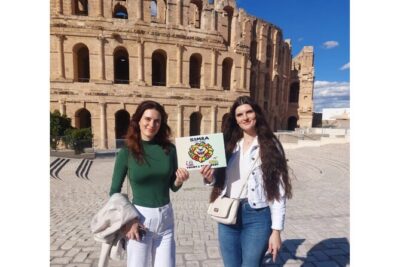
Fun VIP Tour: El Jem, Kairouan, Monastir/Sousse (PICKUP ALL City)
Read our review →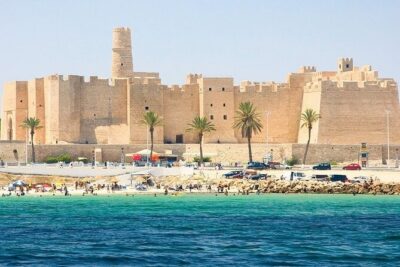
Private Tour to Kairouan, El Jem & Monastir from Tunis_hammamet
Read our review →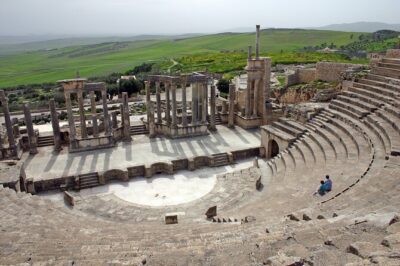
Private Excursion to Testour, Dougga and Bulla Regia from Tunis.
Read our review →
Full Day Dougga & Bulla Regia Via Testour Private tour with Lunch
Read our review →
Private and Guided Tour to Kairouan and El Jem and Monastir
Read our review →
Private Day Trip to Testour, Dougga and Bulla Regia from Hammamet
Read our review →Browse the lists this tour appears in