
Reviewed · BARDO MUSEUM TOURS
Daytrip Carthage Sidi Bousaid Bardo and Tunis Medina
Ancient empires and blue doors share one busy day. This private tour links Carthage’s Punic and Roman ruins with the whitewashed lanes of Sidi Bou Said, the medieval Medina of Tunis, and the Bardo Museum. I like the efficient route and the chance to see four major Tunisian sights without arranging separate transport.
I also like that the guide can shape the day around your interests. Ghassen has been praised for his focus on Carthage and the Punic Wars, while Sana is noted for being punctual, friendly, attentive, and a careful driver. The main drawback is the pace: seven stops in roughly seven to eight hours leaves limited time at each place, and the Bardo visit may feel brief if you want detailed museum commentary.
In This Review
- Key points to know before booking
- Why this private day trip works
- Starting at Carthage’s Tophet
- Seeing the Punic Ports and Carthage’s sea power
- Walking through the Baths of Antoninus
- Carthage Museum on Byrsa Hill
- Sidi Bou Said’s blue-and-white streets
- Entering the Medina of Tunis
- Finishing at the National Bardo Museum
- The guide can shape the day
- Timing, comfort, and practical limits
- Who should book this day?
- Should you book it?
- FAQ
- Where does the tour start?
- How long does the experience last?
- Is this a private tour?
- Is transportation included?
- Is lunch included?
- Are entrance fees included?
- Can I visit the Bardo Museum on a Monday?
- What cancellation policy applies?
Key points to know before booking
- Four major Tunis-area sights in one day: You visit Carthage, Sidi Bou Said, Tunis Medina, and the Bardo Museum, with several separate stops within Carthage.
- Private air-conditioned transport: Pickup and return are offered from your hotel in Tunis or Hammamet, making the long day simpler to manage.
- A strong choice for archaeology fans: The Tophet, Punic ports, Antoninus Baths, and Carthage Museum give you several angles on the ancient city.
- Guides can tailor the experience: Ghassen, Sana, Mohammed, and Moncef are among the guides associated with especially positive experiences.
- The schedule is full: Sidi Bou Said gets about an hour, the Medina about 90 minutes, and the Bardo Museum about an hour.
- Check the museum day: The Bardo Museum is closed on Monday, so the full advertised route is not available then.
Why this private day trip works
This is a useful answer to a common Tunis travel problem: the region has several major sights, but they are spread across different parts of the capital area. Carthage is by the coast, Sidi Bou Said sits nearby on a hill, the Medina occupies the old center of Tunis, and the Bardo Museum is elsewhere in the city.
With a private vehicle, you do not need to piece together taxis or public transport between them. You also avoid the fixed rhythm of a large coach group. That matters here because the day includes several short stops, and a private guide can decide where to spend a little more time.
The advertised price is $162.60 per person. That is not a budget outing, especially for a solo traveler, but the value improves if two or more people share the private vehicle. Transport, guiding, and several entrance fees are included, and pickup is offered from Tunis or Hammamet.
Lunch is not included. You should also note that entry to the Baths of Antoninus is listed separately from the included admissions, so confirm the exact entrance arrangements before you go. The tour is usually booked about 34 days ahead, which suggests that you should not leave it until the last moment if your Tunis dates are fixed.
More Bardo Museum Visits in Tunis
- Private tour: Medina,Carthage ,Sidi Bou Said, Bardo Museum+lunch
★ 5.0 · 230 reviews - Carthage, Bardo Museum, Sidi Bou Said and Medina Private Day Tour
★ 4.5 · 153 reviews - Tunis: Carthage, Bardo Museum, Sidi Bou Said & Medina Group Tour
★ 4.5 · 33 reviews
Starting at Carthage’s Tophet
The Tophet is a short stop, usually about 20 minutes, but it raises one of the most difficult questions in Carthaginian archaeology. The site was long linked to child sacrifice, partly because later writers and Gustave Flaubert helped create a powerful image of cruel priests, fire, and the god Moloch.
Modern scholarship is more careful. Many historians now consider the area a children’s cemetery, while the exact rituals connected with the god Baal and the goddess Tanit remain debated. You will see burial urns and religious markers rather than a fully reconstructed scene.
That uncertainty is part of the point. A good guide can help you separate archaeological evidence from old stories that became popular through literature. The stop is brief, so ask questions if this subject interests you. If you want a long archaeological discussion, the schedule may feel too tight.
Admission is included here.
Seeing the Punic Ports and Carthage’s sea power
The Punic Ports stop lasts about 20 minutes and is free of charge. The remains are not dramatic in the same way as standing beside Roman arches, but they explain how Carthage became a major naval and trading power.
A narrow channel once connected two separate harbors. The southern port was long and oval, designed for merchants and cargo. The northern port was circular and served the navy, with room for an extraordinary number of ships in dry docks around its edge.
The arrangement was practical and strategic. The military harbor was hidden from open view, while Carthaginian ships could move toward the sea. After Carthage fell in 146 BC, Scipio’s forces filled the ports. The Romans later reshaped the area for their own use.
This stop works best when you already have the basic story in mind. The remains can be hard to read without explanation, so your guide’s commentary matters more here than the physical size of the ruins. The short visit gives you a useful picture of Carthage as a working city, not simply an archaeological site.
Walking through the Baths of Antoninus
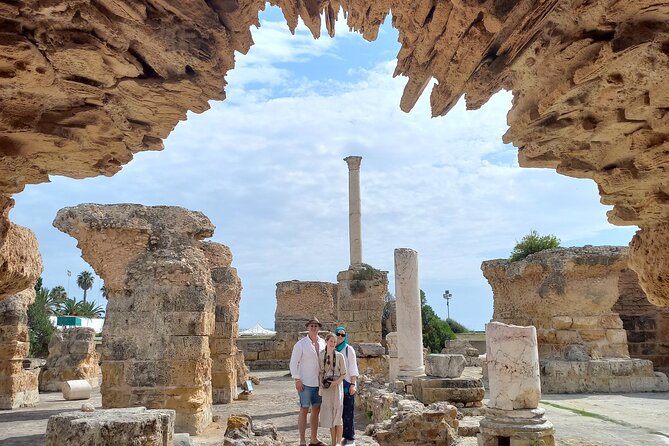
The Baths of Antoninus receive about 45 minutes and are part of an archaeological park. Built in the second century, this Roman bath complex shows the later chapter of Carthage, after Rome rebuilt the city.
The size of the site helps you understand Roman public life. Baths were not only places to wash. They were social centers with carefully planned spaces, water systems, and grand architecture. Even in a partly ruined state, the complex gives you a sense of how much investment Rome put into provincial cities.
This is one of the stops where comfortable shoes help. You should expect walking across an archaeological area rather than a quick photo stop. The tour data lists admission as not included, so budget for that separately or confirm whether the guide handles it on the day.
The 45-minute allocation is reasonable for an overview. It is not enough for every corner of the complex, but it gives you time to see the main remains without turning the entire day into a Roman ruins marathon.
More Carthage Tours in Tunis
- Guided Bike Tour of Carthage Archeological Site in Tunisia
★ 5.0 · 88 reviews - Group Guided Bike Tour of Carthage Archeological Site in Tunisia
★ 5.0 · 57 reviews - Archaelogical Site Of Carthage + Picturesque Village Of Sidi Bou Said
★ 5.0 · 56 reviews - Historical Tour of Ancient Carthage
★ 5.0 · 51 reviews
Carthage Museum on Byrsa Hill
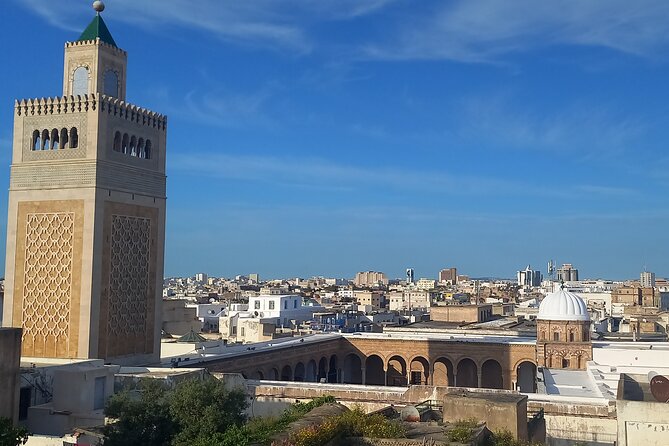
The Carthage Museum sits on Byrsa Hill, the symbolic center of the ancient Punic city. The hill also provides a useful view of the surrounding area, so this is more than an indoor museum visit.
The museum was founded in 1875 and is described as Tunisia’s oldest museum. Its collections help connect the scattered ruins outside with the wider story of Carthage. You can expect objects linked to Punic and Roman civilization, along with displays showing how many different cultures shaped this part of the Mediterranean.
The visit lasts about 30 minutes, and admission is included. That makes it a valuable orientation stop, but the timing is short. If you enjoy inscriptions, sculpture, pottery, and small archaeological finds, you may wish you had longer.
This is also a good moment to tell your guide what kind of history you prefer. Ghassen has been praised for adapting the day to a strong interest in Carthage and the Punic Wars. A guide who knows your focus can make a half-hour museum visit much more useful.
Sidi Bou Said’s blue-and-white streets
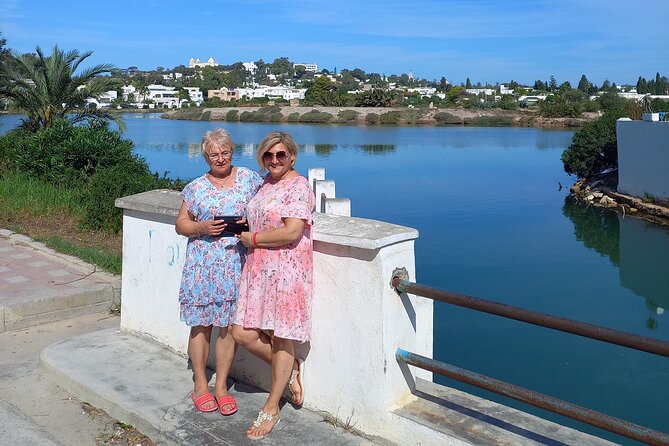
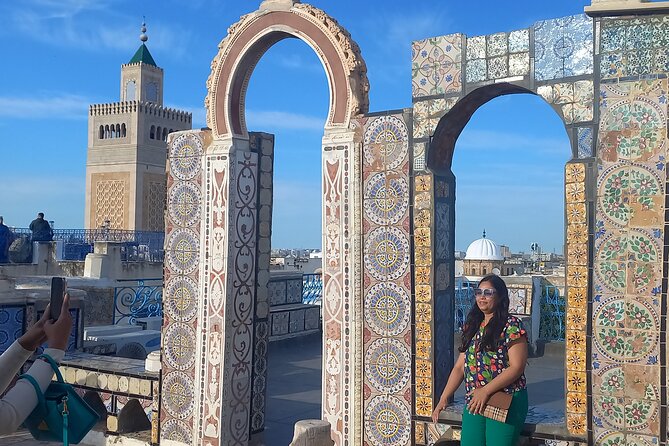
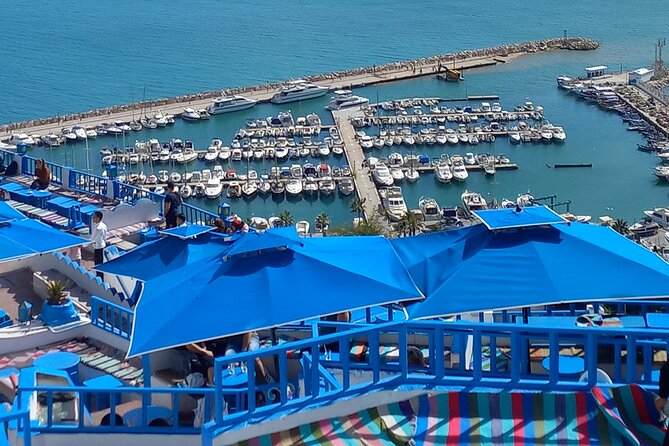
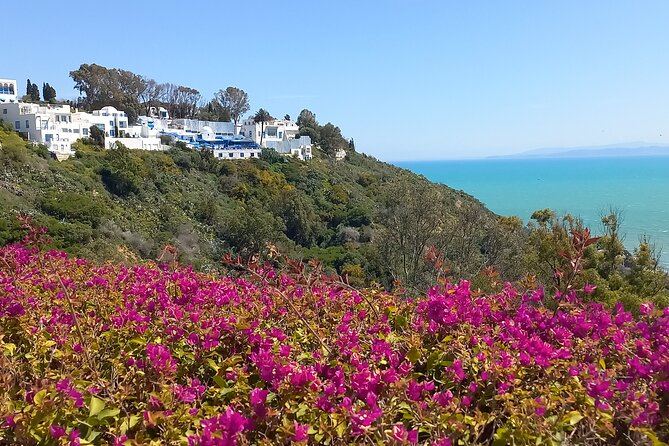
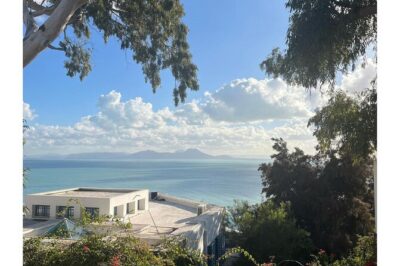
After the ancient sites, Sidi Bou Said changes the mood completely. You get about an hour to walk through a hilltop village known for its white buildings, blue doors, cobbled streets, and views toward the sea.
The village takes its name from a 13th-century Sufi saint. Its design reflects Ottoman and Andalusian influences, including the arrival of Spanish Muslims in Tunisia during the 16th century. French authorities later protected its character in 1915, helping preserve the appearance that makes it so recognizable today.
Sidi Bou Said is the easiest place on this tour for relaxed wandering and photographs. You can enjoy the painted doors, look down toward the water, and take in the village without needing a long history lecture. The hour is enough for a taste, though not for a slow exploration of every lane.
The setting can also feel more polished and arranged than the Medina. That is not a flaw, but it means the two old quarters offer different experiences. Sidi Bou Said presents a carefully protected village style. Tunis Medina feels more like a working urban district.
Entering the Medina of Tunis
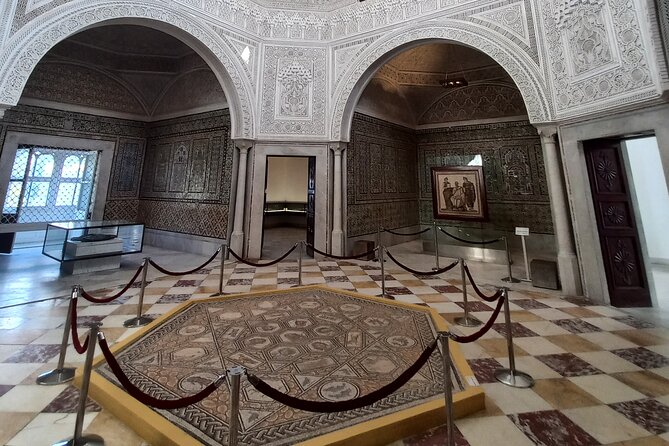
The Medina receives about 90 minutes, the longest single walking stop of the day. This is the place to slow down, although the overall schedule still keeps you moving.
The old city is a maze of narrow streets and covered souqs. You will find shops selling shoes, shisha pipes, and other goods, along with cafés, artisan workshops, residential lanes, and decorated doorways. Palaces, hammams, mosques, and Quranic schools appear among the commercial streets.
Look upward and inward. The best details may be carved stucco, patterned tiles, marble columns, and brightly painted doors rather than a single famous monument. A guide helps you read the Medina as a living neighborhood instead of treating it as a shopping corridor.
The route may also include a mosque and the government quarter, depending on how the day is arranged. One guide has been praised for finding good photo spots in both the Medina and Sidi Bou Said. That is useful because the most attractive views are not always obvious from the main path.
You should expect walking on uneven surfaces and through narrow lanes. A moderate level of fitness is recommended. Keep your belongings close in crowded areas and wear shoes that can handle a long day on foot.
Finishing at the National Bardo Museum
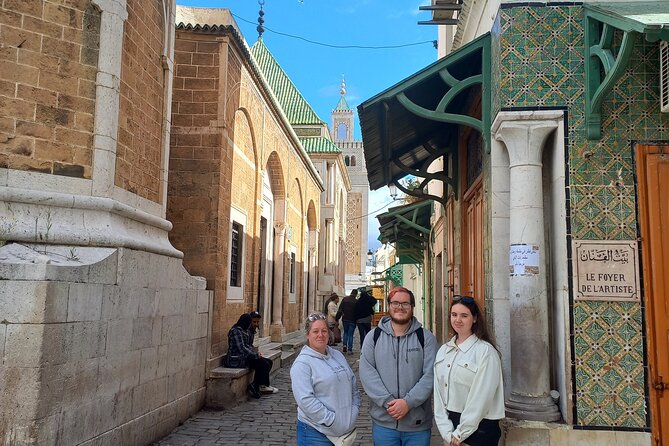
The Bardo Museum is one of the most important museums in Africa, particularly for its mosaic collection. Its displays cover the civilizations that developed along the Mediterranean coast, making it a fitting final stop after Carthage and the Medina.
The museum gives you the indoor context that the ruins cannot. Instead of seeing only broken walls and foundations, you can examine the art, objects, and decorative work produced by earlier societies. The mosaics are the major draw, and they help explain the artistic skill and daily life behind the ancient buildings.
The visit is planned for one hour, with admission included. That is enough to see important galleries, but it is not a full museum study. One useful caution is that the guide’s explanation here may not be as detailed as the commentary at Carthage. If the Bardo is your main reason for booking, you may prefer a separate, longer museum visit.
The Bardo is closed on Mondays. This is the most important scheduling detail in the entire experience. On Monday, the advertised museum visit does not take place, so check the day before you reserve.
The guide can shape the day
The private format is the strongest feature of this experience. You are not sharing the day with a large group, and the guide can respond to your interests, energy level, and questions.
Ghassen is particularly well suited to someone focused on Carthage, the Punic Wars, and archaeology. Sana has been praised for punctuality, warmth, good timing with explanations, and confident driving on narrow roads and in tight parking areas. Mohammed and Moncef are also associated with highly positive days, including strong conversation about Tunisian history and the places along the route.
That said, guide quality can vary by assignment. The most useful step is to state your priorities at the beginning. Tell the guide if you want more ancient history, more time for photographs, a better look at the Medina, or a slower walk through Sidi Bou Said.
Timing, comfort, and practical limits
The day lasts about seven to eight hours. That is a lot of ground to cover, but the air-conditioned private vehicle makes the transfers easier, especially if you are starting from Hammamet.
The schedule includes roughly:
- 20 minutes at the Tophet
- 20 minutes at the Punic Ports
- 45 minutes at the Baths of Antoninus
- 30 minutes at the Carthage Museum
- 1 hour in Sidi Bou Said
- 1 hour 30 minutes in the Medina
- 1 hour at the Bardo Museum
These times do not include every transfer, photo pause, or meal. In practice, you will need to keep an eye on the clock. The day works best when you accept that you are getting a broad introduction rather than a slow, specialist visit to each location.
Service animals are allowed, and the tour is near public transportation, although the private pickup means you may not need to use it. A moderate physical fitness level is advised because Carthage and the old city involve walking, while Sidi Bou Said has sloping and cobbled streets.
Free cancellation is available if you cancel at least 24 hours before the start time. Changes or cancellations within 24 hours are not refunded.
Who should book this day?
I would recommend this tour to first-time visitors who want a well-organized introduction to Tunis and its nearby sights. It is also a good match for couples, families, and small groups who value a private vehicle and can divide the per-person price.
History fans will get the most from the Carthage sequence. You see a religious site, the ports, Roman baths, and a museum in one connected story. The Medina and Sidi Bou Said then add architecture, daily life, and photography.
I would be more cautious if you dislike full schedules or prefer to spend half a day in one museum. The Bardo visit is short, the Carthage stops move quickly, and lunch is not included. You should also avoid Monday if the Bardo is important to you.
Should you book it?
Book this tour if you want to cover the main Tunis area sights in one private day, with hotel pickup, air-conditioned transport, and the freedom to ask for a more personal focus. Its strongest points are the efficient route, the excellent Carthage content, and guides such as Ghassen and Sana, who are praised for history knowledge, care, and flexibility.
Skip it if you want a slow museum day, extensive independent shopping, or long stretches at each ruin. For most first visits, though, $162.60 per person is a fair price when shared by a small group, especially since several admissions and transport are included. Confirm the Bardo schedule, ask what is covered at the Baths of Antoninus, and tell the guide your priorities before setting off.
FAQ
Where does the tour start?
Pickup is offered from hotels in Tunis or Hammamet, with return transportation included.
How long does the experience last?
The tour lasts approximately seven to eight hours.
Is this a private tour?
Yes. Only your group participates, rather than joining a larger shared group.
Is transportation included?
Yes. The tour uses a private, air-conditioned vehicle for transport to and from your hotel.
Is lunch included?
No. Lunch is not included in the tour price.
Are entrance fees included?
Admission is included at the Tophet de Carthage, Carthage Museum, and National Bardo Museum. The Punic Ports and Sidi Bou Said have no admission charge. Admission to the Baths of Antoninus is listed as not included.
Can I visit the Bardo Museum on a Monday?
No. The National Bardo Museum is closed on Mondays, so the museum visit does not take place that day.
What cancellation policy applies?
You can receive a full refund by canceling at least 24 hours before the local start time. Cancellations or changes made within 24 hours are not refunded.
More Medina Walks in Tunis
- Guided tour in the UNESCO world heritage Medina of Tunis
★ 5.0 · 68 reviews - Private Day Tour Tunis Medina Carthage Sidi Bou Said Bardo Museum
★ 5.0 · 30 reviews - Private Tour Sidi bou Said Medina Carthage & bardo Museum
★ 4.5 · 13 reviews - Picturesque Village Of Sidi Bou Said + Tunis Old Medina
★ 4.5 · 13 reviews
Newest from Tunis
- Private Arrival Transfer: Tunis Airport to Tunis Hotel★ 4.5 · 5 reviews
- Cap Bon Guided Day Tour from Tunis★ 5.0 · 2 reviews
- Tunis Group Tour: Carthage, Sidi Bou Said, Bardo museum & Medina★ 5.0 · 5 reviews
- Walking City Tour★ 4.5 · 7 reviews
- Dougga Guided Day Tour from Tunis★ 5.0 · 5 reviews
- Tunisia 7-Day tour★ 5.0 · 6 reviews
- Unveiling the Beauty of Sidi Bou Said and Carthage Private Tour★ 5.0 · 2 reviews
- Bardo Museum , Oudhna and the roman aqueduct★ 5.0 · 4 reviews
Bardo Museum Tours, compared.
VIP Tour: Tunis Medina/Bardo, Sidi Bou Said, Carthage |PICKUP ALL
Read our review →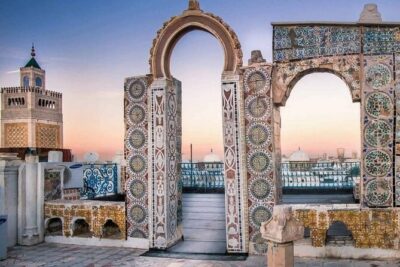
Private tour: Medina,Carthage ,Sidi Bou Said, Bardo Museum+lunch
Read our review →Private tour: Medina,Carthage ,Sidi Bou Said, Bardo Museum+lunch
Read our review →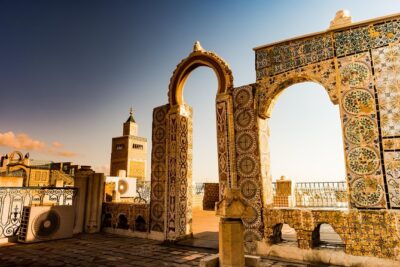
Carthage, Bardo Museum, Sidi Bou Said and Medina Private Day Tour
Read our review →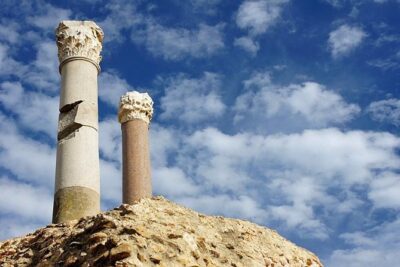
Carthage, Bardo Museum, Sidi Bou Said & Medina Group Tour
Read our review →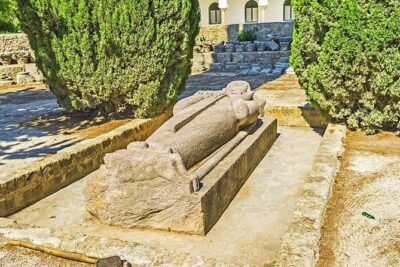
From Hammamet or Tunis: Carthage, Bardo, Sidi Bou said and Medina
Read our review →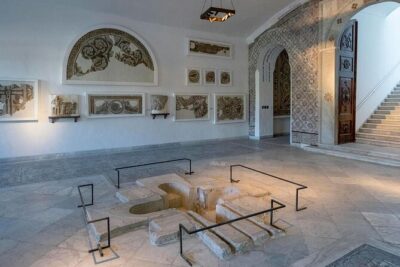
Private Day Tour Tunis Medina Carthage Sidi Bou Said Bardo Museum
Read our review →Private tour: Medina,Carthage ,Sidi Bou Said, Bardo Museum+lunch
Read our review →Browse the lists this tour appears in