
Reviewed · TATAOUINE & BERBER VILLAGE TOURS
Berber Village Kesra & Mactaris Historic site Daytrip from Tunis
Tunisia rewards you for leaving the coast. This private day trip links the ancient ruins of Mactaris with the high Berber village of Kesra, giving you two very different views of central Tunisia in about eight hours. I like the near-solitary feel of the archaeological site, and I like that front-door pickup from Tunis, Hammamet, or Sousse removes a major transport headache.
The main drawback is the long road time. The drive can take roughly four to five hours in total, leaving about two and a half hours for the two stops. That is a fair trade for a private outing into a less-visited part of the country, but it is not the best choice if you want a relaxed day with little time in the vehicle.
In This Review
- Six reasons this day trip earns a place on your Tunisia plan
- Why Mactaris is worth the long ride inland
- Megalithic tombs and museum pieces at Mactaris
- Kesra at 1,100 meters above sea level
- Berber heritage beyond the usual coastal route
- Four to five hours on the road, handled privately
- Is $187.93 per person a fair price?
- Who will enjoy this outing most
- Practical details before you book
- Should you book the Mactaris and Kesra day trip?
- FAQ
- How long is the Mactaris and Kesra day trip?
- Where can I be picked up?
- Is this a private tour?
- What is included in the price?
- Is lunch included?
- How long do you spend at Mactaris?
- How long do you spend in Kesra?
- Can I cancel for a full refund?
Six reasons this day trip earns a place on your Tunisia plan
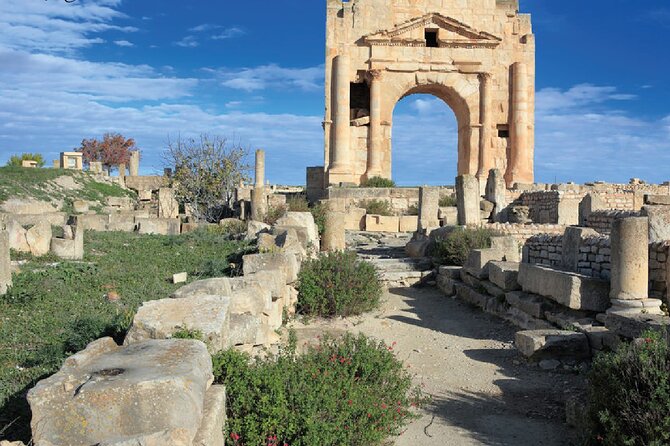
- Mactaris gives you ancient ruins without heavy crowds, including megalithic tombs, carved stones, monuments, and a site museum.
- Kesra sits at about 1,100 meters, making it Tunisia’s highest village and one of its most distinctive mountain settlements.
- Private pickup is included from Tunis, Hammamet, or Sousse, with drop-off at the end of the day.
- The vehicle has air-conditioning and Wi-Fi, useful on a long central-Tunisia drive.
- A private guide can shape the visit around your interests, especially if archaeology is your main reason for booking.
- The price of $187.93 per person includes transport, entry fees, water, and taxes, but not lunch.
Why Mactaris is worth the long ride inland
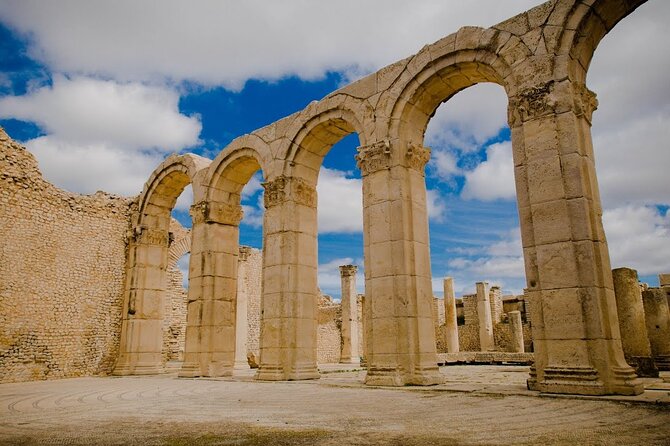
Mactaris, also written as Maktar or Mactaris, sits on a plateau near the northern edge of Tunisia’s central ridge. Its position helped the ancient city connect different parts of the country. It was not simply a local settlement. Its location near the watershed between two slopes also gave it a useful commercial role.
I like this stop because it lets you see the age of Tunisia in layers. The site has Numidian origins, then carries traces of Punic, Roman, Byzantine, and Islamic periods. You are not looking at one polished monument with a single story. You are seeing a place that changed as different powers controlled the region.
The setting also helps explain why the city mattered. Mactaris occupied an important point in the center of Tunisia, with routes reaching beyond the immediate area. The old settlement’s size and the number of surviving structures hint at a place that once had more influence than its remote location might suggest.
Your guide is especially useful here. Without context, a collection of stones, tombs, and foundations can blur together. With explanation, the site becomes easier to read. You can ask how the Numidian beginnings relate to later Carthaginian influence, how Roman building altered the city, and why the location supported trade.
More Kairouan & Dougga Trips in Hammamet
- Private and Guided Tour to Kairouan and El Jem and Monastir
★ 4.5 · 22 reviews - Private Day Trip to Testour, Dougga and Bulla Regia from Hammamet
★ 5.0 · 21 reviews - Kairouan & El Djem Guided Day Trip with Lunch from Hammamet
★ 4.0 · 18 reviews
Megalithic tombs and museum pieces at Mactaris
The megalithic tombs are one of the most unusual features of the visit. Their density shows that people used this area for a very long time, well before the later Roman monuments that often receive the most attention at Tunisian archaeological sites.
I would give Mactaris your full attention rather than treating it as a quick photo stop. The remains are spread across an open plateau, and the sense of space is part of the experience. The site is described as having stelae preserved in its museum, along with other objects that help connect the visible ruins to the people who lived and died here.
The museum matters because it gives you smaller details that open-air ruins cannot. A stone marker or carved piece can show symbols, burial customs, or artistic habits that are easy to miss among larger foundations. Admission is included, so you do not need to choose between the ruins and the museum based on extra cost.
Plan on about 90 minutes at Mactaris. That is enough for a focused visit, but not enough to study every stone at length. If archaeology is your main interest, tell your guide early. The private format gives you a better chance to spend more of this stop on the tombs, stelae, and museum rather than rushing through a fixed group schedule.
One practical point: the site is inland and remote compared with Tunisia’s major coastal attractions. That is precisely why it can feel so peaceful, but it also means the journey is part of the day. You should book this outing for the quality of the destination, not because it is a quick excursion.
Kesra at 1,100 meters above sea level
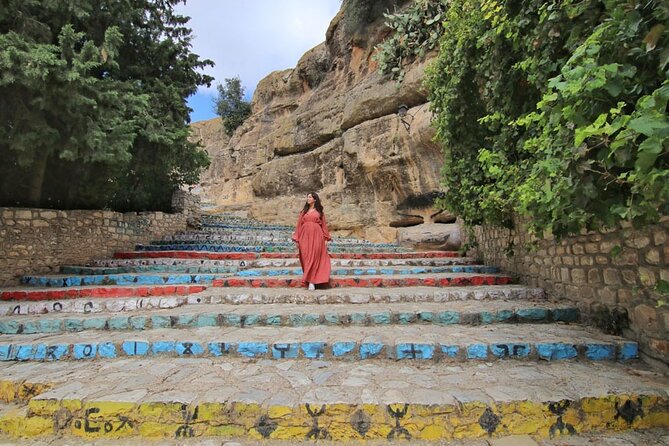
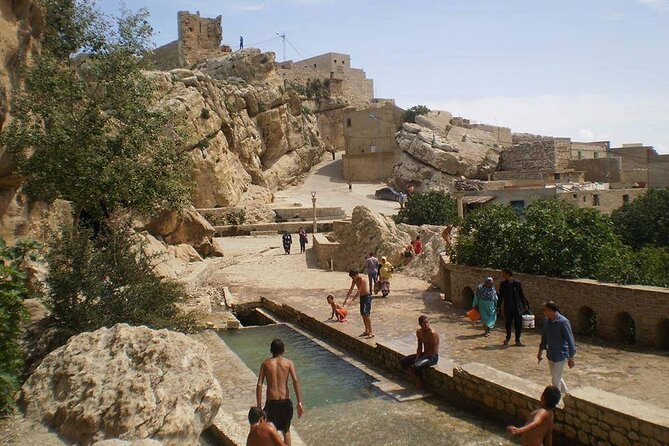
After Mactaris, the tour heads to Kesra, the highest village in Tunisia. The village sits around 1,100 meters above sea level, on a rocky hill overlooking the plains. Its height changes the mood of the trip. You move from an archaeological plateau shaped by ancient settlement to a mountain community still connected to old customs.
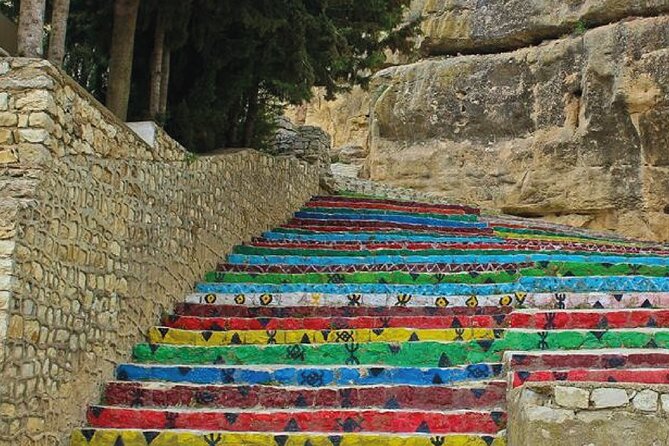
Kesra is identified as one of the country’s first Berber villages. Its past also includes Punic, Roman, Byzantine, and Islamic periods, so the village carries many historical layers. I like the contrast with Mactaris: here, the past is not only displayed in ruins. It is tied to the village’s position, buildings, water sources, and continuing traditions.
The village’s location once offered natural protection. Its high position gave it a commanding view over the surrounding plains, while natural springs provided an important source of water. That combination helped make Kesra a practical settlement as well as a defensible one.
The visit lasts about an hour. That is enough to see the village’s distinctive setting and hear about its heritage, but it is a short introduction rather than a long village stay. You should expect a guided look at Kesra’s character, history, and views, not a full-day cultural program.
Kesra is also the more scenic stop. The mountain air, rocky rise, and wide views give the second half of the day a different rhythm. The word landscape is especially appropriate here in the literal sense, since the village’s appeal depends heavily on its high terrain and views across the plains.
Berber heritage beyond the usual coastal route
Many Tunisia itineraries focus on Tunis, Carthage, Sidi Bou Said, Hammamet, or the resort coast. This trip takes you into the center-west, where the pace and setting feel less polished for tourism. That is a major reason to choose it.
Kesra’s traditions are described as conservative, with daily life still shaped by older social practices. You should approach the visit with respect and curiosity. The point is not to treat the village as a staged attraction, but to understand how an old settlement continues to function in the present.
The village is also linked to mythical heritage. Your guide can explain the stories and local ideas associated with Kesra, then place them beside the village’s Berber and later historical influences. A private tour helps here because you can ask for more explanation instead of moving along with a large group.
I would not expect an elaborate cultural performance or a long list of organized activities. The appeal is quieter. You are seeing a high village with a long past, natural water sources, and a strong sense of place. For me, that is more valuable than adding another standard monument to a crowded sightseeing schedule.
Further south, and a completely different kind of day out:
- Private tour: Medina,Carthage ,Sidi Bou Said, Bardo Museum+lunch
★ 5.0 · 194 reviews - Quad ride on the hills of Hammamet
★ 4.0 · 104 reviews - 2-Day Tunisian Sahara Tour with Food & Stay from Hammamet
★ 4.5 · 80 reviews - Tour to the Medina of Hammamet and the Spice Market of Nabeul
★ 4.0 · 45 reviews
Four to five hours on the road, handled privately
The driving time deserves honest attention. One detailed account puts the total pure driving time at roughly four to five hours, while the full outing lasts about eight hours. That leaves limited time at the actual stops, especially once pickup, drop-off, and any breaks are counted.
Still, the private vehicle makes the road easier to manage. You receive pickup and return service from your accommodation or another agreed location in Tunis, Hammamet, or Sousse. Air-conditioning matters in Tunisia, and Wi-Fi gives you a way to stay connected during the long transfer.
Bottled water is included, along with all fees and taxes. Those small inclusions reduce the need to organize basics during a remote day. You also avoid the uncertainty of arranging separate transport to Mactaris and Kesra, which would be difficult for many independent visitors.
The private format is the real advantage. Only your group takes part, so you can ask questions, set a comfortable pace within the available time, and avoid collecting a busload of people at every stop. A shared tour might cost less, but it would also make the long journey feel more tiring and the short visits less flexible.
The vehicle’s Wi-Fi should be seen as a useful extra, not the reason to book. Connectivity can help during the journey, but the main value comes from having a private air-conditioned transfer to places that are not simple coastal day trips.
Is $187.93 per person a fair price?
At $187.93 per person, this is not a budget excursion. Its value depends heavily on how many people are in your private group and where you are staying. The larger your group, the better the per-person value becomes, especially since the price includes private round-trip transport, a guide, admission fees, bottled water, air-conditioning, Wi-Fi, and taxes.
For two people, the price is easier to justify if you place a high value on comfort and personal attention. You are paying for access to a remote part of Tunisia without having to manage the route yourself. For a larger family or group of friends, the private arrangement can make more financial sense than booking several separate seats on a small organized excursion.
Lunch is not included. You should plan for that when comparing the total cost with other day trips. The available information does not specify a particular restaurant or meal arrangement, so do not assume lunch is built into the schedule or price.
I also would not judge the price by the number of hours spent at the monuments alone. The experience includes a substantial transfer into central Tunisia, where the distance is part of the challenge. If you want Mactaris and Kesra specifically, the transport solution gives the tour practical value. If you simply want a full day of sightseeing, a closer destination may offer more time out of the vehicle for similar money.
Who will enjoy this outing most
I would recommend this trip to you if archaeology is a serious interest, especially if you want more than the familiar Roman sites near the coast. Mactaris offers a strong mix of Numidian, Punic, Roman, Byzantine, and Islamic remains, with megalithic tombs and a museum to add detail.
It also suits you if you want to see a Berber village in a high mountain setting. Kesra is not interchangeable with a coastal resort or a standard historic center. Its altitude, rocky position, natural springs, and continuing traditions make it a distinct stop.
The tour works well for couples, families, or friends who want a private day and do not mind a long drive. Most travelers can participate, and service animals are allowed. The tour is also near public transportation, though the included pickup makes local connections less important.
I would hesitate to recommend it if you dislike long car journeys or want a slow day with several hours at each location. Mactaris receives about 90 minutes and Kesra about an hour, so the schedule is purposeful rather than leisurely.
Practical details before you book
Confirmation is provided when you book, and a mobile ticket is available. Pickup is offered from Tunis, Hammamet, or Sousse, which makes the tour useful from several popular bases. Be sure your selected pickup point is clear at the time of booking.
The outing requires good weather. If poor weather forces cancellation, you can receive a different date or a full refund. You can also cancel for a full refund if you do so at least 24 hours before the scheduled start time. Changes or cancellations made less than 24 hours before departure are not accepted for a refund.
The tour includes admission to Mactaris, but entry to Kesra is free. All fees and taxes are covered, while lunch is your responsibility. Bring water beyond the included bottle if you prefer to drink often during the day, and allow for the fact that the exact rhythm may depend on pickup and road conditions.
Should you book the Mactaris and Kesra day trip?
Book it if you want an unusual central-Tunisia outing built around archaeology, Berber heritage, and private transport. Mactaris is the star for archaeology, with its megalithic tombs, museum, and broad historical span. Kesra provides the memorable change of scene, rising high above the plains at about 1,100 meters.
Skip it if your ideal day means minimal driving, a long lunch, or several hours at one major site. The four-to-five-hour road commitment is real. But if you accept that trade, this is a strong way to reach two places that are difficult to combine independently, with the comfort of a private vehicle and a guide focused on your group.
FAQ
How long is the Mactaris and Kesra day trip?
The experience lasts approximately eight hours.
Where can I be picked up?
Pickup and drop-off are offered from Tunis, Hammamet, or Sousse.
Is this a private tour?
Yes. Only your group takes part in the activity.
What is included in the price?
The price includes all fees and taxes, an air-conditioned vehicle, Wi-Fi, bottled water, and admission to Mactaris.
Is lunch included?
No. Lunch is not included in the tour price.
How long do you spend at Mactaris?
The planned visit to Mactaris lasts about one hour and 30 minutes.
How long do you spend in Kesra?
The planned visit to Kesra lasts about one hour.
Can I cancel for a full refund?
Yes, you can cancel for a full refund if you cancel at least 24 hours before the experience starts. Poor-weather cancellations also offer a different date or a full refund.
More Berber Village Trips
- One night under the tent: Tataouine – Chenini – Ksar Ghilane – Matmata
★ 5.0 · 53 reviews - Out of time Berber villages Tekrouna and Zriba Alia
★ 5.0 · 42 reviews - Private Day Trip Tataouine and Berber Village
★ 5.0 · 40 reviews - Tataouine Cheneni 1 day visit
★ 4.0 · 33 reviews
More Kairouan & Dougga Trips in Hammamet
- Private Day Tour , Kairouan & Amphitheatre of el Jem From Tunis /Hammamet/Sousse
★ 4.5 · 8 reviews - Kairouan & El Jem Small Group Tour from Tunis, Hammamet or Sousse
★ 5.0 · 6 reviews - Kairouan, El Djem, Monastir Self-Guided Excursion from Hammamet
★ 4.5 · 5 reviews - Kairouan, El Djem and Monastir Guided Excursion from Hammamet
★ 5.0 · 5 reviews
Newest from Hammamet
- Kairouan & El Jem Small Group Tour from Tunis, Hammamet or Sousse★ 5.0 · 6 reviews
- 4-Day Private Tour: Sahara and Djerba Island from Tunis and Hammamet★ 5.0 · 4 reviews
- 2days 4×4 SAFARI from Sousse, Hammamet,Tunis – 4*hotel accommodation★ 3.5 · 6 reviews
- Enfidha Private Arrival Airport Transfer to Hammamet★ 4.5 · 4 reviews
- 3DAYS 4×4 safari from Sousse/Hammamet/Tunis 100km deep in desert camp★ 4.5 · 3 reviews
- Transfer from Airport Tunis Carthage To Hammamet★ 5.0 · 2 reviews
- Kairouan, El Djem, Monastir Self-Guided Excursion from Hammamet★ 4.5 · 5 reviews
- From Hammamet: Sahara Desert Overnight Camping★ 4.5 · 2 reviews
Tataouine & Berber Village Tours, compared.
One night under the tent: Tataouine – Chenini – Ksar Ghilane – Matmata
Read our review →
Out of time Berber villages Tekrouna and Zriba Alia
Read our review →
Chenini 1 day: Discovery of Ksours and Berber villages
Read our review →
Tatouine – Cheneni – Ksar Ghuilaine – Matmata: 2 days visit
Read our review →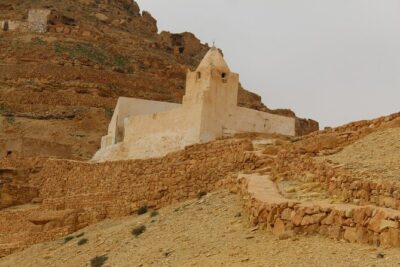
Ksar Ghilaine and Chneni Tataouine 1 day tour in Tunisia
Read our review →Browse the lists this tour appears in