
Reviewed · TUNIS TOURS
7 Day Guided Tunisia Tour Including Pickup
Tunisia packs a lot into one week. This private seven-day tour links the country’s finest Roman sites, desert towns, Berber villages, salt flats, and Mediterranean highlights into one long but rewarding journey. I like the way the route keeps changing character, from the great amphitheater at El Jem to underground homes in Matmata, then from Sahara dunes to the white-and-blue village of Sidi Bou Said.
I also like the personal service. Guides such as Salem, Ziad, Yassine, Daoud, Kais, and Samir are repeatedly praised for their care, flexibility, language skills, and command of local history. The main drawback is the pace: this is a wide-ranging road trip, covering roughly 2,100 kilometers according to one account, so you should expect several long days in the vehicle.
In This Review
- Key points at a glance
- What the seven-day route really offers
- Day 1: Sousse, El Jem, and the underground homes of Matmata
- Day 2: Chenini and the fortified granaries of Tataouine
- Day 3: Douz and the salt flats of Chott el Jerid
- Day 4: Chebika, Old Tamerza, and the Star Wars desert
- Day 5: Sbeitla and Kairouan, two very different centers
- Day 6: Dougga and the Medina of Tunis
- Day 7: Sidi Bou Said and Carthage
- The guide and vehicle make the difference
- Who should book this Tunisia tour?
- FAQ
- How long does the Tunisia tour last?
- Where does pickup take place?
- Is this a private tour?
- Are meals included?
- Are monument entrance fees included?
- Can I cancel for a full refund?
- Should you book it?
Key points at a glance
- A private route across almost all of Tunisia: Only your group participates, giving the guide room to adjust the pace and answer questions.
- El Jem and Dougga are the big Roman rewards: These exceptionally preserved sites help you picture ancient North Africa beyond the usual Rome itinerary.
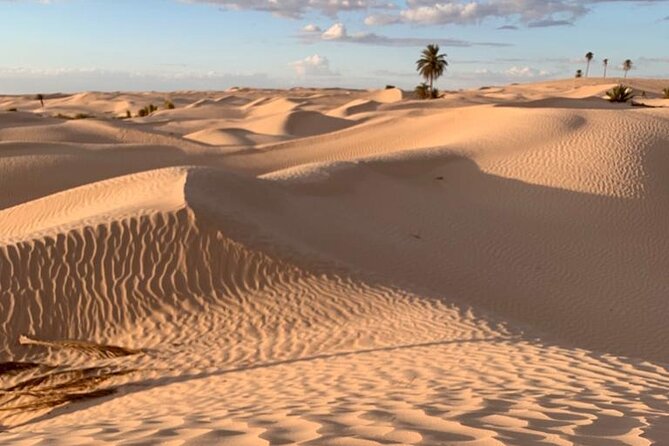
- Southern Tunisia brings the most unusual scenery: Matmata’s underground homes, Chenini’s hill village, Chott el Jerid’s salt crust, and the Eriguet Dunes feel far removed from the coast.
- The guides are a major strength: Salem receives especially warm praise for his care, flexibility, humor, and ability to speak Spanish and Portuguese.
- Meals are partly covered: Six breakfasts and six dinners are included, while entrance fees and taxes are extra.
- The route suits curious, active sightseers: It is best for people who value variety and context more than long, lazy stays in one place.
What the seven-day route really offers
At $1,858.33 per person, this is not a bargain-basement bus tour. The price needs to be judged against the amount of ground covered, the private format, the guide and driver service, six breakfasts, six dinners, and the planning involved in linking distant parts of Tunisia.
You are paying for a country-spanning itinerary rather than a single attraction. The route reaches Sousse, El Jem, Matmata, Tataouine, Douz, Tozeur, Sbeitla, Kairouan, Dougga, Tunis, Carthage, and Sidi Bou Said. Building that route independently would require several hotel bookings, careful driving plans, and a good deal of research.
There is one important budget point. The tour information says that all fees and taxes, including monument entrance fees, are not included. Some individual stops are marked as including admission, but the broader exclusion is the safer guide for planning. Ask exactly which tickets are covered before paying, and keep extra money available for archaeological sites and paid attractions.
The private setup adds real value. You are not tied to strangers, and the guide can respond to your interests. If you want more time at Dougga or fewer minutes in a market, you have a better chance of discussing that than you would on a large coach trip.
Two or three more Tunis trips worth a look
- Private Tour to Kairouan, El Jem & Monastir from Tunis_hammamet
★ 5.0 · 301 reviews - Private tour: Medina,Carthage ,Sidi Bou Said, Bardo Museum+lunch
★ 5.0 · 230 reviews - Carthage, Bardo Museum, Sidi Bou Said and Medina Private Day Tour
★ 4.5 · 153 reviews
Day 1: Sousse, El Jem, and the underground homes of Matmata
The first day gives you a quick introduction to Tunisia’s layered past. In Sousse, you spend about 30 minutes in the Medina, a UNESCO-listed old city with narrow lanes, courtyards, shops, cafés, and the Great Mosque.
Thirty minutes is enough to get your bearings, but not enough for a slow exploration. Treat this as a first taste rather than a full Medina visit. The compact stop also hints at the tour’s general style: you will see many major places, but the schedule does not linger everywhere.
The El Jem Coliseum is the day’s major sight. Built around the third century during the reign of Emperor Gordian, the amphitheater could hold up to 35,000 people. Its scale is startling, especially when you remember that this enormous Roman structure sits in a modern Tunisian town rather than in a major European capital.
Allowing two hours here is sensible. You can walk through the arena, inspect the seating levels, and appreciate how much of the structure remains. I consider El Jem one of the strongest reasons to take this route. It is large enough to inspire awe, yet open enough for you to understand its design without fighting through crowds.
Matmata changes the subject completely. The village sits in a dry, rocky area known for troglodyte houses carved into soft limestone. Rooms are arranged around central courtyards, with the earth helping protect residents from desert heat and cold.
Two hours gives you time to understand how these homes work rather than simply taking a photograph at the entrance. Some have been converted into unusual hotels, which adds a useful connection between traditional building methods and modern tourism. The stop is especially good for anyone interested in how people adapt to difficult climates.
The distance between these stops means day one will feel full. Wear shoes suitable for uneven ground and carry water, even though the tour itself includes meals.
Day 2: Chenini and the fortified granaries of Tataouine
Day two focuses on the Berber architecture of southern Tunisia. Chenini is a hill village built into rocky slopes, with stone and mud-brick homes, narrow paths, and fortified granaries known as ksour.
The two-hour visit should give you time to walk through the village and see how the buildings fit the terrain. Chenini is not polished in the way a restored museum can be. That is part of its appeal. You are looking at a settlement shaped by defense, storage, climate, and community life.
Ksar Ouled Soltane is more immediately striking. This fortified granary near Tataouine is made up of stacked storage rooms that once protected crops and possessions. The architecture is practical, but the repeated forms create a memorable pattern against the dry surroundings.
One hour is scheduled here, and that is probably enough for a focused visit. Admission is included at this stop, although you should still confirm the final ticket arrangements with the operator because the general terms exclude monument fees.
Ksar Hadada receives two hours. The site is tied to the Star Wars films and the fictional planet of Tatooine, but the real story is more useful than the film connection. The ksar reflects Berber building traditions and the need to store food securely in a harsh region.
The movie reference may attract fans, but you do not need to know the films to enjoy the place. I would encourage you to look past the props and famous associations. The architecture tells you more about southern Tunisian life than a film location sign ever can.
Day 3: Douz and the salt flats of Chott el Jerid
Douz is known as the Gateway to the Sahara. The town has long served as a starting point for desert outings and camel treks, making it a natural pause between the fortified villages and the salt lake region.
The two-hour stop gives you time to see the town and understand its role in desert travel. The supplied details do not promise a camel ride, so do not assume one is part of the program. If that matters to you, ask before booking.
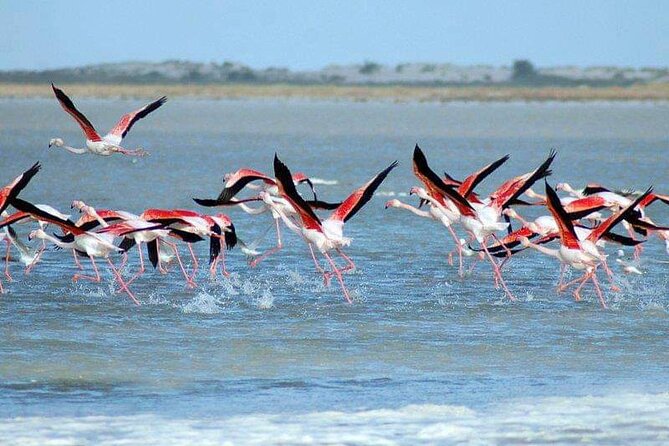
Chott el Jerid is a completely different kind of desert sight. This shallow salt lake often appears as a broad expanse of salt crust and mud flats when dry. After rain, it can hold temporary water and attract birds such as flamingos and other migratory species.
You have about an hour here. Conditions will shape what you see. In a dry period, expect salt patterns and stark open views rather than a conventional lake. In wetter conditions, the colors and reflections may change, but the visit remains weather-dependent.
This is one of those stops where expectations matter. Chott el Jerid is not an amusement park attraction. Its appeal comes from scale, silence, and unusual geology. Bring sunglasses and protect yourself from the sun.
Further south, and a completely different kind of day out:
- Private Excursion to Testour, Dougga and Bulla Regia from Tunis.
★ 5.0 · 100 reviews - Guided Bike Tour of Carthage Archeological Site in Tunisia
★ 5.0 · 88 reviews - Guided tour in the UNESCO world heritage Medina of Tunis
★ 5.0 · 68 reviews - Group Guided Bike Tour of Carthage Archeological Site in Tunisia
★ 5.0 · 57 reviews
Day 4: Chebika, Old Tamerza, and the Star Wars desert
Day four is devoted to the Tozeur region and its oases. In Chebika, a spring called Ain Chebika flows down the mountainside in cascades and pools surrounded by palms and rocky cliffs.
The two-hour visit lets you see the contrast between water and dry stone. The oasis is a natural setting, so the flow can vary. You should expect uneven paths around the spring and plan your footwear accordingly.
Tamerza adds a human story to the day. Old Tamerza was abandoned in the 1960s after flooding caused by heavy rainfall. Its crumbling homes and narrow lanes now offer a glimpse of a community left behind.
You have one hour at the old village. That is enough for a short walk and photographs, though anyone fascinated by abandoned settlements may wish for longer. The ruins are not just picturesque. They show how quickly extreme weather can alter the fate of a place.
Ong Jemel and the Eriguet Dunes provide the grand finale. The area is known for open desert scenery and its connection to Star Wars filming locations. Two hours gives you time to take in the dunes and the famous film-related setting.
The combination of Chebika’s water, Tamerza’s ruins, and Ong Jemel’s sand makes this a well-balanced day. It also brings more remote roads and exposed conditions. Listen closely to the guide about where to walk, and do not wander away from the group in unfamiliar desert terrain.
Day 5: Sbeitla and Kairouan, two very different centers
Sbeitla is one of the finest archaeological stops on the route. The former Roman city flourished from the first through sixth centuries and includes a forum, temples, basilicas, a theater, baths, houses, and mosaics.
The three temples dedicated to Jupiter, Juno, and Minerva are especially impressive. Two hours is enough to walk among the main ruins, but the site is broad and exposed. You will get more from it if your guide explains what each building did instead of giving you only a list of dates.
This is another place where admission is identified as included in the schedule, while the general terms say monument fees are extra. Confirm this point before departure so your budget is accurate.
Kairouan shifts the focus from Roman North Africa to Islamic Tunisia. Founded in 670 AD, it became a center of Islamic learning and the capital of Ifriqiya, a region that included parts of present-day Tunisia, Algeria, and Libya.
The two-hour visit is a useful introduction to one of the country’s most important religious and cultural centers. Take time to notice how different the city feels from Sbeitla. The value of this tour lies partly in these sharp changes between civilizations, not just in the number of sites.
Day 6: Dougga and the Medina of Tunis
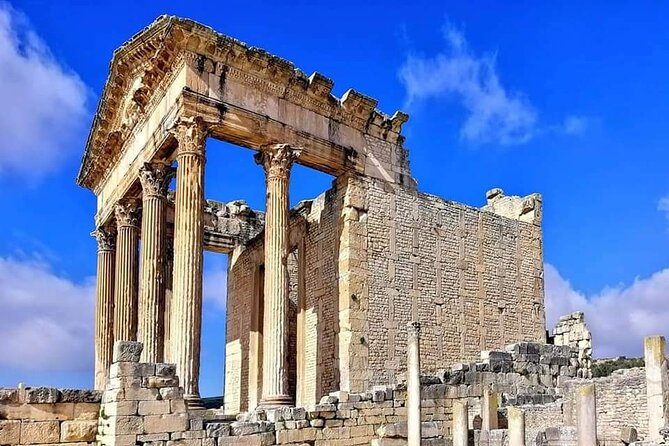
Dougga may be the strongest archaeological stop of the week. This UNESCO-listed ancient city contains temples, a theater, public buildings, mosaics, and streets that still make the old settlement easy to picture.
Two hours is a good minimum. The site is extensive, and the ruins are spread across open ground. Comfortable shoes, water, and sun protection will make a real difference.
I like Dougga because it feels less like a single monument and more like a town you can walk through. You see how religion, entertainment, administration, and domestic life fit together. It also gives the guide plenty of room to explain how Roman cities functioned in North Africa.
Later, the Medina of Tunis provides a livelier urban contrast. This walled old city dates back to the ninth century and contains souks, workshops, traditional architecture, and a maze of lanes.
The scheduled hour is brief. You can sample the atmosphere, but you will not cover the whole Medina. Keep your plans modest and stay aware of the meeting point. A private guide is particularly useful here because the lanes can be confusing.
Day 7: Sidi Bou Said and Carthage
Sidi Bou Said is the gentlest final day. Its white buildings, blue doors, blue windows, and wrought-iron details create a distinctive Mediterranean setting above the sea.
Two hours gives you time to walk the cobbled streets and enjoy the views without rushing. The village is visually striking, but remember that it is also a real residential place. Give people space, and treat the famous doors as part of the neighborhood rather than as a backdrop built for photographs.
Carthage closes the tour with another major historical site. The ruins stretch across a wide area and include the Tophet, an ancient burial ground with rows of stelae, and the Antonine Baths, a huge complex once used for bathing and social life.
Two hours allows a useful overview, though Carthage is spread out enough that you cannot see every part in depth. The guide’s explanations matter here because the remains are separated across the modern city. Without context, some sections can look like scattered stones. With context, you can picture the scale of the ancient port and its public buildings.
The guide and vehicle make the difference
The strongest praise is directed at the human side of the trip. Salem is repeatedly described as attentive, professional, flexible, and deeply informed. One person nicknamed him Google because he seemed to know the answer to everything. That kind of guide can turn a demanding road itinerary into a coherent story.
Other names connected with positive experiences include Ziad, Yassine, Daoud, Kais, Samir, Hisham, Khaled, Manuel, and Michel. The comments also highlight friendly drivers, comfortable vehicles, and careful service over the long distances.
The language information is limited, but Salem is specifically praised for speaking very good Spanish and Portuguese. If you need another language, ask before reserving. The tour is private, so good communication with the guide will shape the entire week.
Pickup is offered, with the meeting point listed as Carthage Airport in Tunis. The stated operating hours are 8:00 AM to 6:00 PM, Monday through Sunday, for the dates provided. Confirmation is received at booking, and the tour is described as suitable for most participants and near public transportation.
Who should book this Tunisia tour?
I would choose this tour if you want a broad first look at Tunisia and prefer having transport, hotels, meals, and guiding organized in one plan. It is especially suitable for history fans, photographers, first-time visitors, and people who want to combine Roman sites with desert scenery and living communities.
You should think twice if you prefer slow mornings, beach time, or several nights in one town. The schedule is demanding, and the long drives are part of the bargain.
The tour has a 5 out of 5 rating from 27 reviews, with 100 percent recommending it. That is a strong record, and the praise is unusually consistent about guide care and organization. Still, the route’s breadth means you should arrive ready for early starts, changing temperatures, uneven ruins, and plenty of time on the road.
FAQ
How long does the Tunisia tour last?
The tour lasts approximately seven days, with visits scheduled from day one through day seven.
Where does pickup take place?
The listed starting point is Carthage Airport in Tunis, Tunisia. Pickup is offered.
Is this a private tour?
Yes. Only your group participates in the activity.
Are meals included?
Six breakfasts and six dinners are included. Other meals are not specified as included.
Are monument entrance fees included?
The general tour terms say that entrance fees at monuments, along with all fees and taxes, are not included. Some individual stops are marked as including admission, so you should confirm the exact ticket coverage before booking.
Can I cancel for a full refund?
Yes. You can cancel at least 24 hours before the experience start time for a full refund. Cancellations or changes made less than 24 hours beforehand are not accepted for a refund.
Should you book it?
Book this tour if you want Tunisia in broad, bold strokes: Roman amphitheaters, Islamic cities, Berber ksour, underground homes, salt flats, oasis springs, desert dunes, Carthage, and the Mediterranean coast. The private format and highly praised guides add real value.
I would not book it expecting a relaxed resort holiday or deep time at every stop. But if you can handle the mileage and budget separately for entrance tickets, this is an efficient and unusually varied way to see Tunisia with someone taking care of the complicated parts.
Newest from Tunis
- Private Arrival Transfer: Tunis Airport to Tunis Hotel★ 4.5 · 5 reviews
- Cap Bon Guided Day Tour from Tunis★ 5.0 · 2 reviews
- Tunis Group Tour: Carthage, Sidi Bou Said, Bardo museum & Medina★ 5.0 · 5 reviews
- Walking City Tour★ 4.5 · 7 reviews
- Dougga Guided Day Tour from Tunis★ 5.0 · 5 reviews
- Tunisia 7-Day tour★ 5.0 · 6 reviews
- Unveiling the Beauty of Sidi Bou Said and Carthage Private Tour★ 5.0 · 2 reviews
- Tunis Carthage Private Arrival Airport Transfer to Tunis★ 5.0 · 4 reviews
Tunis Tours, compared.
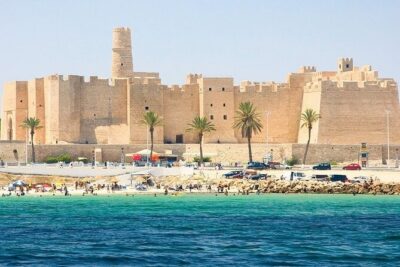
Private Tour to Kairouan, El Jem & Monastir from Tunis_hammamet
Read our review →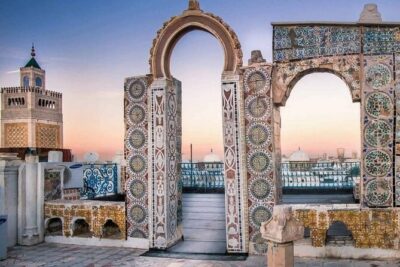
Private tour: Medina,Carthage ,Sidi Bou Said, Bardo Museum+lunch
Read our review →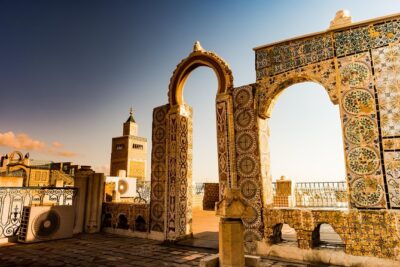
Carthage, Bardo Museum, Sidi Bou Said and Medina Private Day Tour
Read our review →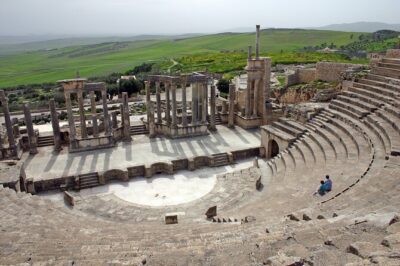
Private Excursion to Testour, Dougga and Bulla Regia from Tunis.
Read our review →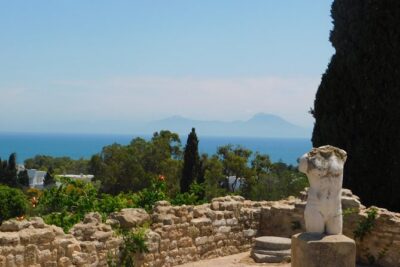
Guided Bike Tour of Carthage Archeological Site in Tunisia
Read our review →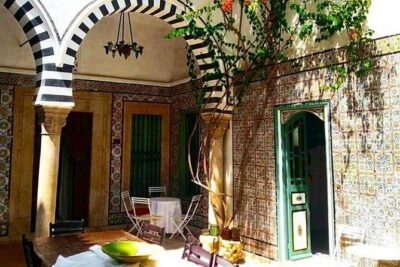
Guided tour in the UNESCO world heritage Medina of Tunis
Read our review →
Group Guided Bike Tour of Carthage Archeological Site in Tunisia
Read our review →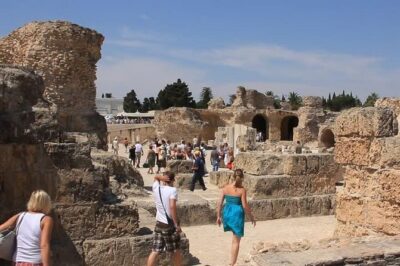
Archaelogical Site Of Carthage + Picturesque Village Of Sidi Bou Said
Read our review →Browse the lists this tour appears in