
Reviewed · KAIROUAN & DOUGGA TOURS
Full Day Uthina and Dougga Tour with Licensed Guide
Ancient Tunisia rewards the curious. This private outing pairs Uthina’s enormous amphitheatre with Dougga’s hilltop Roman ruins, giving you two very different archaeological sites in one carefully planned day. Hotel pickup from Tunis, a licensed guide, and included admission make the trip simple to arrange.
I like the private format, since your group can set the pace and ask questions without waiting for strangers. I also like the mix of famous monuments and quieter remains, from villa mosaics at Uthina to Dougga’s Capitol and Licinian Baths. The main consideration is the tight six-hour schedule. With three hours at each site, you will see the major sights, but you may need to keep moving if you want detailed explanations and plenty of photographs.
The guide can make a major difference here. Otman has been praised for his encyclopedic grasp of archaeology, while Carla helped shape a day around one family’s interests, including an 11-year-old who stayed fascinated by the ruins. That sort of flexibility is one of the strongest reasons to choose a private tour.
In This Review
- Key points to know before booking
- Why Uthina is a strong first stop
- Dougga brings the Roman story into focus
- What a licensed guide adds at Uthina and Dougga
- Six hours is efficient, but not leisurely
- Is $150 per person good value?
- Who will enjoy this tour most?
- Practical details that matter
- Should you book the Uthina and Dougga tour?
- FAQ
- Where does the tour take place?
- What time does the tour start?
- How long does the tour last?
- Is hotel pickup available?
- Is this a private tour?
- Are admission tickets included?
- How large is Uthina’s amphitheatre?
- How many people could sit in Dougga’s Theatre?
- Is the tour suitable for children?
- Can I cancel for a full refund?
Key points to know before booking
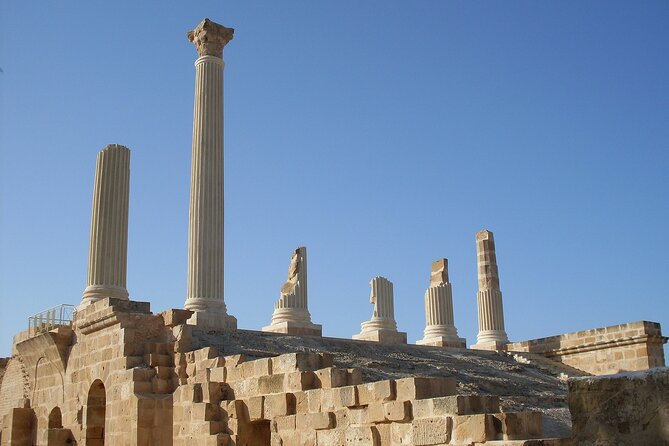
- Two major Roman sites in one day: Visit Uthina, also called Oudhna, followed by Dougga, the finest Roman archaeological site in Tunisia.
- A 16,000-seat amphitheatre: Uthina’s arena gives you a clear sense of the scale of Roman public entertainment.
- A private tour with hotel transfer: Your group travels together, and the day can be adapted more easily than a large group excursion.
- Three hours at each site: The schedule offers enough time for the main monuments, though not unlimited time for every ruin and mosaic.
- A strong guide can shape the experience: Otman is specifically praised for explaining the archaeology in great depth.
- $150 per person: The price makes the most sense for visitors who value private transport, guiding, and a full archaeological day rather than a bare sightseeing transfer.
Why Uthina is a strong first stop
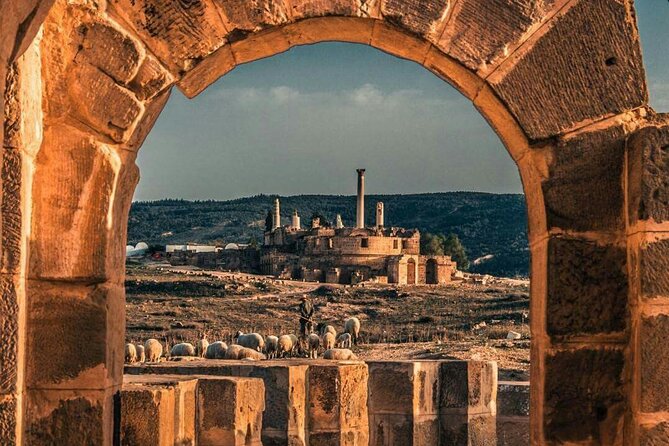
Uthina sits about 30 kilometers southwest of Tunis in the valley of Oued Miliane. The area was valued for its fertile soil long before the Roman town was founded at the end of the first century BC, so you are looking at a place with a story that begins before the familiar Roman remains.
I like starting here because Uthina feels less like a single monument and more like an archaeological site waiting to be read. You can connect the town’s public life with its private homes, moving from the amphitheatre to the mosaics found in villas. The remains show how Roman urban life worked at several levels, from mass entertainment to domestic decoration.
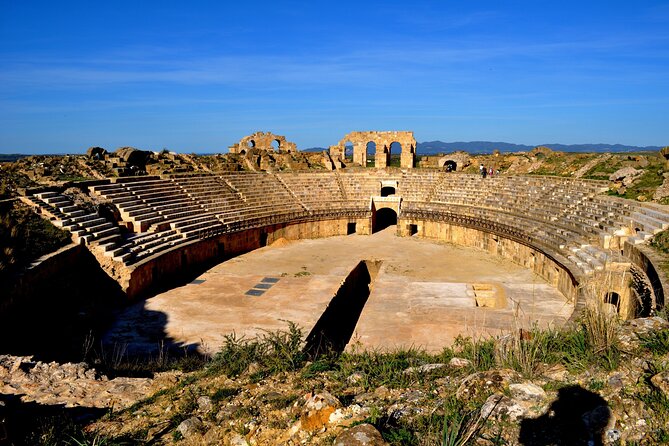
The amphitheatre is the big draw. It could hold up to 16,000 spectators, a remarkable figure that gives the structure real force even when you are looking at weathered stone. You can picture the arena filled for gladiatorial contests, with the crowd arranged around the action. That capacity also helps explain why Roman towns invested so heavily in public buildings: entertainment was part of civic life, not a small side activity.
Uthina’s villa mosaics add a quieter counterpoint. Rather than focusing only on emperors, battles, and grand public spaces, the mosaics hint at how wealthy residents decorated their homes. The contrast is useful. You see both the public face of the town and the private world behind its walls.
The three-hour visit should allow time for the amphitheatre, villas, and major remains with an explanation from your guide. I would use this stop to ask questions early, especially if you want help understanding how the public buildings relate to the residential areas. A good guide can turn scattered stones into a town plan.
More Kairouan & Dougga Trips in Tunis
- Private Tour to Kairouan, El Jem & Monastir from Tunis_hammamet
★ 5.0 · 301 reviews - Private Excursion to Testour, Dougga and Bulla Regia from Tunis.
★ 5.0 · 100 reviews - Daytrip to Kairouan and El Jem Colosseum
★ 4.5 · 55 reviews
Dougga brings the Roman story into focus
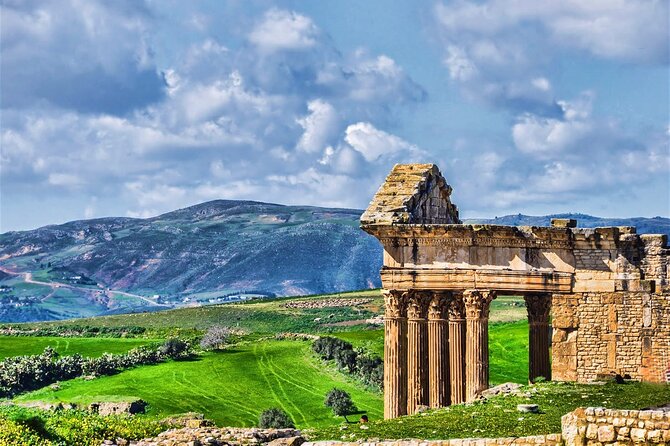
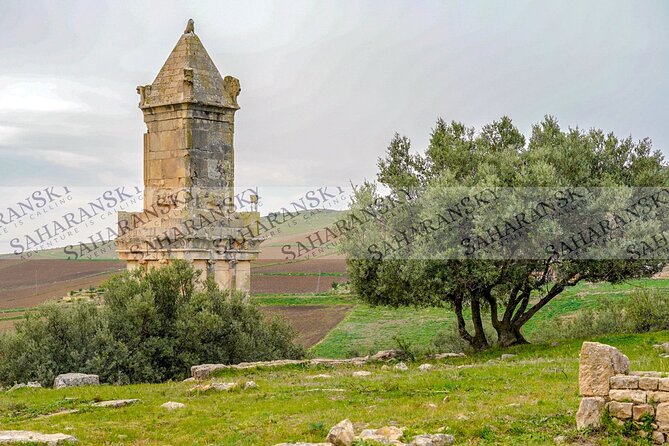
After Uthina, the tour continues to Dougga, described as the pinnacle of Roman presence in Tunisia. The setting is part of its appeal. The ruins spread across an open hillside, and the position lets you see how the buildings relate to one another rather than encountering each monument as an isolated object.
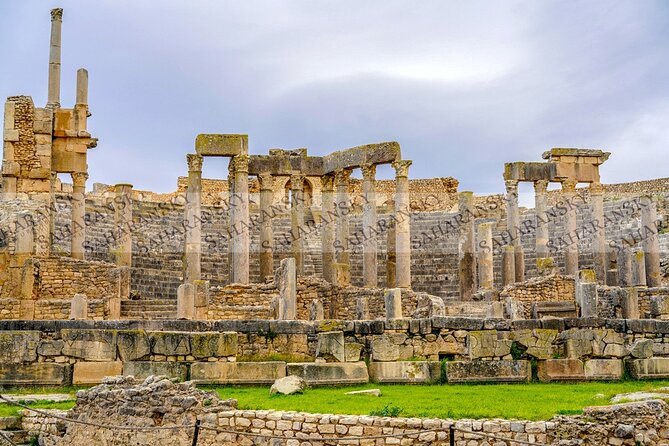
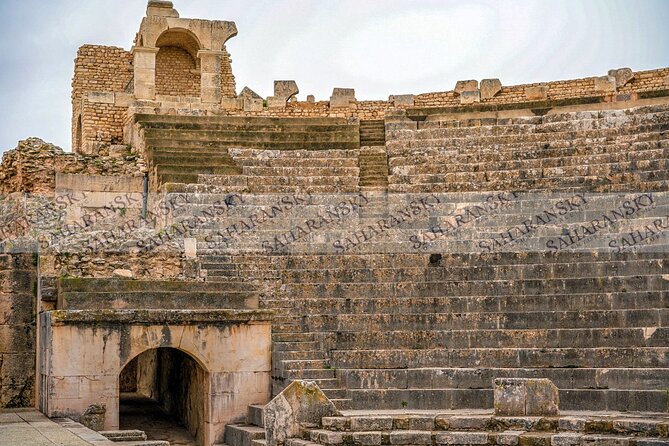
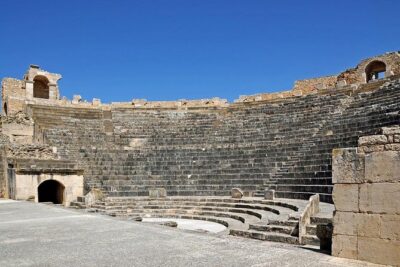
The visit begins at the Theatre, built in AD 168 by Marcus Quadratus, one of the town’s wealthier residents. It held up to 3,500 people. Compared with Uthina’s 16,000-seat amphitheatre, Dougga’s Theatre feels more intimate, but that smaller scale makes it easier to imagine a performance taking place there.
The Theatre is close to the car park, so you do not need to spend the first part of the visit on a long approach. That is practical when you have a fixed three-hour window. It also gives you a quick orientation point before you move toward the residential quarter and temples.
From the Theatre, the route leads into the wider site. The residential quarter helps you see Dougga as a functioning town, not simply a collection of impressive public buildings. The temples show the religious side of Roman civic life, while the Licinian Baths reveal the importance of bathing as a social and public activity.
The baths are an important part of the visit because they show the technical and communal side of Roman life. You are not only looking at decoration or monuments built for display. You are seeing the remains of a complex designed for daily use, with spaces that served public recreation and social contact.
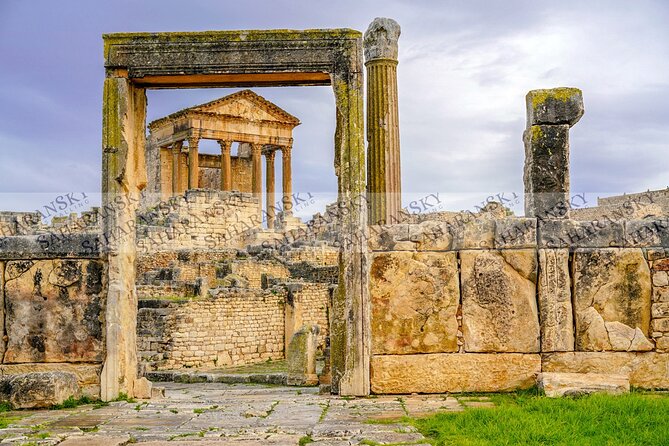
Make time for the Capitol. The site offers particularly good places to photograph it from below, where the building can be framed against the surrounding terrain. Your guide should help you find these viewpoints, since the best image is not always taken from directly in front of a monument.
What a licensed guide adds at Uthina and Dougga
Archaeological sites can be rewarding on their own, but they can also become a parade of columns, foundations, and names. I would consider the guide a central part of this experience, not an optional extra.
The strongest praise connected with this tour centers on Otman, who has been described as an archaeological encyclopedia. That is especially useful at Dougga, where several temples, baths, homes, and public buildings occupy the same broad area. Without context, you may admire the stonework but miss how the town operated.
A private guide also gives you room to shape the day. One family’s route was adapted to include Testour, Zaghouan, Dougga, and Uthina, and the guide kept an 11-year-old interested in the ruins. That does not mean every booking includes those extra stops, so you should confirm the exact plan before departure. It does show the value of speaking up about your interests.
If you care about architecture, ask for more detail on construction and function. If you are traveling with children, ask the guide to focus on the amphitheatre, public baths, and stories of daily life. If photography matters most, let the guide know early so the schedule includes the Capitol viewpoints and other useful angles.
Six hours is efficient, but not leisurely
The tour begins at 8:00 am and allows about three hours at Uthina and three hours at Dougga. Pickup and transfers are included, so you do not need to solve the transport problem on your own from Tunis.
The six-hour duration is both a strength and a limitation. It is long enough to cover two major sites, yet short enough to fit into a wider Tunisia itinerary. If you have only a limited stay in Tunis, this is an efficient way to reach important Roman remains outside the capital.
You should also set realistic expectations. Dougga is a large archaeological area, and three hours can pass quickly once you stop for explanations and photographs. Uthina has more than its amphitheatre, too. You may need to choose between a thorough look at selected buildings and a faster sweep across the full site.
I would wear practical shoes and bring water, though the supplied information does not specify site conditions or facilities. More importantly, keep your morning flexible. The experience requires good weather, and poor conditions can lead to a new date or a full refund.
The private format is especially helpful for families, couples, or small groups with different walking speeds and interests. Group discounts may improve the per-person value when several people book together, although the exact discount is not specified.
Further south, and a completely different kind of day out:
- Private tour: Medina,Carthage ,Sidi Bou Said, Bardo Museum+lunch
★ 5.0 · 230 reviews - Carthage, Bardo Museum, Sidi Bou Said and Medina Private Day Tour
★ 4.5 · 153 reviews - Guided Bike Tour of Carthage Archeological Site in Tunisia
★ 5.0 · 88 reviews - Guided tour in the UNESCO world heritage Medina of Tunis
★ 5.0 · 68 reviews
Is $150 per person good value?
At $150 per person, this is not the cheapest way to see ruins in Tunisia. The fair question is what you are buying beyond admission tickets.
You are paying for a private activity, transfer from your Tunis hotel, a licensed guide, and admission to both archaeological sites. For someone who would otherwise need to arrange transport, find the sites, pay entry fees, and hire separate interpretation, the package can be good value.
The value is strongest when you care about understanding what you see. Uthina and Dougga are not simply photo stops. Their theatres, baths, temples, villas, and public spaces make more sense when someone explains their purpose and connection.
The price is less compelling if you want only a quick look or already have private transport and strong archaeological knowledge. In that case, the main benefit is convenience and access to a guide. Since this is a private tour, you are also paying for control over the group experience rather than sharing a vehicle and schedule with strangers.
The tour is often booked well ahead, on average around 126 days in advance. That suggests you should not leave it until the last minute if the date matters to your plans. Confirmation is provided at booking, and free cancellation is available up to 24 hours before the start time.
Who will enjoy this tour most?
I would recommend this outing to anyone who wants Roman archaeology without giving up the ease of a private transfer from Tunis. It suits first-time visitors who want a clear introduction, as well as people with a strong interest in Roman architecture and urban life.
Families can benefit from the private structure. The example of an 11-year-old remaining fascinated is encouraging, especially because the guide can adjust the explanation and focus on visual features such as theatres, arenas, and mosaics.
It is also a good match for photographers. Dougga provides strong views toward the Capitol, while Uthina offers the scale of the amphitheatre and the pattern of villa mosaics. You will have to manage your time, but the guide can point out the best places to pause.
I would hesitate to recommend it to someone who wants a slow, unstructured archaeological day. Six hours across two sites means a steady pace. If you prefer to spend half a day examining one temple or tracing every visible wall, Dougga alone might deserve more time.
Practical details that matter
Pickup is offered, and the tour starts at 8:00 am. The activity is private, so only your group participates. That makes it easier to ask for pauses, adjust explanations, and keep the day comfortable for children or companions with different interests.
Mobile tickets are available, and confirmation arrives when you book. Service animals are allowed, and the experience is near public transportation, although the principal convenience is the arranged transfer.
Most people can participate, but the available information does not provide detailed guidance about terrain, steps, or wheelchair access. If mobility is a concern, ask the provider for current site-specific advice before booking.
The cancellation policy is straightforward. You can receive a full refund if you cancel at least 24 hours before the local start time. Changes made inside that window are not accepted, and poor weather may result in a new date or full refund.
Should you book the Uthina and Dougga tour?
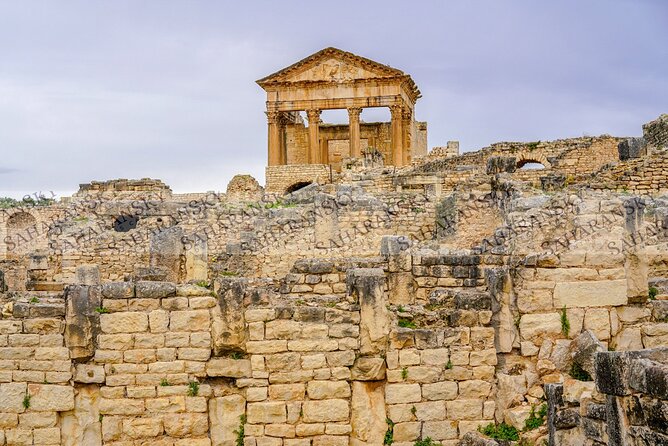
Book it if you want two important Roman sites in one private outing and you value interpretation, transport, and a flexible group setting. Uthina gives you the memorable 16,000-seat amphitheatre and villa mosaics, while Dougga supplies the Theatre, temples, residential quarter, baths, and Capitol views.
I would book especially confidently for a family or small group that wants a guide able to adjust the day. Ask for Otman if available, since his archaeological knowledge has been a major strength, and tell the agency what interests you before departure.
Skip it if you want a leisurely single-site visit or if $150 feels high for a six-hour schedule. For the right person, though, the combination of private service and two substantial sites makes this one of the more useful archaeological day trips from Tunis.
FAQ
Where does the tour take place?
The experience begins in Tunis and visits Uthina, also called Oudhna, and Dougga.
What time does the tour start?
The scheduled start time is 8:00 am.
How long does the tour last?
The tour lasts approximately six hours, with about three hours planned at Uthina and three hours at Dougga.
Is hotel pickup available?
Yes. Pickup and transfer from your Tunis hotel are offered.
Is this a private tour?
Yes. Only your group participates in the activity.
Are admission tickets included?
Yes. Admission is included for both Uthina and Dougga.
How large is Uthina’s amphitheatre?
Uthina’s amphitheatre could accommodate up to 16,000 spectators.
How many people could sit in Dougga’s Theatre?
Dougga’s Theatre could seat up to 3,500 people. It was built in AD 168 by Marcus Quadratus.
Is the tour suitable for children?
Most people can participate, and the private format allows the guide to adapt explanations. An 11-year-old was reported to have remained fascinated by the ruins during a customized day.
Can I cancel for a full refund?
Yes. You must cancel at least 24 hours before the local start time for a full refund. Poor weather may lead to a different date or a full refund.
More Kairouan & Dougga Trips in Tunis
- Kairouan and El Jem Private Day Tour
★ 4.5 · 38 reviews - Full Day Dougga & Bulla Regia Via Testour Private tour with Lunch
★ 5.0 · 29 reviews - Private Guided Tour of Dougga and Testour Mosque
★ 4.5 · 15 reviews - Dougga and Bulla Regia Guided Tour From Tunis
★ 4.5 · 11 reviews
Newest from Tunis
- Private Arrival Transfer: Tunis Airport to Tunis Hotel★ 4.5 · 5 reviews
- Cap Bon Guided Day Tour from Tunis★ 5.0 · 2 reviews
- Tunis Group Tour: Carthage, Sidi Bou Said, Bardo museum & Medina★ 5.0 · 5 reviews
- Walking City Tour★ 4.5 · 7 reviews
- Dougga Guided Day Tour from Tunis★ 5.0 · 5 reviews
- Unveiling the Beauty of Sidi Bou Said and Carthage Private Tour★ 5.0 · 2 reviews
- Tunisia 7-Day tour★ 5.0 · 6 reviews
- Bardo Museum , Oudhna and the roman aqueduct★ 5.0 · 4 reviews
Kairouan & Dougga Tours, compared.
Fun VIP Tour: El Jem, Kairouan, Monastir/Sousse (PICKUP ALL City)
Read our review →
Private Tour to Kairouan, El Jem & Monastir from Tunis_hammamet
Read our review →
Private Excursion to Testour, Dougga and Bulla Regia from Tunis.
Read our review →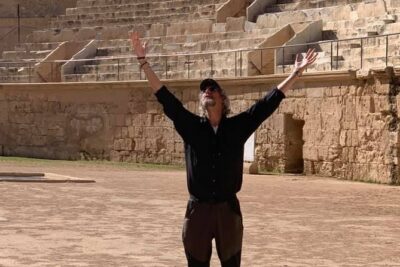
Full Day Dougga & Bulla Regia Via Testour Private tour with Lunch
Read our review →
Private and Guided Tour to Kairouan and El Jem and Monastir
Read our review →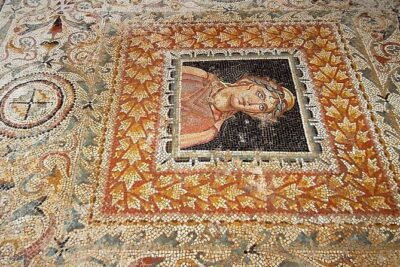
Private Day Trip to Testour, Dougga and Bulla Regia from Hammamet
Read our review →Browse the lists this tour appears in